Genoese Fort causeway
The path to Tabarka's iconic fort wasn't always there.
Full story unlocks in the tour
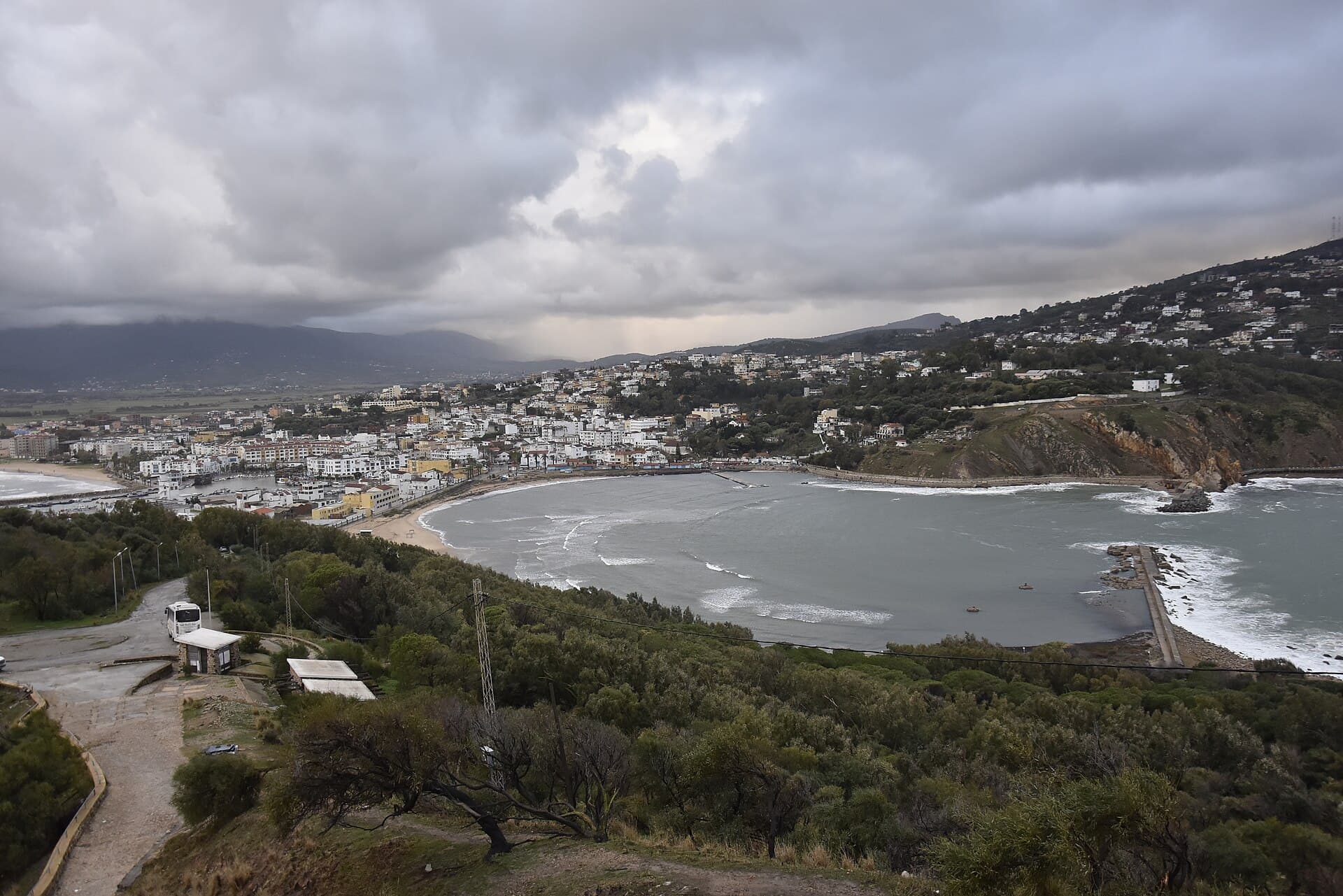 Noomen9 / CC BY-SA 4.0, via Wikimedia Commons
“Where emerald hills meet the Mediterranean's embrace.”
Not the postcards. The stories even locals don't know — whispered in your ear, right where they happened.
The path to Tabarka's iconic fort wasn't always there.
Beneath the waves, Tabarka holds a secret that fueled its past prosperity.
Just a short drive inland, Tabarka's landscape undergoes a dramatic transformation.
Discover every secret of Tabarka
Every address, every reveal in full — in your ear, right where it happened.
You pick your stops. You walk. The voice reveals what the others miss.
No tours available yet. Check back soon — we're preparing them.
Tabarka, a coastal town in Tunisia's far northwest, offers a unique blend of natural beauty and historical intrigue. Situated where the cork-oak mountains of the Kroumirie region meet the Mediterranean Sea, it presents a landscape unlike any other in the country. The town, with a population of around 18,000, maintains a tranquil atmosphere, largely untouched by the mass tourism found in other Tunisian coastal cities.
Known for its dramatic sandstone 'Needles' rising from the sea, a historic Genoese fort, and vivid red coral reefs, Tabarka is a destination for those seeking both relaxation and adventure. It's a place where you can explore ancient ruins, dive into crystal-clear waters, and immerse yourself in a deep cultural heritage. The town's quiet charm and verdant surroundings make it a compelling alternative to Tunisia's more frequented destinations.
Tabarka's origins trace back to a Numidian settlement, a precursor to its flourishing under Roman rule as Thabraca. During this era, it became a vital strategic point on the North African coast, connecting Carthage and Hippo Regius. The town's development was significantly influenced by its natural harbor, ideal for trade, and its role as a primary port for exporting the prized Numidian marble (giallo antico) from nearby quarries to Rome. Additionally, the abundance of red coral in its coastal waters laid the foundation for a trade that would define Tabarka for millennia.
In 1540, the Lomellini family, a Genoese merchant dynasty, gained control of the island of Tabarka. This concession, part of a deal involving the ransom of the corsair Dragut, led to the construction of the Genoese Fort that still crowns the island today. For nearly two centuries, Tabarka operated as a Genoese trading enclave, driven by coral harvesting and commerce, until the Bey of Tunis reclaimed it in 1741. The fort, a prominent landmark, originally sat on an island, only becoming connected to the mainland by a causeway in the 20th century.
Tabarka has been occupied by various civilizations, including Punics, Greeks, Romans, Arabs, Genoese, and Ottomans, each leaving their mark on its architecture and culture. In 1952, future Tunisian President Habib Bourguiba was exiled to Tabarka by French colonial authorities. The town gained international recognition in the 1970s with the establishment of the Tabarka Jazz Festival, an event that continues to attract music lovers. Despite a decline in tourism after the 2011 revolution, Tabarka has retained its authentic character, offering a glimpse into a less commercialized side of Tunisia. Efforts are now underway to include Tabarka in a world network of marine protected areas to safeguard its unique coral ecosystem.
Begin your exploration at the Genoese Fort, a 16th-century fortress situated on what was once an island, now connected to the mainland by a causeway. The climb to the fort offers sweeping views of the harbor, town, and the Kroumirie mountains. While only a section of the fort is accessible, the views alone are worth the visit.
Just west of the harbor, discover Les Aiguilles (The Needles), a series of weathered sandstone spires sculpted by wind and water, rising dramatically from the sea and shoreline. A footpath along the coast leads to these formations, which are particularly striking in the late afternoon light.
Tabarka is recognized as Tunisia's premier scuba diving destination, thanks to its clear, deep waters and extensive coral reefs. The underwater world teems with marine life, including red coral, groupers, moray eels, and octopus, making it ideal for both divers and snorkelers.
For a change of scenery, venture inland to the Kroumirie Mountains, a region of cork oak and pine forests. The hill town of Aïn Draham, about 25 kilometers inland, offers a cooler climate and opportunities for hiking amidst distinctive landscapes.
Tabarka offers distinct experiences depending on the season. For beach activities and diving, the best time to visit is from June through September when the water is warm. Spring (April to June) and autumn (September to November) provide mild, green, and quiet conditions, ideal for walking, exploring the fort, and enjoying the coast without the summer crowds. While winter (December to March) is cooler and wetter, it offers an atmospheric experience with the contrast of snow-dusted mountains and the Mediterranean shore. Tabarka is generally several degrees cooler and greener than other parts of Tunisia year-round.
Tabarka is approximately a three-hour drive from Tunis, with the final stretch offering scenic coastal and mountain views. Shared taxis, known as louages, are a common mode of transport from Tunis, Béja, and Jendouba. While there is a small airport, Tabarka–Aïn Draham International Airport (TBJ), scheduled commercial service has been intermittent, so relying on it for international flights is not advisable. Most visitors arrive by car, either rental or hired, which also provides the flexibility to explore the surrounding Kroumirie region.
Within Tabarka, the town's compact size makes walking a convenient way to get around. Yellow taxis are readily available for longer distances or evening travel, though night fares are typically 50% higher. Accommodation options range from luxury resorts to budget-friendly guesthouses, with booking in advance recommended during peak seasons. The local currency is the Tunisian Dinar (TND).