Bory Castle
One man spent 36 years shaping a castle for his wife, largely with his own hands.
Full story unlocks in the tour
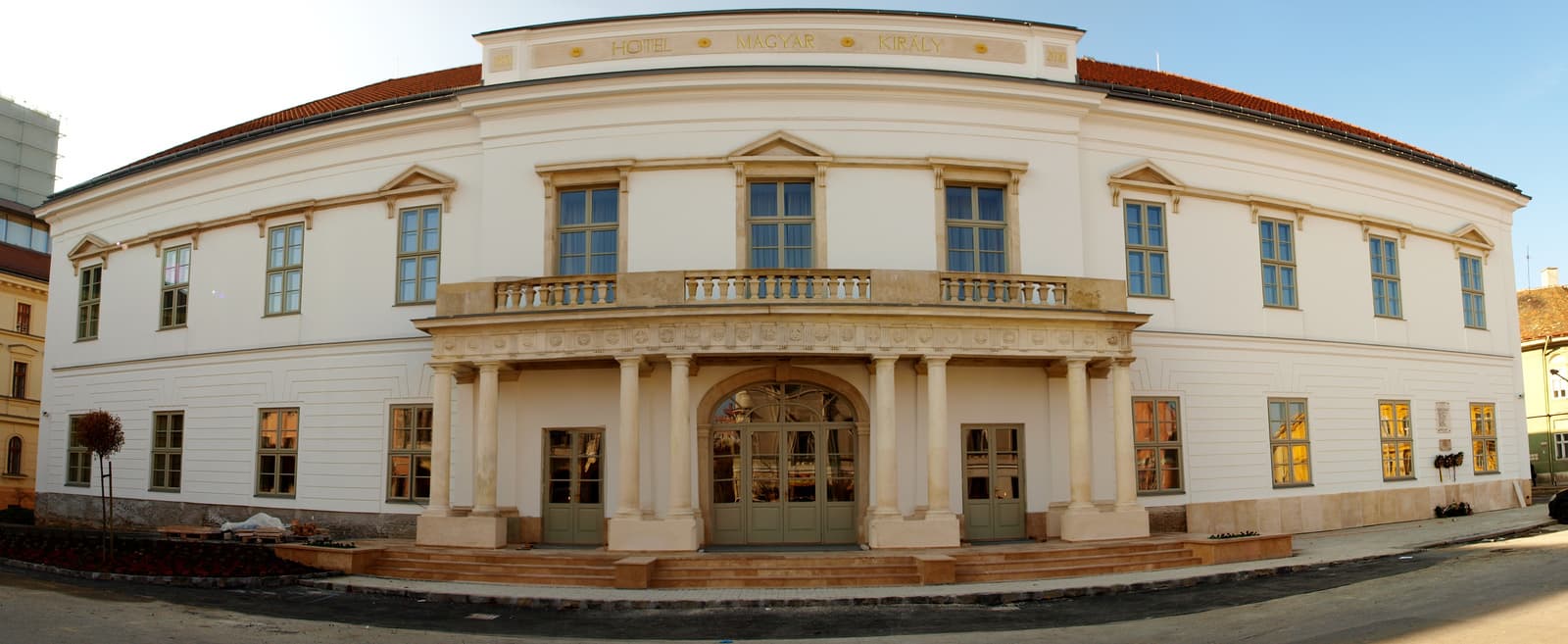 Kontiki / CC BY-SA 2.5 hu, via Wikimedia Commons
“Where Hungarian kings were crowned and laid to rest, a city layered with history and quiet surprises.”
Not the postcards. The stories even locals don't know — whispered in your ear, right where they happened.
One man spent 36 years shaping a castle for his wife, largely with his own hands.
The most significant church in medieval Hungary was dismantled, yet its remnants guard a surprising secret.
Amidst centuries of upheaval, one small medieval building endured, largely untouched.
Discover every secret of Székesfehérvár
Every address, every reveal in full — in your ear, right where it happened.
You pick your stops. You walk. The voice reveals what the others miss.
No tours available yet. Check back soon — we're preparing them.
Székesfehérvár, often simply called Fehérvár, is a city in central Hungary that holds an unparalleled place in the nation's story. Established in 972 by Grand Prince Géza, it served as the first capital of the Kingdom of Hungary for five centuries. This "Royal White City," a translation of its medieval Latin name Alba Regia, was the site where 37 Hungarian rulers received their crowns and 15 were laid to rest, including King St. Stephen I.
Today, Székesfehérvár, the ninth-largest city in Hungary, offers a blend of restored Baroque and Neoclassical architecture, winding lanes, and contemporary spaces. Situated strategically between Budapest and Lake Balaton, it's an accessible destination for those seeking to delve into Hungary's past beyond the capital. The city's atmosphere is one of tranquility and dignity, inviting visitors to explore its historical sites, distinctive museums, and feel the enduring spirit of a significant past.
The origins of Székesfehérvár stretch back to the 5th century BCE, with Roman settlements like Gorsium and Herculia preceding the Hungarian presence. Grand Prince Géza established the Hungarian town in 972, selecting a defensible location on four moorland islands between the Gaja stream and its tributary, the Sárvíz. He constructed a small stone castle and a Byzantine-style church, which later became his final resting place. The city, initially known as Alba Civitas, was first mentioned in a document in 1009.
Under Géza's son, King St. Stephen I, Székesfehérvár was granted city rights and developed swiftly. The construction of the Romanesque Székesfehérvár Basilica began between 1003 and 1038, becoming one of Europe's most monumental buildings at the time. For five centuries, it was the political and spiritual core of the Hungarian Kingdom, serving as the coronation site for 37 kings and the burial place for 15. In 1222, King Andrew II issued the Golden Bull here, a foundational document that limited monarchical power and secured the rights of the Hungarian nobility.
The city's prosperity continued into the 13th to 15th centuries, with the construction of palaces and city walls. However, this golden age was interrupted in 1543 when the Ottomans captured Székesfehérvár, ruling for almost 150 years. During this period, many royal tombs and the basilica were destroyed, and the city was renamed Beograd, becoming an important Turkish stronghold. The original Hungarian population largely fled. Székesfehérvár was reconquered in 1688, and by the 18th century, it began to revive under Habsburg rule, with an extensive building program that shaped its Baroque and Neoclassical character. Maria Theresa made it an episcopal seat in 1777. The city faced further destruction in 1945 during World War II, but its medieval ruins have been carefully preserved and excavated, serving as a powerful reminder of its royal past.
Begin your exploration at the Medieval Ruin Garden, a National Memorial Place where the foundations of the Coronation Basilica lie. Here, you will find the sarcophagus of St. Stephen I. Adjacent to this significant site stands the St. Stephen Cathedral, an 18th-century structure built on the site of earlier churches, housing a relic of St. Stephen's skull. Take time to observe the St. Anna Chapel, the city's only intact Gothic monument and medieval building.
Wander through the Old Town, characterized by 18th-century Baroque and Rococo buildings and squares. In Town Hall Square, observe the Orb statue, a sphere held by three lions, symbolizing the crowning of Hungary's first king. A short bus ride away, the eccentric Bory Castle awaits. This distinctive 20th-century structure, built by architect Jenő Bory, stands as a testament to his artistic vision and affection for his wife, featuring seven towers, courtyards, and numerous sculptures.
Other notable attractions include the Black Eagle Pharmacy Museum, offering a glimpse into 18th-century pharmacy, and the Hetedhét Toy Museum, displaying toys from past centuries. The Vörösmarty Theatre is one of Hungary's oldest and most modern theaters. For a different perspective, the Open Air Museum of Palotaváros focuses on the life of Serbian immigrants.
The most pleasant times to visit Székesfehérvár are spring (April–May) and early autumn (September–October). During these months, the weather is mild, with average daytime temperatures ranging from 16°C to 22°C (61°F to 72°F), ideal for walking and exploring historical sites. Summers (July–August) are warm and sunny, with average highs around 28°C (82°F), though humidity can be higher. Winters are moderately cold, with occasional snow, creating a cozy atmosphere for indoor activities.
Székesfehérvár is easily accessible, located approximately 65 kilometers southwest of Budapest. Regular trains depart from Budapest's Déli pályaudvar (South Station), with a journey time of just over an hour. Buses are also an economical option, with the station conveniently situated near the historical center. If arriving by air, Budapest Ferenc Liszt International Airport (BUD) is the main gateway.
Once in Székesfehérvár, the city center is best explored on foot. For trips to Bory Castle or the outskirts, local buses are reliable. While the historic city center is pedestrian-only, paid parking is available nearby, including a free parking area on Palotai Street suitable for buses. The local currency is the Hungarian Forint (HUF), and it is advisable to carry cash for buses and some entrance fees, as exchange facilities might be limited compared to Budapest. Free Wi-Fi is available in the main square.