Albert Park
This green expanse in the city center holds a secret tied to a bold aviation feat.
Full story unlocks in the tour
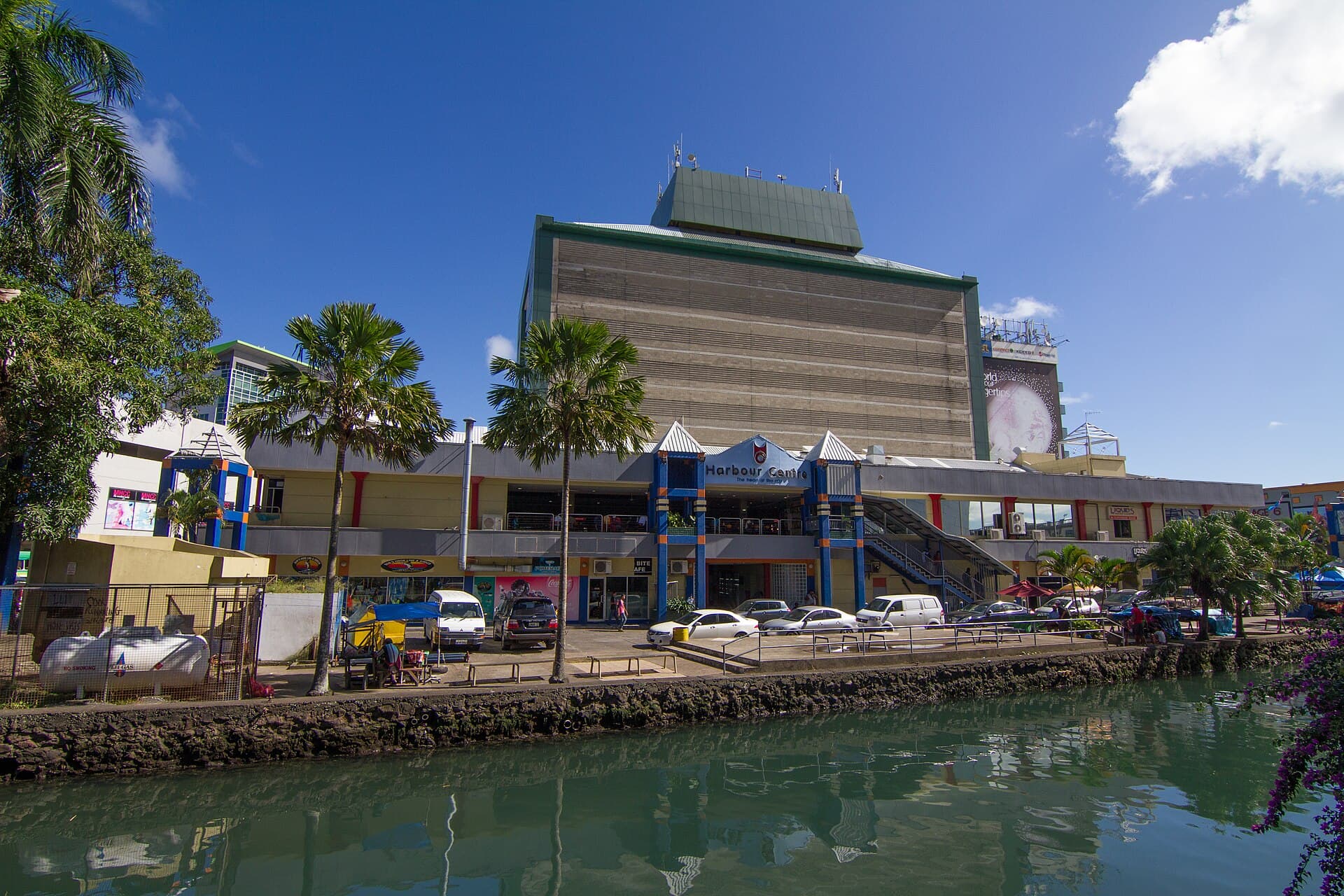 Maksym Kozlenko / CC BY-SA 4.0, via Wikimedia Commons
“On Viti Levu's southeastern shore, Suva unfolds, where ocean breezes meet the verdant interior.”
Not the postcards. The stories even locals don't know — whispered in your ear, right where they happened.
This green expanse in the city center holds a secret tied to a bold aviation feat.
The serene botanical gardens you explore today grow on a site with a fiery past.
Examine the Fijian dollar closely, and you might notice an absence reflecting a shift in national identity.
Discover every secret of Suva
Every address, every reveal in full — in your ear, right where it happened.
You pick your stops. You walk. The voice reveals what the others miss.
No tours available yet. Check back soon — we're preparing them.
Suva, the capital of Fiji, is a dynamic urban center on the southeastern coast of Viti Levu, the largest island in the Fijian archipelago. It is a city where modern high-rises stand alongside colonial-era architecture, serving as Fiji's primary hub for commercial, political, and administrative activities. Suva is also the largest urban center in the South Pacific outside of Australia and New Zealand, making it a significant economic and cultural capital for the region.
Beyond its administrative role, Suva is a multicultural city with a lively atmosphere. Its population includes indigenous iTaukei, Indo-Fijians, and other ethnic groups, contributing to a diverse cultural fabric. This blend of cultures is reflected in the languages spoken—English, Fijian, and Fiji Hindi are all commonly heard—and in the city's lively markets, food scene, and cultural events. While Fiji is often associated with sun-drenched beaches and resorts, Suva offers a different, more urban perspective on South Pacific life, with direct access to lush rainforests just a short drive away.
Suva's strategic location on a hilly peninsula between Laucala Bay and Suva Harbour has made it a major port and a critical point for trade and tourism in the South Pacific. It hosts regional headquarters for international corporations, agencies, and diplomatic missions, solidifying its role as a regional powerhouse. The city's particular appeal lies in its ability to offer a rich mix of historical sites, museums, parks, and bustling local markets, making it an intriguing destination for travelers seeking an authentic South Pacific experience.
The origins of Suva trace back to an indigenous settlement established in the early 1800s, specifically around 1849, near the site of what is now Thurston Gardens. The name "Suva" itself is believed to come from a mound where a temple once stood, overlooking Walu Bay. In 1868, the Bauan chieftain, Seru Epenisa Cakobau, granted a significant tract of land, including an area near Suva, to the Australian-based Polynesia Company. The company initially aimed to cultivate cotton, but the land and climate proved unsuitable for this venture.
A pivotal moment in Suva's history arrived in 1874 when control of the Fiji Islands was ceded to the United Kingdom. In 1877, colonial authorities decided to relocate Fiji's capital from Levuka to Suva. Levuka, the main European colonial settlement at the time, was geographically constrained by a steep mountain and the sea, making expansion impractical. Colonel F.E. Pratt of the Royal Engineers was appointed Surveyor-General in 1875 and designed the new capital in Suva.
The administration of the colony officially transferred to Suva in 1882. Suva gained municipality status in 1910 under the Municipal Constitution Ordinance of 1909. Its initial area of one square mile expanded in 1952 with the annexation of the Muanikau and Samabula wards, and in October of that year, Suva was officially designated Fiji's first city. Further annexations, including Tamavua and Cunningham, continued its growth. Throughout the 20th century, Suva continued to develop, becoming the largest trading port in the South Pacific by 1922 and the capital of an independent Fiji in 1970. The completion of the monumental Government Buildings complex in 1939 became a symbol of colonial power and administrative stability, and the establishment of the University of the South Pacific in 1968 further cemented Suva's role as a regional intellectual hub.
Suva offers a blend of historical sites, natural beauty, and local life. Begin with a stroll through the Thurston Gardens, Fiji's official botanical gardens, which also house the Fiji Museum. The museum holds the largest collection of Fijian artifacts globally, with some dating back 3,700 years, offering a deep dive into the islands' history and diverse communities. Adjacent to the gardens, you can view the Government House, now the Presidential Palace, and if you're fortunate, witness the monthly changing of the guard ceremony.
For a glimpse of local commerce and culture, the Suva Municipal Market near the bus station and cruise port is a lively experience. It is a colorful display of tropical produce, seafood, kava, and local spices, providing a vivid insight into daily Fijian life. Nearby, explore the colonial architecture along Victoria Parade and Cumming Street, where you will find buildings like the old town hall, the Fintel building, the Suva City Library, and the Grand Pacific Hotel, all dating from the early 20th century. A short drive from the city center, the Colo-i-Suva Forest Park offers a refreshing escape into a tropical rainforest with waterfalls, natural rock pools perfect for swimming, and tranquil walking trails.
Suva experiences a tropical rainforest climate with consistent warm temperatures year-round, averaging around 22°C in winter and up to 28°C in summer. However, it is known for significant rainfall throughout the year, averaging 3,000 mm annually, with no true dry season. The wetter season typically runs from November to May, with the most copious rainfall occurring from November to March. The slightly cooler and drier months are from June to October, making this period, particularly early June to early October, the ideal time to visit for warm-weather activities and more moderate rainfall.
The local currency in Suva is the Fijian Dollar (FJ$). While credit and debit cards are widely accepted in tourist areas, it is advisable to carry cash for smaller shops and local markets. Tipping is not customary in Fiji, but a small bonus for exceptional service is appreciated. English is widely spoken, especially in business, government, and education, making communication easy for visitors. Fijian and Fiji Hindi are also commonly spoken, reflecting the city's multicultural population.
Cruise ships typically dock at Kings Wharf, which is a short 5-10 minute walk from the city center, the Municipal Market, Fiji Museum, and Thurston Gardens. A free shuttle bus service may also operate from the port to upscale department stores. Taxis are readily available, and the main bus station is next to the Suva Municipal Market, offering a reliable bus service for getting around.