The Walls of Ston
These formidable fortifications, often called the 'European Great Wall,' once had a surprising vulnerability that prompted a unique solution.
Full story unlocks in the tour
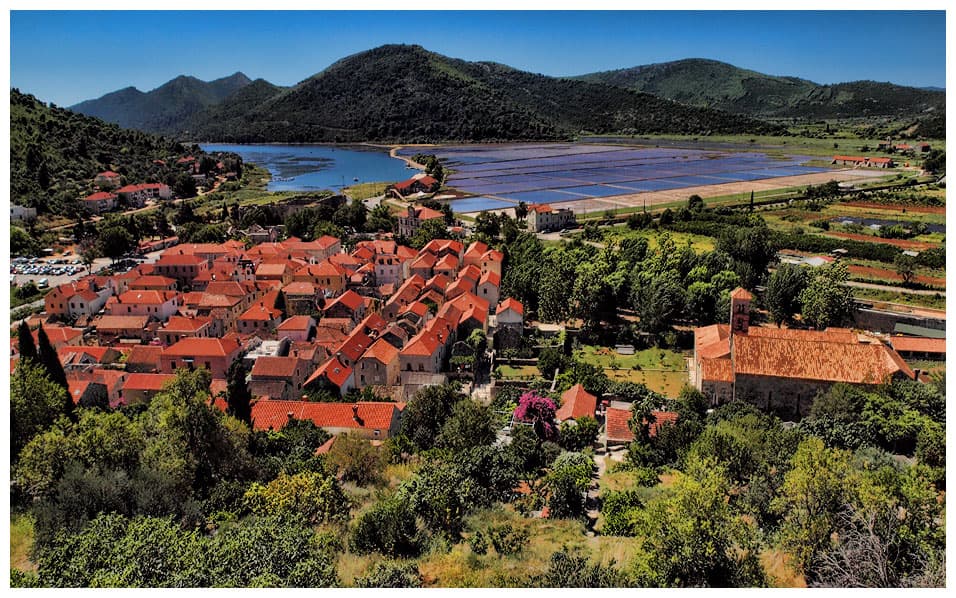 Mario Fajt / CC BY 2.0, via Wikimedia Commons
“Where ancient walls guard 'white gold' and the sea's finest treasures.”
Not the postcards. The stories even locals don't know — whispered in your ear, right where they happened.
These formidable fortifications, often called the 'European Great Wall,' once had a surprising vulnerability that prompted a unique solution.
Among the many pools in Ston's ancient saltworks, one stands apart with a name that hints at its special purpose for the common people.
The renowned Mali Ston oysters, celebrated globally, were once sold in a specific type of basket that had to meet a strict, unusual standard.
Discover every secret of Ston
Every address, every reveal in full — in your ear, right where it happened.
You pick your stops. You walk. The voice reveals what the others miss.
No tours available yet. Check back soon — we're preparing them.
Ston, a town on Croatia's Pelješac Peninsula, is a place where centuries of strategic importance converge with exceptional culinary traditions. It is often described as one of the Dalmatian Coast's appealing destinations, offering a more authentic experience compared to busier coastal areas. Situated at the narrowest point connecting the Pelješac Peninsula to the mainland, Ston's geographical position made it a crucial settlement since ancient times. This small town, approximately an hour's drive north of Dubrovnik, presents a trove of cultural, gastronomic, oenological, and natural wonders.
Ston is particularly known for three things: its impressive medieval walls, its historic salt pans, and its globally recognized oysters. The town and its smaller neighbor, Mali Ston, are intertwined, connected by a formidable defensive system. Visitors can explore ancient fortifications, witness traditional salt harvesting methods, and savor some of the finest shellfish in the world, all within a compact and captivating setting.
Ston's history stretches back to ancient times, initially an Illyrian settlement before the Romans established a colony there in 167 BC. The name 'Ston' likely derives from the Latin 'Stagnum' or 'Stamnum,' referring to stagnant or still water, a nod to the area's natural salt pans. Evidence of salt exploitation and collection in the Ston area dates back to the Roman rule. The region's fertile plains, abundant water, and strategic location made it an important political, cultural, and ecclesiastical center.
In 1333, Ston became an integral part of the Republic of Ragusa (Dubrovnik), marking a significant turning point in its development. The Republic recognized the immense economic potential of the Pelješac peninsula, particularly its valuable salt reserves, which contributed up to a third of Dubrovnik's income. To protect this vital industry and the peninsula from potential attacks, Dubrovnik embarked on one of the largest construction projects of its time: the Walls of Ston.
Construction of these monumental defensive walls began in 1333 and continued throughout the 14th and 15th centuries. The original length of the walls was over 7 kilometers, connecting Ston with Mali Ston and encompassing three fortresses, 41 towers, and six bastions. The town of Ston itself was meticulously planned, with a regular grid of streets and a design considered one of the best-structured cities in Europe. Italian architects like Michelozzo contributed to the intricate system. The walls served as the outermost defense for the Republic of Ragusa, safeguarding its Adriatic trade routes and its economic prosperity. While parts of the walls were unfortunately demolished in the 19th century, the remaining 5.5 kilometers (approximately 3.4 miles) still stand as a testament to medieval engineering and a priceless cultural monument.
The most prominent attraction in Ston is undoubtedly its defensive walls, often referred to as the 'European Great Wall' due to their impressive scale. Visitors can walk along sections of these fortifications, which stretch between Ston and Mali Ston, offering wide-ranging views of the rooftops, salt pans, and coastline. The full route can take one to two hours and can be steep in sections.
Adjacent to the walls are the historic Ston Salt Works, among the oldest active salt pans in Europe, with a history of operation spanning over 700 years. Salt production here still utilizes traditional harvesting methods, and visitors can explore the pans and learn about the ancient process. Depending on the season, you might even observe workers actively collecting salt.
Mali Ston, connected to Ston by the walls, is a smaller, quieter village recognized for its seafood, particularly its globally recognized oysters. Oyster farming in Mali Ston Bay dates back to Roman times, and the European flat oyster (Ostrea edulis) from this region has received international accolades for its quality. Many waterfront restaurants in Mali Ston offer fresh oysters and mussels.
The Pelješac Peninsula, where Ston is situated, is also a notable wine region, particularly known for its bold red grape variety, Plavac Mali. Numerous wineries across the peninsula offer tastings and cellar tours. For outdoor enthusiasts, cycling through the Pelješac countryside, with its quiet roads and vineyard landscapes, is a popular activity. Prapratno Bay, just outside Ston, offers one of Croatia's rare sandy beaches with shallow, clear waters, popular with families.
The best times to visit Ston for pleasant weather and outdoor activities are from mid-May to mid-July and from mid-August to early October, with a peak in early September. During these shoulder seasons (spring and autumn), temperatures are mild, and there are generally fewer crowds than in the peak summer months. Summer (June, July, and August) offers the warmest weather, ideal for hot-weather activities and swimming, but be prepared for higher temperatures and more visitors. The annual Oyster Festival in March celebrates the region's shellfish culture, offering a unique culinary experience.
Ston is easily accessible by car, approximately an hour's drive north from Dubrovnik Airport. The scenic route follows the Adriatic coastline before crossing onto the Pelješac Peninsula. The Pelješac Bridge now allows direct travel from mainland Croatia without passing through Bosnia and Herzegovina, simplifying the journey. While public buses connect Ston with Dubrovnik and other Dalmatian towns, renting a car is highly recommended for flexibility to explore the surrounding beaches, wineries, and villages on the peninsula. Parking in Ston is generally straightforward, especially outside peak summer months. Croatia uses the Euro as its currency. Comfortable walking shoes are essential for exploring the walls and town. Guided tours and wine tastings are popular, so consider booking in advance.