Stirling Old Town Jail
This Victorian prison offered a unique approach to rehabilitation, but a surprising flaw in its design came to light during a time of national crisis.
Full story unlocks in the tour
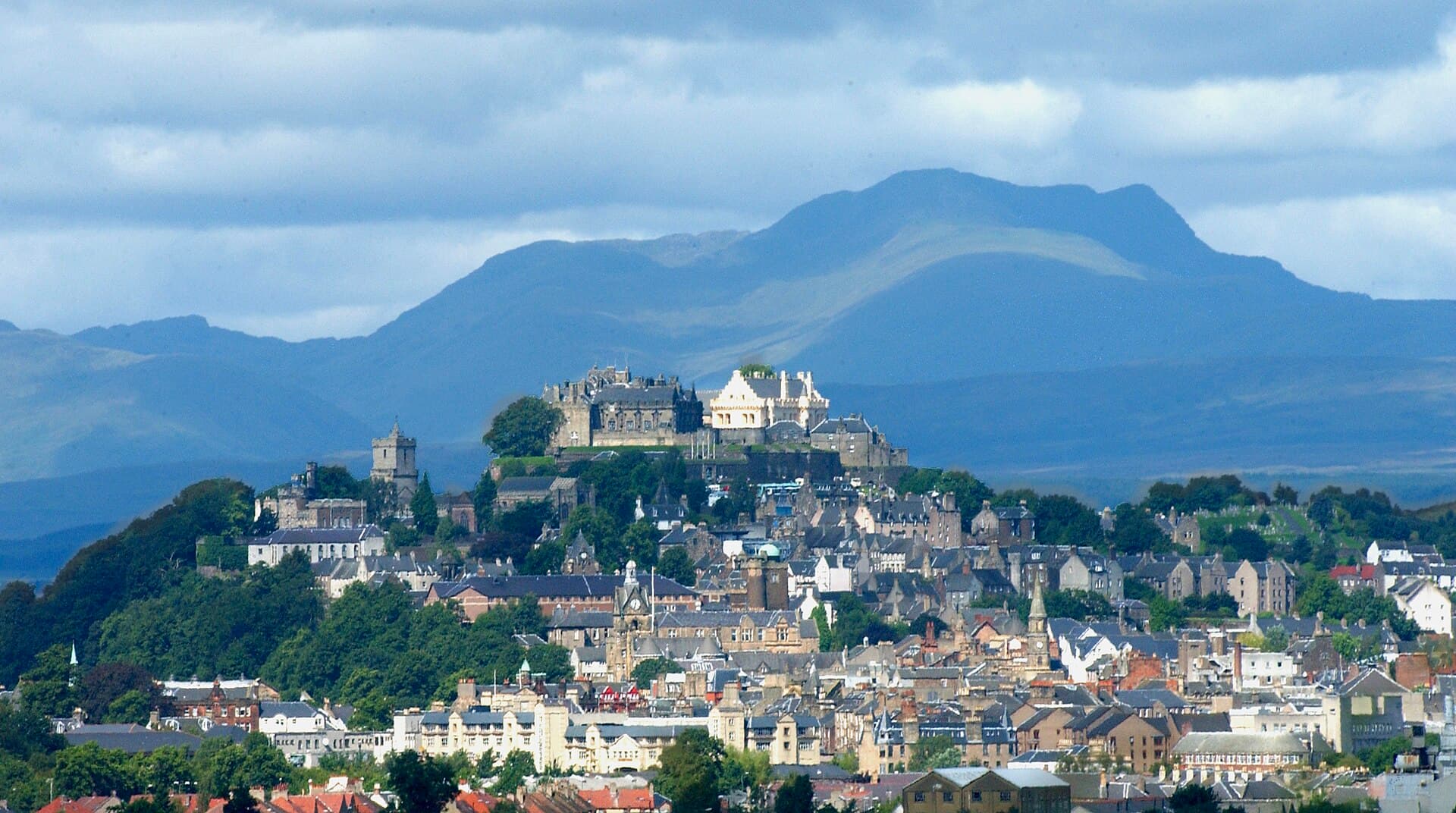 Stirling Council from Stirling, UK / CC BY 2.0, via Wikimedia Commons
“Where Scottish history carved its dramatic landscape.”
Not the postcards. The stories even locals don't know — whispered in your ear, right where they happened.
This Victorian prison offered a unique approach to rehabilitation, but a surprising flaw in its design came to light during a time of national crisis.
This church holds a rare distinction, shared with only one other active church in the UK, directly linking it to Scottish royalty.
This grand 17th-century townhouse, once a military hospital, is said to have a permanent resident who occasionally makes an appearance.
Discover every secret of Stirling
Every address, every reveal in full — in your ear, right where it happened.
You pick your stops. You walk. The voice reveals what the others miss.
No tours available yet. Check back soon — we're preparing them.
Stirling, a city where the Scottish Lowlands meet the Highlands, is a place deeply etched into the fabric of Scotland's past. Dominated by its imposing castle, Stirling has served as a strategic stronghold for centuries, guarding the lowest crossing point of the River Forth. This historic city has witnessed pivotal moments in Scottish history, from the Wars of Independence to royal coronations, earning its reputation as the 'brooch clasping Highlands and Lowlands together.'
Beyond the dramatic tales of battles and royalty, Stirling offers a tangible connection to the past. Its Old Town, with its worn stone paths and venerable buildings, invites exploration. The city's enduring landmarks, like the National Wallace Monument, stand as testaments to the fierce spirit of Scottish independence.
Today, Stirling is a lively city that embraces its heritage while looking to the future. Visitors can delve into its captivating stories, explore its architectural treasures, and enjoy the sweeping views of the surrounding landscapes. Whether seeking dramatic history or a charming Scottish experience, Stirling offers a journey through time.
The history of Stirling begins long before its first written mention around 1110, with evidence suggesting human activity on Castle Hill as early as prehistoric times. The distinctive 'crag and tail' geological formation, a rocky hill with a sloping ridge, provided a natural defensive position that made the site ideal for fortification.
Stirling Castle quickly became a favored royal residence. King Alexander I established a chapel here around 1110 and later died at the castle in 1124. His successor, David I, elevated Stirling to a royal burgh, solidifying the castle's role as a crucial administrative center. Over the centuries, it was a preferred home for Scottish monarchs, with many either living, being crowned, or dying within its walls until the Union of the Crowns in 1603.
Stirling's strategic importance made it a focal point during the Wars of Scottish Independence. The most famous engagement, the Battle of Stirling Bridge, occurred on September 11, 1297. Scottish forces, led by Andrew Moray and William Wallace, achieved a decisive victory against a larger English army. The narrow bridge over the River Forth proved to be a tactical disadvantage for the English, allowing the Scots to trap and defeat them. This victory significantly boosted Scottish hopes for independence.
Following the battle, Stirling Castle changed hands multiple times. It was reclaimed by the Scots after Stirling Bridge but fell back to English control until Robert the Bruce's forces secured it after the Battle of Bannockburn in 1314. The castle has endured at least eight sieges throughout its history, with the last being an unsuccessful attempt by Bonnie Prince Charlie in 1746.
Most of the present-day castle structures were built between 1490 and 1600, during the reigns of Stewart kings James IV, James V, and James VI. These monarchs developed Stirling as a principal royal center, incorporating English, French, and German architectural influences into the new buildings. James IV, for instance, cultivated a Renaissance court and sought to establish a palace of European standing. The Church of the Holy Rude, adjacent to the castle, also played a significant role, hosting royal baptisms and coronations, including that of the infant James VI in 1567.
Stirling offers a concentrated array of historic sites, many within walking distance. Dominating the skyline is Stirling Castle, a sprawling complex of buildings constructed primarily between the late 1400s and early 1600s. Visitors can explore the Royal Palace, the Great Hall, and the Chapel Royal, all reflecting the aspirations of the Stewart monarchs.
Standing atop Abbey Craig, the National Wallace Monument rises 67 meters (220 feet) tall, commemorating Sir William Wallace. Visitors can climb the 246 steps to the observation platform for expansive views of the Forth Valley and the Ochil Hills, with exhibition rooms detailing Wallace's story and the Battle of Stirling Bridge.
Below the castle, the Church of the Holy Rude is Stirling's medieval parish church, founded in 1129. It is notable as one of only a few active churches in the UK where a coronation has taken place—that of James VI in 1567. Nearby, Argyll's Lodging is a remarkably preserved 17th-century Renaissance townhouse, offering a glimpse into the lives of Scottish nobility.
For a different perspective on local history, the Stirling Old Town Jail provides an immersive experience into Victorian prison life, with actor-led tours and wide-ranging views from its rooftop observation area.
Beyond these main attractions, consider a visit to the Battle of Bannockburn Visitor Centre for an interactive experience of Robert the Bruce's famous victory, or explore the peaceful ruins of Cambuskenneth Abbey by the River Forth.
The best time to visit Stirling for pleasant weather activities is from late June to late August, when temperatures average between 17°C and 20°C (63°F and 68°F), and daylight hours are long. This is peak tourist season, so expect larger crowds and higher accommodation rates.
For a balance of comfortable weather and fewer crowds, consider visiting in spring (March to May) or early autumn (September to October). Autumn brings vivid foliage, particularly appealing for photographers, with temperatures ranging from 8°C to 14°C (46°F to 57°F). While winters are milder than other parts of Scotland due to the Gulf Stream, they bring colder temperatures and shorter daylight hours.
Stirling is well-connected by public transport. The city is served by local and national train and bus services, with the train and bus stations located a short walk from the city center. For those arriving by car, parking at Stirling Castle can be limited, especially during peak times. A park-and-ride service (Castleview Park and Ride) is highly recommended, offering free parking and regular buses to the castle, a 5-minute walk away.
Many of Stirling's main attractions, including Stirling Castle, the Church of the Holy Rude, and the Old Town Jail, are within walking distance of each other in the Old Town. The National Wallace Monument is a bit further, but accessible by bus or a walk up Abbey Craig. Local bus routes service Stirling and its surrounding areas, and a Demand Responsive Transport (DRT) service operates in rural areas, functioning like a pre-booked taxi at bus fare prices.