Stawamus Chief
The colossal granite of the Stawamus Chief holds a name that resonates with profound spiritual meaning for the Indigenous Squamish people.
Full story unlocks in the tour
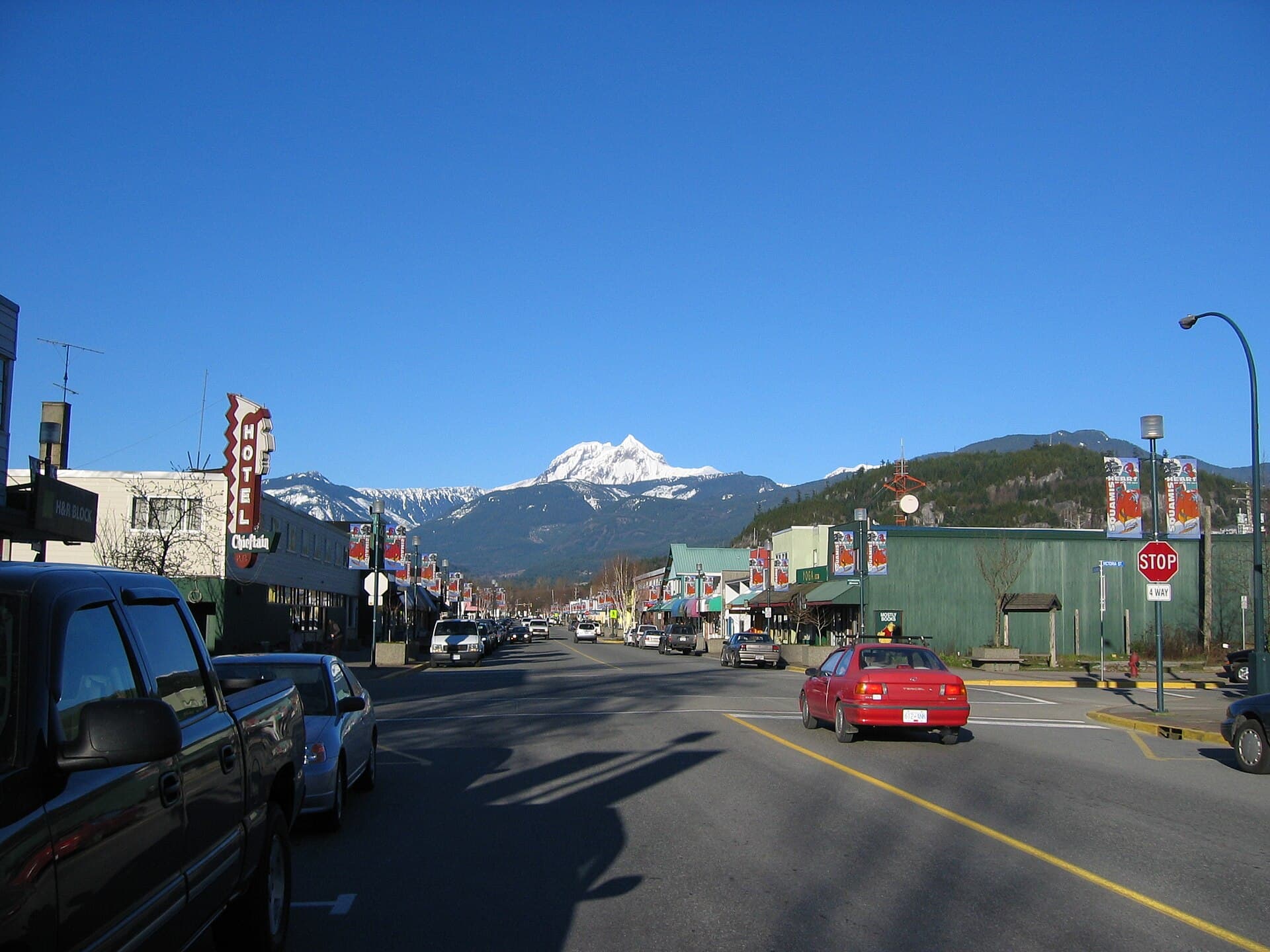 The original uploader was Damieng at English Wikipedia. / CC BY-SA 3.0, via Wikimedia Commons
“Where granite shoulders meet the Pacific, and the wild heart finds its compass.”
Not the postcards. The stories even locals don't know — whispered in your ear, right where they happened.
The colossal granite of the Stawamus Chief holds a name that resonates with profound spiritual meaning for the Indigenous Squamish people.
Before Squamish emerged as a nexus for outdoor exploration, early European visitors sought Howe Sound for an unexpected quarry.
Cleveland Avenue, the central artery of downtown Squamish, possesses a past that predates the town's contemporary designation.
Discover every secret of Squamish
Every address, every reveal in full — in your ear, right where it happened.
You pick your stops. You walk. The voice reveals what the others miss.
No tours available yet. Check back soon — we're preparing them.
Squamish unfurls at the northern reach of Howe Sound, a fjord carved by glaciers. Here, the Squamish River delta spreads wide, meeting the sea where granite cliffs rise sharply from the water. This town, cradled by mountains and the ocean, offers a direct portal to the wild, a place where the air carries the scent of pine and salt. It is a community deeply connected to its landscape, where the rhythm of tides and the grandeur of peaks shape daily life.
For generations, the Squamish Nation has stewarded these lands, their presence woven into the very fabric of the region. Today, the town serves as a launching point for adventures both terrestrial and aquatic, inviting visitors to engage with the raw beauty of British Columbia. From the quiet contemplation of a forest trail to the exhilaration of a mountain ascent, Squamish provides a canvas for profound outdoor experiences.
## Indigenous Heritage For millennia, the Sḵwx̱wú7mesh Úxwumixw (Squamish Nation) have been the original inhabitants and guardians of this territory. Their ancestral lands encompass the area around present-day Squamish, extending through Howe Sound and into parts of what is now Vancouver. Their history here is one of deep connection to the land and water, sustained by fishing, hunting, and gathering. Oral traditions and archaeological findings speak to a sophisticated culture with complex social structures and a profound understanding of the natural world. The Stawamus Chief, known as Siám' Smánit, holds particular spiritual significance, a place of power and stories passed down through generations.
## Early European Contact and Settlement European exploration of Howe Sound began in the late 18th century, with Captain George Vancouver charting the area in 1792. For decades after, the primary European interest lay in the fur trade, particularly sea otters. Permanent European settlement in the Squamish Valley began in the late 19th century, drawn by the promise of timber and agricultural land. The construction of the Pacific Great Eastern Railway (PGE) in the early 20th century was a pivotal moment, connecting Squamish to Vancouver and further opening the region for resource extraction and tourism. Squamish became a vital transportation hub, with the railway bringing goods and people, and the wharves facilitating coastal shipping.
## Industrial Growth and Modern Transformation Logging and mining became the foundational industries for Squamish through much of the 20th century. The vast forests provided raw materials, and the Britannia Mine, a significant copper mine on the shores of Howe Sound, employed many. The town developed around these industries, shaping its character and economy. As the latter half of the century progressed, and resource industries began to wane, Squamish started to redefine itself. Its spectacular natural setting, once primarily a backdrop for industry, began to be recognized for its recreational potential. The late 20th and early 21st centuries have seen Squamish transform into a destination for outdoor recreation, attracting climbers, hikers, mountain bikers, and water sports enthusiasts, while still honoring its industrial and Indigenous roots.
A journey up the Sea to Sky Gondola offers sweeping views of Howe Sound, the Coast Mountains, and the Squamish Valley. At the summit, explore walking trails, a suspension bridge, and viewing platforms that provide expansive vistas. For those drawn to the vertical world, the Stawamus Chief Provincial Park presents world-renowned granite climbing routes and challenging hiking trails leading to three distinct peaks, each offering a unique perspective of the surrounding landscape.
Down in town, browse the independent shops and cafes along Cleveland Avenue. The West Coast Railway Heritage Park showcases a collection of historic trains and railway artifacts, providing insight into the region's transportation past. For a deeper understanding of the local ecosystem, consider a visit to the Squamish Estuary, a critical habitat for migratory birds and other wildlife, accessible via walking paths.
Summer, from June to September, offers the warmest weather, ideal for hiking, climbing, and water activities. Spring (April-May) and Fall (October-November) provide cooler temperatures and fewer crowds, excellent for exploring trails amidst changing foliage. Winter (December-March) brings opportunities for snow sports in nearby areas and a quieter, reflective atmosphere in town.
Squamish is approximately an hour's drive north of Vancouver along the scenic Sea to Sky Highway (Highway 99). Public transit options from Vancouver are limited, so a personal vehicle offers the most flexibility for exploring the area. Accommodation ranges from hotels and motels to vacation rentals and campgrounds. The town provides essential services, including grocery stores, pharmacies, and a variety of dining options. Be prepared for variable mountain weather, even in summer, and always check trail conditions before venturing out.