The Gurkenmuseum (Cucumber Museum) in Lehde
Beyond the humble gherkin, there's a royal connection to Spreewald's most famous produce.
Full story unlocks in the tour
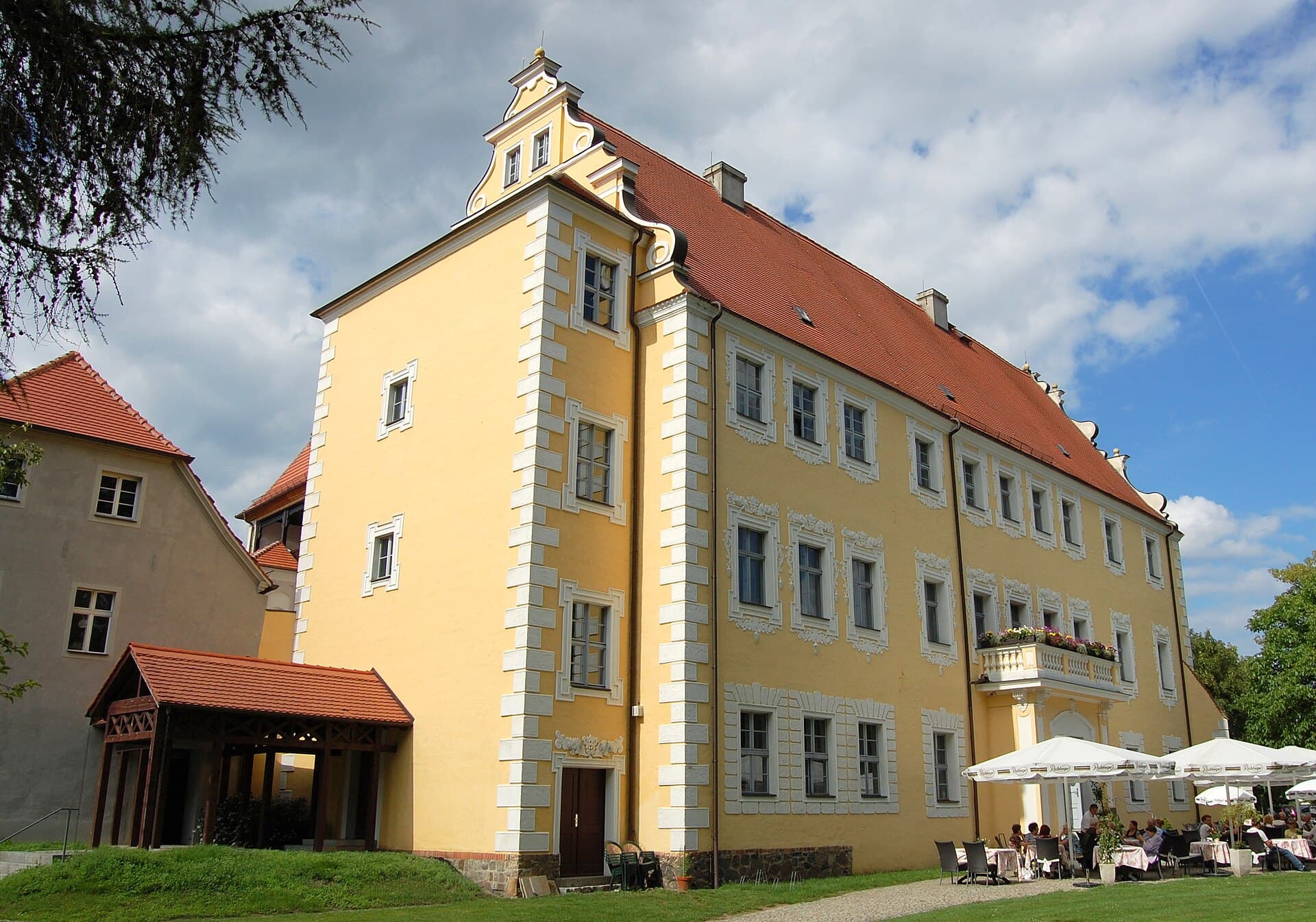 Olaf Meister / CC BY-SA 3.0, via Wikimedia Commons
“A labyrinth of waterways, Sorbian traditions, and the crunch of a perfect pickle.”
Not the postcards. The stories even locals don't know — whispered in your ear, right where they happened.
Beyond the humble gherkin, there's a royal connection to Spreewald's most famous produce.
Imagine a family bed where everyone slept together, not just for warmth, but for something else entirely.
The post office here doesn't deliver by van or bicycle; it arrives by a much quieter, more traditional method.
Discover every secret of Spreewald
Every address, every reveal in full — in your ear, right where it happened.
You pick your stops. You walk. The voice reveals what the others miss.
No tours available yet. Check back soon — we're preparing them.
Spreewald, an alluring region in eastern Germany, presents a unique inland delta where the Spree River branches into a sprawling network of over 200 small canals, known as Fließe, totaling some 1,500 kilometers. Located approximately 100 kilometers southeast of Berlin in the state of Brandenburg, this UNESCO biosphere reserve offers a landscape unlike anywhere else in Germany. Here, verdant wetlands, meadows, and forests are interwoven with placid waterways, creating a tranquil environment that has preserved a traditional way of life for centuries.
The region is not only a sanctuary for nature lovers, supporting a rich biodiversity with around 6,000 animal and plant species, including rare fire-bellied toads, otters, and white storks, but also a lively center of Sorbian culture. The Sorbs, a Slavic ethnic minority, have inhabited this area since the 6th century, maintaining their distinct language, customs, and festivals. Visitors can traverse this dreamlike landscape by traditional flat-bottomed punt boats, akin to gondolas, or by canoe, gliding silently through green corridors and past rustic villages where wooden houses stand beside water channels.
The distinctive landscape of the Spreewald was sculpted during the last Ice Age, approximately 12,000 years ago, when the Spree River split into its intricate web of streams, forming a vast inland delta. For centuries, local communities have utilized these wetlands and waterways, creating a mosaic of small farmsteads within the natural floodplain.
The Spreewald is the ancestral home of the Sorbs (also known as Wends), a West Slavic people who settled in the region around the 6th century. They are Germany's only indigenous ethnic minority and have maintained their cultural identity, language, and traditions despite centuries of German influence. The Sorbian language, related to Polish and Czech, is still spoken by some inhabitants, and bilingual signage (German and Sorbian) is common in many areas. Their cultural legacy is evident in traditional festivals, lively folk costumes, and unique customs such as the 'Bird Wedding' in January and the Sorbian Carnival, 'Zapust'.
Conservation efforts in the Spreewald began in the 1980s, culminating in its designation as a UNESCO Biosphere Reserve in 1991. This international recognition underscores the region's ecological and cultural significance, aiming to preserve its unique flora and fauna, historic cultural landscape, and traditional skills. The reserve, covering approximately 475 square kilometers, focuses on sustainable land use, with a high share of agricultural land under organic production.
Cucumbers have been an agricultural staple in the Spreewald for centuries, with cultivation dating back to the 8th century. The region's fertile soil and water quality contribute to the distinctive taste of 'Spreewaldgurken' (Spreewald gherkins), which have gained worldwide acclaim and are a protected name. This culinary heritage is celebrated, with the gherkin becoming a symbol of the region.
The primary way to experience Spreewald is by navigating its waterways. Traditional flat-bottomed punt tours, known as Kahnfahrten, offer a relaxing way to glide through the canals, often with a local boatman sharing stories. Alternatively, rent a kayak or canoe for a more independent exploration. The villages of Lehde and Leipe are particularly appealing, with houses accessible only by boat.
In Lehde, visit the Freilandmuseum (Open-Air Museum), which presents 19th-century Sorbian life through original farmhouses and interactive exhibits. Also in Lehde is Germany's only Gurkenmuseum (Cucumber Museum), dedicated to the history and cultural significance of the Spreewald gherkin, complete with tastings. The Gurkenradweg (Pickle Cycling Trail), a 260-kilometer route, provides an enjoyable way to explore the region's sights and natural allure by bicycle. For a touch of history, the Slavic Castle Raddusch, a reconstructed 9th/10th-century wooden settlement, offers insights into early Slavic life.
Spreewald welcomes visitors year-round, but the best time depends on your preferred activities. The high season runs from April through October, with summer (July and August) being the most favored for boat trips and water activities due to warm weather and ample shade from trees. Expect more people during this time. Autumn (late September and October) offers beautiful foliage, quieter canals, and opportunities to observe migrating waterfowl. Winter provides a serene, frosty landscape, and if the canals freeze, ice skating is possible. Average daytime temperatures range from 4°C in January to 26°C in July.
Spreewald is located about 100 kilometers southeast of Berlin. The easiest way to reach Spreewald from Berlin is by car (approximately 1 hour 15 minutes) or by regional train (RE2 or RE3) to Lübbenau or Lübben (around 1 to 1.5 hours). From the train station, it's a short walk or taxi ride to the boat harbors. While a car offers flexibility, cycling and walking are excellent ways to traverse the flat terrain once there. Many towns offer bike rentals. Accommodation options include hotels, guesthouses, and holiday apartments in towns like Lübbenau and Burg, or in the historic villages of Lehde and Leipe. Booking in advance, especially during high season, is advisable.