Bouboulina's Museum
Spetses is home to a legendary female naval commander, but her story ends with a surprising, almost unbelievable, twist.
Full story unlocks in the tour
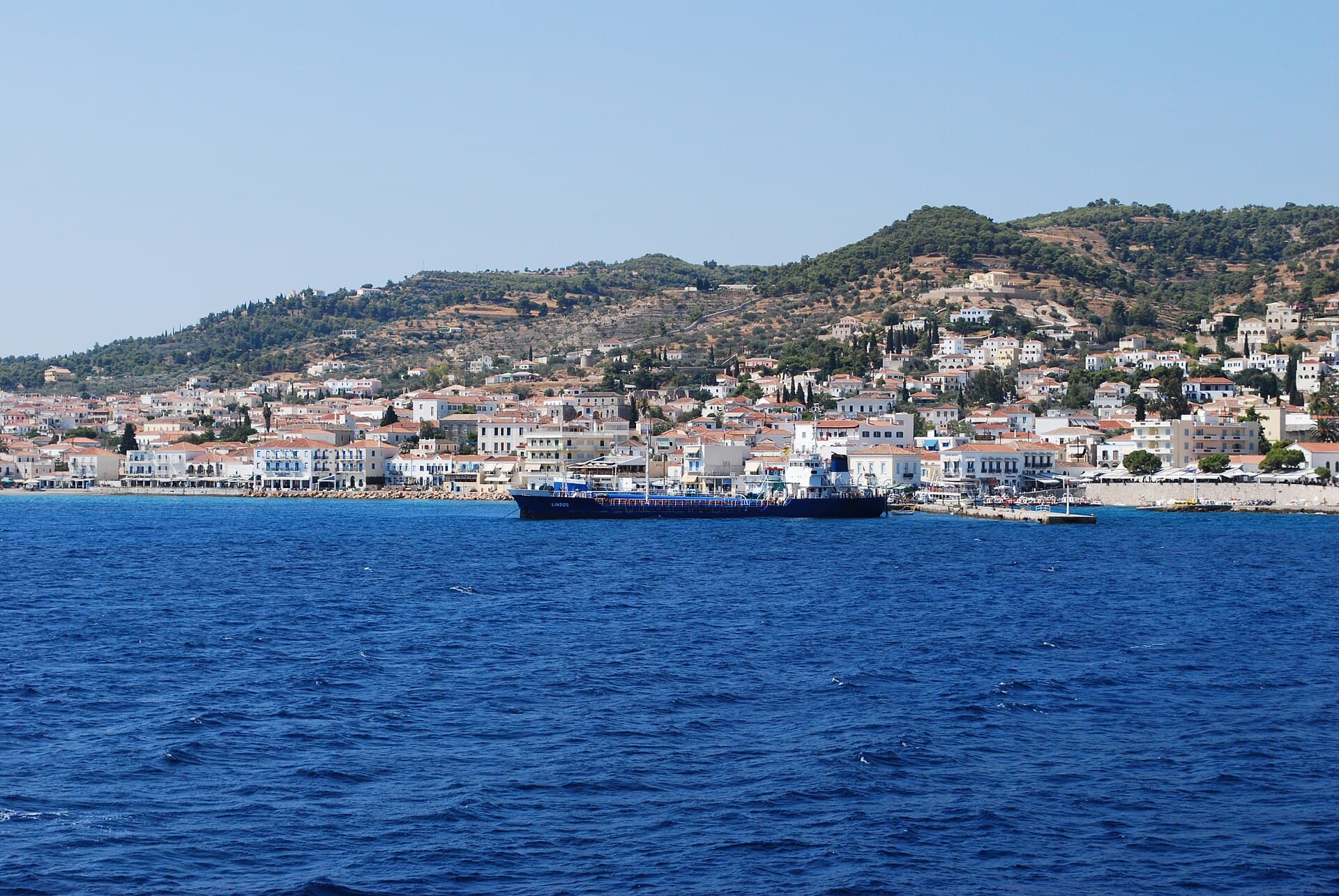 Jean Housen / CC BY 3.0, via Wikimedia Commons
“An island where history echoes in car-free streets and the scent of pine mingles with sea air.”
Not the postcards. The stories even locals don't know — whispered in your ear, right where they happened.
Spetses is home to a legendary female naval commander, but her story ends with a surprising, almost unbelievable, twist.
During Ottoman raids, the island's menfolk employed a clever ruse involving hats and flowers to protect their families.
Walk through Spetses Town, and you'll encounter a peculiar abundance of historical artifacts that speak to a turbulent past.
Discover every secret of Spetses
Every address, every reveal in full — in your ear, right where it happened.
You pick your stops. You walk. The voice reveals what the others miss.
No tours available yet. Check back soon — we're preparing them.
Spetses, an island in the Saronic Gulf, offers a distinct atmosphere, a short ferry ride from Athens. Known in ancient times as Pityussa, meaning 'pine-clad,' and later by the Venetians as 'Isola de Spezie' or 'island of aromas' due to its fragrant vegetation, Spetses maintains an understated elegance. Its car-free policy, in effect since 1963 for most vehicles, contributes to a peaceful environment, encouraging exploration on foot, by bicycle, or via horse-drawn carriage. The island's architecture, characterized by neoclassical mansions and traditional shipbuilding at the Old Harbor, reflects a deep maritime heritage and a prosperous past.
Spetses is a favored destination for Athenians seeking a tranquil escape or a lively weekend, particularly during the peak summer months. Beyond its natural beauty and clear waters, the island holds a central place in history, playing a pivotal role in the Greek War of Independence. The main town, Dapia, serves as the island's hub, with shops, cafes, and restaurants lining the waterfront. Whether you seek historical exploration, beach relaxation, or a taste of authentic Greek island life, Spetses presents a captivating experience.
Spetses holds a history stretching back to the Mesolithic Age, around 8000 BC, when it was connected to the Argolida mainland. Archaeological findings from Saint Marina date the first Hellenic settlement to the 3rd millennium BC. The island, then known as Pityussa, meaning 'covered in pine trees,' saw its population fluctuate due to pirate attacks, with new settlers arriving from the Peloponnese.
Under Venetian rule from the 13th century, the island was renamed 'Isola de Spezie' (Island of Spices) due to its strategic location on a spice trade route. The 18th century marked a 'golden era' for Spetses, as its powerful commercial fleet grew, dominating Mediterranean shipping routes. This maritime prowess proved crucial during the Orlov Revolt (1768–1774), a precursor to the Greek War of Independence.
Spetses holds a distinguished place in modern Greek history as the first island to raise the flag of revolution against the Ottomans on April 3, 1821. The island's merchant ships were converted into warships, playing a decisive role in naval battles, blockading ports, and transporting supplies. The heroism of Spetsiot captains, particularly Laskarina Bouboulina, the only female admiral in world naval history, became widely known. The victorious Naval Battle of Spetses on September 8, 1822, where the Spetses fleet repelled an Ottoman attempt to retake Nafplion, is still commemorated annually with the Armata Festival, featuring a re-enactment of the burning of a Turkish flagship.
Begin your exploration in Dapia, the main port, where you can admire the statue of Laskarina Bouboulina, the island's celebrated naval heroine. Her former home now houses the Bouboulina Museum, offering guided tours that delve into her remarkable life. Nearby, the Spetses State Museum, located in the mansion of Hatziyannis Mexis, another revolutionary leader, showcases over 4000 years of the island's history.
Walk towards the Old Harbor to witness the island's enduring shipbuilding tradition, with active shipyards still crafting wooden boats. The area also contains charming neoclassical mansions, testaments to the island's past wealth. For expansive views, consider a hike to the lighthouse, one of Greece's oldest, situated at the eastern edge of the Old Port.
Spetses offers a variety of beaches. Agia Marina, close to Dapia, is popular and organized with watersports and beach bars. Kaiki Beach, also known as Scholes, is another lively option near the college. For a quieter experience, head to Agioi Anargyroi, the island's longest beach, set in a picturesque cove with tavernas. Zogeria Bay, embraced by pine trees, is known for its clear turquoise waters and golden sand, accessible by boat. The island also features a network of hiking trails, totaling 65 km, leading to hilltops with sea views and secluded coves.
The optimal time to visit Spetses is during the shoulder seasons: May to June and September to October. During these months, temperatures are pleasant (averaging 17-21°C in spring and still in the late 20s in September), and the tourist presence is lighter than in peak summer. September is particularly appealing, with sea temperatures peaking around 27°C, fewer crowds, and the dramatic Armata Festival. While July and August are hot and lively, they are also the busiest and most expensive. Winter sees many closures, though the island maintains a local life.
Spetses is accessible by ferry from Piraeus Port in Athens, with high-speed catamarans taking approximately 2 to 2.5 hours. Alternatively, you can drive or take a bus to Porto Heli on the mainland and catch a 10-15 minute ferry or water taxi to Spetses. There is no airport on the island; the closest is Athens International Airport.
Cars are largely prohibited on Spetses, with exceptions for essential services. Transportation around the island relies on walking, bicycles (rentals from €10-15/day), scooters, horse-drawn carriages (€15-20 for short trips, €40-50 for island tours), and sea taxis. Two bus lines operate during the tourist season, connecting major beaches and towns. The island's main road, a 24km perimeter, is mostly flat, making cycling a pleasant way to explore.
For dining, budget around €15-30 per person for taverna meals. Souvlaki and gyros are affordable street food options. Accommodation ranges from budget guesthouses to luxury hotels, with mid-range options around €100-200 per night. ATMs are available on the island.