The original Spa-Francorchamps Circuit
The world-famous Circuit de Spa-Francorchamps, known for its challenging layout, started with a surprising lack of enthusiasm.
Full story unlocks in the tour
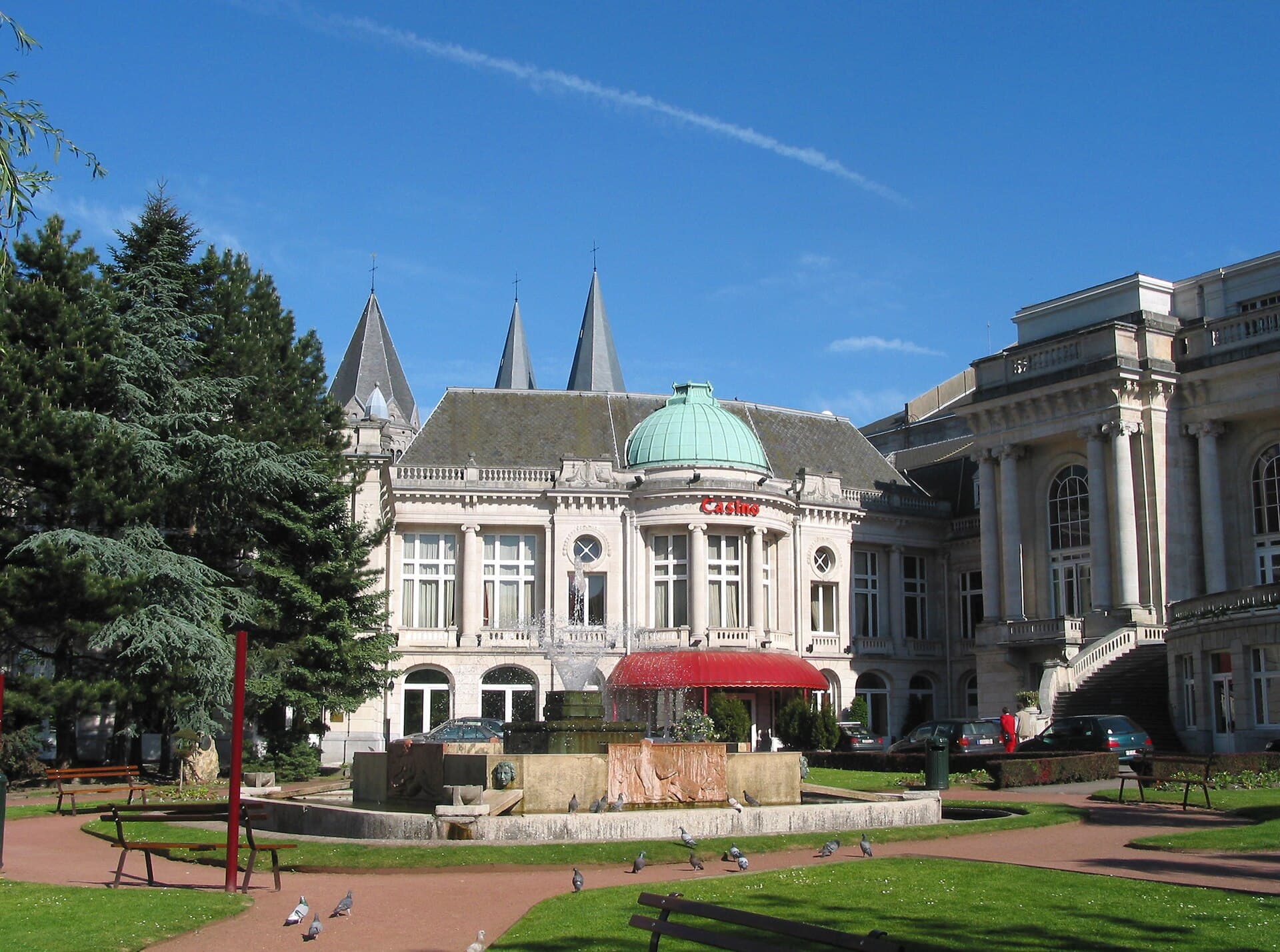 Jean-Pol GRANDMONT / CC BY 2.0, via Wikimedia Commons
“Where the very concept of 'spa' was born, amidst the Ardennes forests and the roar of a legendary racetrack.”
Not the postcards. The stories even locals don't know — whispered in your ear, right where they happened.
The world-famous Circuit de Spa-Francorchamps, known for its challenging layout, started with a surprising lack of enthusiasm.
The common term for a wellness retreat has a very specific origin point, rooted in the town itself.
One of Spa's grandest establishments holds a distinction that might surprise even seasoned gamblers.
Discover every secret of Spa
Every address, every reveal in full — in your ear, right where it happened.
You pick your stops. You walk. The voice reveals what the others miss.
No tours available yet. Check back soon — we're preparing them.
Within the verdant Ardennes region of eastern Belgium, Spa is a town whose name has become synonymous with wellness across the globe. This historic destination is celebrated for its natural mineral springs, which have drawn visitors seeking healing and rejuvenation since the 16th century. Beyond its therapeutic waters, Spa offers a compelling blend of natural beauty, cultural heritage, and the thrilling excitement of one of the world's most iconic motorsport circuits.
In 2021, Spa was recognized as a UNESCO World Heritage Site, part of "The Great Spa Towns of Europe," a testament to its significant role in the development of European bathing culture during the 18th and 19th centuries. The town's elegant architecture, inviting squares, and surrounding forested hills provide a picturesque backdrop for exploration, whether you're drawn to leisurely strolls, invigorating outdoor activities, or delving into its storied past.
From sampling the mineral-rich waters at historic springs to experiencing the adrenaline of the Formula 1 Belgian Grand Prix, Spa presents a multifaceted travel experience. It's a place where the pursuit of health and the thrill of speed coexist, offering a unique blend of tranquility and excitement.
The story of Spa is inextricably linked to its abundant cold mineral springs, whose perceived healing properties were recognized as far back as Roman times, when the location was known as Aquae Spadanae. The town's formal history as a thermal resort began to flourish in the 16th century, propelled by publications like Lymborth's 1559 book, "Des Fontaines acides de la forest d'Ardenne," which detailed the springs' virtues. This scientific endorsement drew prestigious visitors from across Europe, solidifying Spa's reputation as a premier health destination.
By the late 17th century, Spa had established a postal system, further connecting it to the outside world. The 18th century marked a golden age for Spa, transforming it into a fashionable resort and a lively social hub, famously dubbed the "Café of Europe" by Emperor Joseph II. Royalty, aristocrats, artists, and intellectuals flocked to "take the waters" and partake in the town's social affairs, which included horse races, balls, and gaming. The construction of the Casino de Spa in 1763, one of the world's oldest, further cemented its status as a center for entertainment and leisure.
The 19th century saw significant urban development in Spa, with the construction of iconic buildings such as the Thermal Baths (1868), the Pouhon Pierre le Grand (1880), and the Leopold II Gallery (1880), reflecting the evolving needs of its visitors and advancements in balneotherapy. However, the 20th century brought challenges, with both World Wars impacting the town and leading to a decline in its glamorous image. Despite this, Spa's connection to its waters endured, and the town began a resurgence, aided by modern developments like the Les Thermes de Spa wellness center and a funicular connecting it to the town.
Beyond its thermal heritage, Spa gained another dimension of international renown with the establishment of the Circuit de Spa-Francorchamps. Designed in 1920, this legendary racetrack, while not directly within the town, has become synonymous with Spa, hosting the annual Formula 1 Belgian Grand Prix and other world-class racing events. The circuit, known for its challenging layout and iconic corners like Eau Rouge, has a compelling history of its own, including hosting the first 24 Hours of Spa race in 1924, predating the Grand Prix. Today, Spa continues to balance its legacy as a historic spa town with its identity as a hub for motorsport, offering a unique blend of relaxation and high-octane excitement.
Begin your exploration at the Pouhon Pierre le Grand, an iconic spring named after Tsar Peter the Great, who found relief in its waters in 1717. The pavilion, with its intricate glass and ironwork, is a historical landmark where you can sample the sparkling, iron-rich mineral water.
For a modern wellness experience, take the panoramic funicular up to Les Thermes de Spa. This contemporary facility offers indoor and outdoor thermal pools, saunas, and hammams, all utilizing the town's mineral-rich waters, with expansive views of the Ardennes.
Delve into the town's past at the Spa Museum (Musée de la Ville d'Eaux), housed in an 18th-century bathhouse. It presents an engaging look at Spa's evolution as a wellness destination, showcasing vintage spa equipment and artifacts from its golden age.
To understand Spa's motorsport connection, acknowledge the Circuit de Spa-Francorchamps. Just a short drive from the town, this legendary racetrack hosts the Formula 1 Belgian Grand Prix and offers tours for motorsport enthusiasts. In the town center, explore the Place Royale and Parc de Sept Heures, ideal for leisurely strolls, or visit the historic Casino de Spa, one of the oldest casinos in the world.
For outdoor enthusiasts, the surrounding Ardennes region offers numerous hiking and cycling trails, including the Promenade des Artistes, a picturesque path with art installations and views of the town.
Spa is a year-round destination, with each season offering a distinct atmosphere. For warm-weather activities like hiking and cycling, late spring (May-June), summer (July-August), and early autumn (September) are ideal, with average temperatures ranging from 15°C to 22°C (59°F to 72°F). The Formula 1 Belgian Grand Prix typically takes place in late August, drawing large crowds and creating a lively atmosphere.
Autumn (October-November) presents picturesque foliage in the Ardennes, while winter (December-February) offers a cozy charm, perfect for enjoying the thermal baths, with temperatures averaging 0°C to 6°C (32°F to 43°F) and a chance of snow at higher elevations. Spring (April-May) brings mild temperatures and blooming forests, suitable for lighter outdoor activities. Rain is possible throughout the year, so packing a rain jacket is advisable.
Spa is readily accessible by car, train, and air. It's approximately 35 km from Liège, 50 km from Maastricht, and 135 km from Brussels. Direct train connections link Spa to major cities, and the closest airports are in Liège, Maastricht, and Brussels.
Within the town, many attractions are walkable. A funicular connects the town center to Les Thermes de Spa, located on a hilltop. For exploring the wider Ardennes region or reaching the Circuit de Spa-Francorchamps, a car is beneficial, though public transport options exist.
Accommodation ranges from hotels to bed and breakfasts. During peak season, especially around the Formula 1 Grand Prix, booking in advance is highly recommended due to increased demand and potentially higher prices. Belgian cuisine, influenced by French and German traditions, features local specialties. Many restaurants in Spa offer European, Mediterranean, and Belgian dishes.
When visiting the Circuit de Spa-Francorchamps, be aware of specific rules regarding permitted and prohibited items, such as glass containers, drones, and large bags in grandstands. It's advisable to check the circuit's official guidelines before attending an event.