Archaeological Museum of Sozopol
Among the ancient Greek pottery and Roman artifacts, one particular exhibit holds a chilling secret.
Full story unlocks in the tour
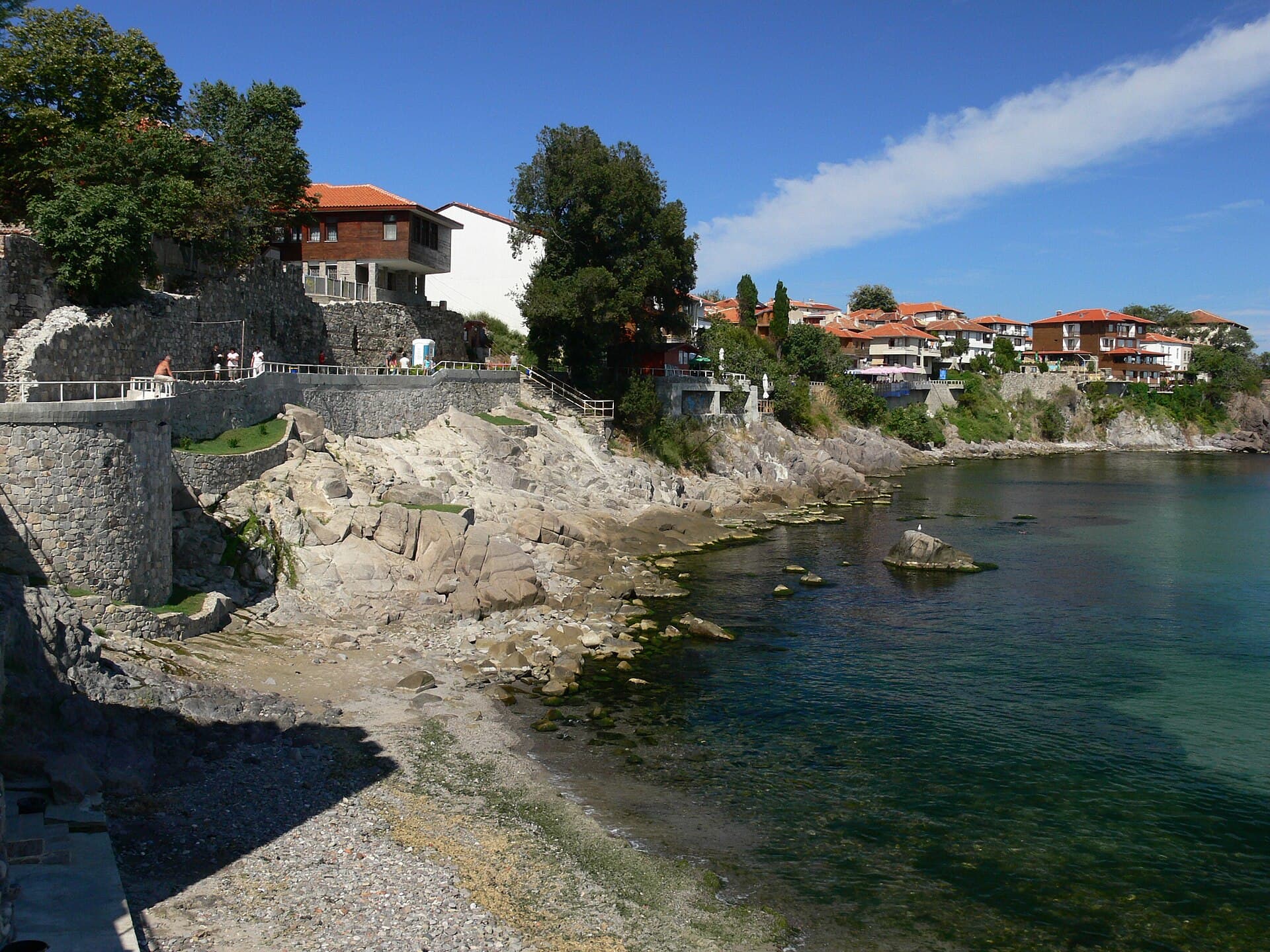 Nenko Lazarov / CC BY 2.5, via Wikimedia Commons
“Where ancient stones meet the Black Sea breeze.”
Not the postcards. The stories even locals don't know — whispered in your ear, right where they happened.
Among the ancient Greek pottery and Roman artifacts, one particular exhibit holds a chilling secret.
This seemingly quiet island, a short boat ride from Sozopol, holds a spiritual treasure that drew international attention.
Beyond the charming Revival-era houses, the very ground beneath your feet in Sozopol's Old Town has layers of history that continue to surprise.
Discover every secret of Sozopol
Every address, every reveal in full — in your ear, right where it happened.
You pick your stops. You walk. The voice reveals what the others miss.
No tours available yet. Check back soon — we're preparing them.
Sozopol, one of Bulgaria's most venerable towns on the Black Sea coast, offers a singular blend of deep history and a gentle seaside atmosphere. The town rests upon a graceful peninsula, its Old Town a labyrinth of narrow, stone-paved passages and distinctive wooden houses from the Bulgarian National Revival period. Visitors may wander through an open-air architectural gallery, where more than 80 traditional houses, many in the Black Sea coastal style, have been preserved. The air carries the tang of the sea and, often, the comforting aroma of fresh fish from local taverns.
With a lineage stretching over 2,600 years, Sozopol has been continuously inhabited since the 5th millennium BC. It is a place where archaeological remains, venerable churches, and fragments from different historical epochs sit in unusual proximity, crafting a layered sense of time. Sozopol is not merely a preserved heritage district; it is a living town where history is woven into the very fabric of daily life, with locals going about their routines amidst structures that have stood for centuries.
Sozopol's narrative commenced around 610 BC when Greek settlers from Miletus and Phocaea established a colony on the peninsula, naming it Apollonia Pontica in honor of Apollo, the god of music, light, and the arts. This strategic location allowed it to flourish as a significant religious and trading hub in the ancient world, governing approaches to the resource-abundant Thracian Black Sea coast. Apollonia Pontica was celebrated for its colossal 13-meter-high bronze statue of Apollo, fashioned by the Athenian sculptor Kalamis, which also served as a guiding light for mariners. The city even minted its own coins, featuring an anchor as its emblem, a clear mark of its maritime importance.
In 72 BC, the Roman general Marcus Lucullus conquered and plundered Apollonia, transporting the renowned Apollo statue to Rome. Despite this devastation, the city was rebuilt, though it never fully regained its former brilliance. By the 4th century AD, with the ascent of Christianity, the city adopted the name Sozopolis, meaning 'city of salvation.'
Sozopol matured into an important Byzantine city and fortress, often changing hands between the Byzantine and Bulgarian empires. After falling under Ottoman rule in 1453, the town transformed into a modest fishing village. However, the 18th and 19th centuries witnessed a revitalization, with the construction of the distinctive wooden houses that characterize the Old Town today, many of which are safeguarded as national cultural and historic monuments. During the Russo-Turkish War of 1828-1829, Sozopol was briefly liberated and served as a base for the Russian fleet. Today, this profound and layered history remains visible throughout the Old Town, with archaeological remains, old churches, and traditional houses coexisting.
A walk through Sozopol's Old Town is an experience unto itself, with narrow stone-paved passages winding between traditional Bulgarian Revival houses. Make sure to visit the Archaeological Museum of Sozopol, which displays the town's expansive history from ancient Apollonia to the medieval period, including a significant collection of ancient Greek painted pottery. The museum also holds the intriguing 'Sozopol vampire' skeleton.
The Apollonia Summer Theatre, an open-air amphitheater, hosts concerts, plays, and festivals, particularly during the annual Apollonia Arts Festival in September. Explore the remnants of the Northern Fortress Wall, dating back to the 6th century, which offers vistas toward St. Ivan Island, especially lovely as the sun descends. The fishing port still maintains its traditional character, with old wooden boats alongside modern yachts, and serves as the departure point for boat tours to St. Ivan Island. On St. Ivan Island, you can explore the ruins of the 10th-century Monastery of Saint John the Baptist, once a major medieval monastic complex and an important Byzantine literary center.
Sozopol also offers several beaches. Central Beach lies directly beneath the Old Town walls, while Harmanite Beach is in the newer part of town and is favored by families. For a more natural setting, Kavatsi Beach is bordered by dunes. Observe the small chapels scattered throughout the Old Town, and the unique painted pebbles and street art that enhance the town's character.
The most favorable time to visit Sozopol is between June and September, when the weather is warm and ideal for beach activities and exploration. July and August represent the peak season, offering the warmest temperatures (an average daily maximum of 29°C) and the clearest skies, though also the most visitors. For a balance of agreeable weather and fewer people, consider the shoulder seasons of early June or late August/September. September is particularly appealing, with warm sea temperatures, lighter crowds, and the Apollonia Arts Festival.
Sozopol is readily explored on foot, especially the Old Town, where distances are brief and cars are best avoided due to narrow, stone-paved passages. If arriving by car, aim for parking outside the Old Town by navigating to 'Sozopol Center'. The nearest international airport is in Burgas (BOJ), with frequent buses connecting to Sozopol (approximately 30-40 minutes travel time). Comfortable footwear is recommended for navigating the uneven cobblestones. Many restaurants in the Old Town offer fresh Black Sea fish and local Bulgarian cuisine. Booking accommodation in the Old Town in advance is advisable, particularly during July and August.