Stalin's Dacha
The Soviet leader Joseph Stalin had a preferred retreat in Sochi, but his living arrangements were far from ordinary.
Full story unlocks in the tour
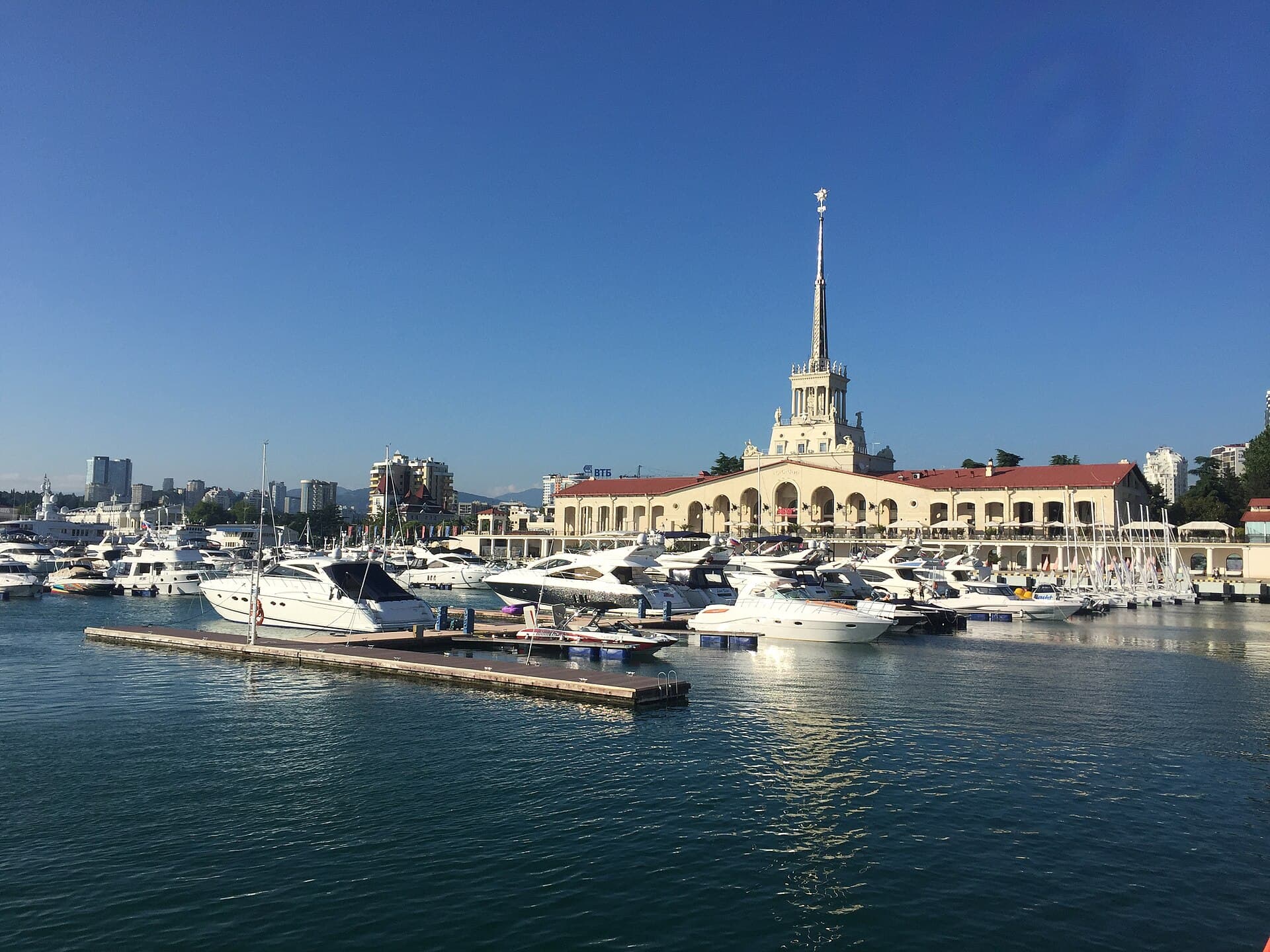 Trace / CC BY-SA 4.0, via Wikimedia Commons
“Where the Black Sea meets the Caucasus, a subtropical paradox.”
Not the postcards. The stories even locals don't know — whispered in your ear, right where they happened.
The Soviet leader Joseph Stalin had a preferred retreat in Sochi, but his living arrangements were far from ordinary.
This expansive botanical garden holds a global collection of plants, yet its origins trace back to a single, passionate individual with no prior gardening experience.
Sochi is home to Russia's only tea plantations, an improbable agricultural triumph in a country known for its cold climate.
Discover every secret of Sotchi
Every address, every reveal in full — in your ear, right where it happened.
You pick your stops. You walk. The voice reveals what the others miss.
No tours available yet. Check back soon — we're preparing them.
Sochi, often referred to as the "Russian Riviera," is a resort city stretching 145 kilometers along the Black Sea coast at the foot of the Caucasus Mountains. This distinctive geographical position grants it a humid subtropical climate, a surprising reality in Russia, where palm trees flourish while snow-capped peaks are a short drive away. The city gained international recognition as the host of the 2014 Winter Olympics, an event that significantly transformed its infrastructure and solidified its standing as a year-round destination.
Beyond its Olympic legacy, Sochi offers a blend of natural splendor and cultural heritage. Travelers can explore verdant botanical gardens, unwind on pebble beaches, and uncover historical sites that reflect its long and varied past. The city's air quality is remarkably excellent, attributed to its nearly 500,000 acres of forests, with a substantial portion situated within the city center itself. From ancient settlements to a fashionable Soviet-era retreat, Sochi continues to evolve, presenting a diverse array of experiences for every traveler.
## From Ancient Settlements to Imperial Retreat Sochi's story spans millennia, with archaeological evidence indicating human habitation over 100,000 years ago by ancient peoples migrating from Asia Minor. Ancient Greeks sailed to the region in the 5th–6th centuries BC, encountering local tribes who were ancestors of the Abkhaz, Ubykh, and Adyghe people.
The Russian Empire established its first outpost in central Sochi in 1838 as part of its expansion along the Black Sea coast. This period was marked by the Russo-Circassian War, which resulted in significant displacement and loss of life for the native Circassian population. Following the war, the coast was actively colonized by various ethnic groups from inner Russia, including Russians, Armenians, Ukrainians, and Greeks. In 1896, the settlement was officially named Sochi, and it gained town status in 1917.
## The Soviet Era and Stalin's Influence Sochi grew into a sea resort in the early 20th century, with the first resort, "Kavkazskaya Riviera," opening in 1909. The city's development as a fashionable resort accelerated under Joseph Stalin, who had his preferred dacha constructed there in the 1930s. This spurred a significant construction drive, reshaping the city with imposing Neoclassical buildings and sanatoriums. Sochi became a premier holiday spot for the Soviet elite and ordinary citizens alike, serving as a rehabilitation center during World War II.
## The Olympic Transformation and Modern Day After the dissolution of the Soviet Union, Sochi remained Russia's major resort town. A pivotal moment in its modern history was the successful bid to host the 2014 Winter Olympics. This event catalyzed a massive infrastructure overhaul, including new stadiums, hotels, and transportation links, costing an estimated $51 billion. While the Games brought global attention and modern amenities, they also generated discussions about their social and environmental impact, including concerns about human rights and forced evictions. Today, Sochi continues to draw millions of tourists annually, offering a distinctive blend of Black Sea beaches and mountain adventures, functioning as a year-round destination.
Begin your exploration at Sochi Olympic Park, an enduring legacy of the 2014 Winter Games, featuring impressive stadiums and an energetic atmosphere. For a blend of nature and recreation, visit Riviera Park, one of Sochi's oldest public parks, established in 1898. It offers walking paths, diverse plant life, and attractions like a dolphinarium.
Immerse yourself in botanical wonders at the Sochi Arboretum, an expansive park with over 1,800 species of exotic plants from around the globe. Take the cable car for sweeping views of the Caucasus Mountains and the Black Sea. Delve into a distinctive piece of history at Stalin's Dacha, the former summer residence of Joseph Stalin, offering a glimpse into the Soviet leader's private life and the architectural style of the era. For those seeking mountain adventures, the nearby ski resort of Rosa Khutor in Krasnaya Polyana offers extensive ski runs and lifts, with snow from November to June. You can also discover natural marvels like the Agura Waterfalls and the Orekhovskaya Waterfall, providing a refreshing escape into the region's lush landscapes.
Sochi's humid subtropical climate means mild winters and warm, humid summers. The ideal time to visit depends on your interests. For beach activities and warm sea temperatures, the summer months from June to September are perfect, with average daytime temperatures ranging from 25°C to 30°C. The "velvet season" in September and October offers pleasant weather with warm water and fewer crowds. For winter sports, the nearby mountains of Krasnaya Polyana are covered in snow from December to March. Spring (April to May) and autumn (October to November) provide comfortable temperatures for sightseeing and outdoor activities.
Sochi is well-connected, with Adler Airport serving as the primary gateway. The city is quite long, stretching 145 kilometers, so understanding its layout is helpful. Public transportation options include buses and minibuses. For navigating different districts or reaching mountain resorts like Rosa Khutor, consider using ride-sharing services or taxis. Accommodations range from historic sanatoriums in Central Sochi to modern hotels in Adler and alpine lodges in Rosa Khutor. While exploring, be aware that mountain weather can change rapidly, even in summer, so it is wise to pack layers. Local markets are good for souvenirs and essentials, and purchasing an inexpensive umbrella there can be more cost-effective than renting.