Sopot Lighthouse
This distinctive tower, offering expansive views of the Baltic Sea, was not always meant to guide ships.
Full story unlocks in the tour
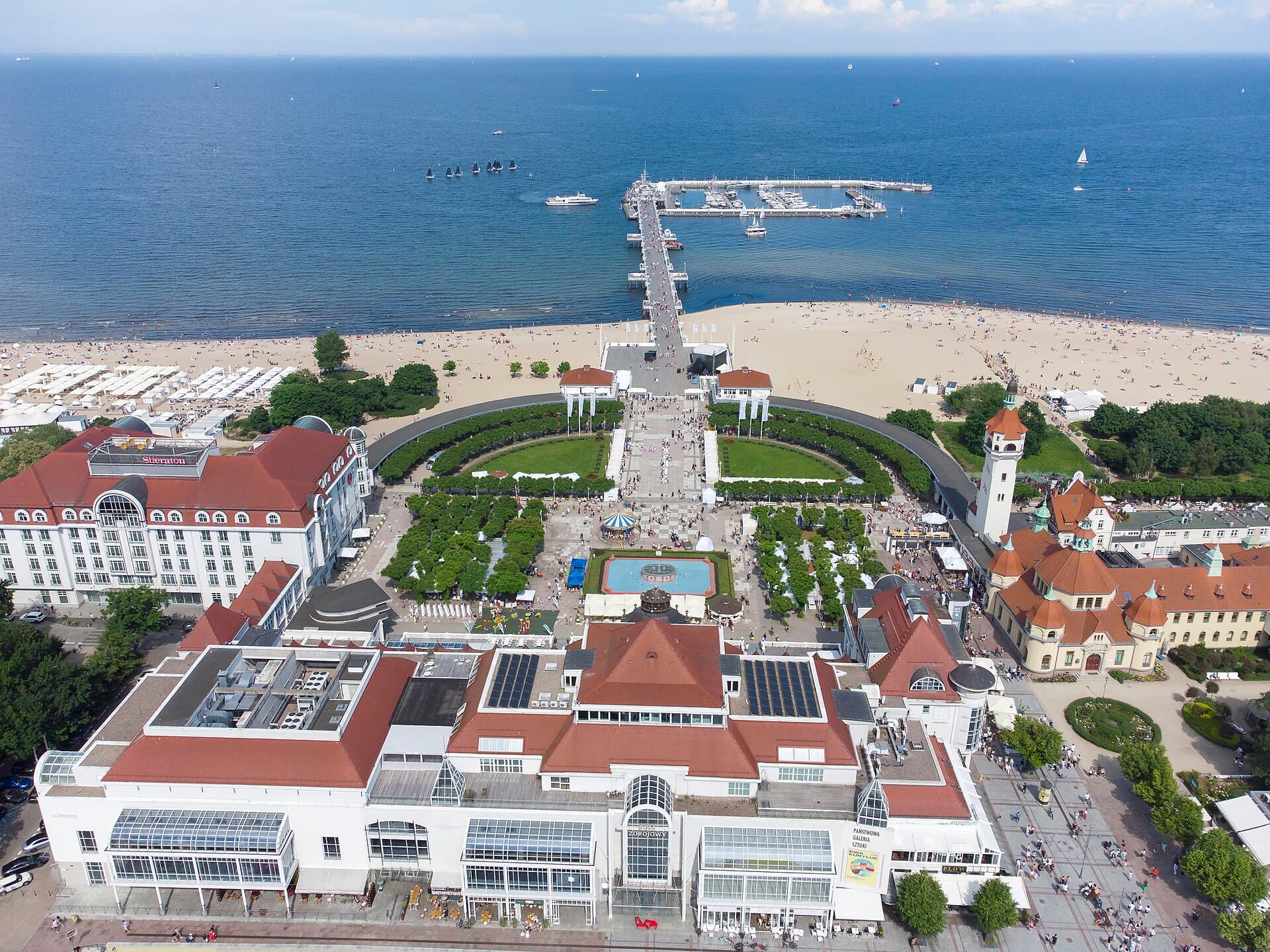 Emptywords / CC BY-SA 4.0, via Wikimedia Commons
“Where Baltic breezes carry the memory of old-world elegance and the pulse of modern life.”
Not the postcards. The stories even locals don't know — whispered in your ear, right where they happened.
This distinctive tower, offering expansive views of the Baltic Sea, was not always meant to guide ships.
Stepping onto Europe's longest wooden pier, one might not imagine its modest, seasonal origins.
This open-air amphitheater, renowned for its acoustics and international festivals, once resonated with a very specific musical tradition.
Discover every secret of Sopot
Every address, every reveal in full — in your ear, right where it happened.
You pick your stops. You walk. The voice reveals what the others miss.
No tours available yet. Check back soon — we're preparing them.
Sopot, a captivating seaside resort on Poland's Baltic coast, offers a blend of elegant spa traditions, lively entertainment, and expansive sandy beaches. As part of the Tri-City metropolitan area alongside Gdańsk and Gdynia, Sopot distinguishes itself with a unique character, often referred to as the "Pearl of the Polish Riviera."
Its allure lies in the juxtaposition of historic architecture, therapeutic sea air, and a lively cultural scene that draws visitors from across Europe and beyond. From leisurely strolls along Europe's longest wooden pier to exploring the whimsical Crooked House, Sopot provides a diverse range of experiences.
The city's roots as a 19th-century spa town for Europe's elite are still evident in its grand hotels and wellness offerings. Whether seeking relaxation, cultural immersion, or energetic nightlife, Sopot presents itself as a dynamic destination where history and modernity harmoniously coexist by the sea.
## From Fishing Village to Grand Resort Sopot's origins trace back to an early Slavic settlement in the 8th century, with its name first appearing in historical records in 1283 as 'Sopoth.' Initially a modest fishing village, its prosperity waned with the establishment of a ducal fort in nearby Gdańsk. For centuries, it remained a possession of the Cistercian abbey in Oliwa.
The transformation of Sopot began in the late 18th and early 19th centuries. In 1808, Dr. Jean Georg Haffner, a former French army medic, settled in Sopot and, at the suggestion of the Prussian government, initiated the development of therapeutic bathing facilities. He established a professional bath complex in 1823, followed by a spa, bathhouses, and the first wooden pier in 1827. This marked the shift towards Sopot becoming a renowned health and holiday resort.
The arrival of the railway line connecting Sopot with Gdańsk and Berlin in 1870 significantly boosted the resort's popularity, leading to a surge in hotel and guesthouse construction. Sopot was officially granted city rights in 1901 by Emperor Wilhelm II, further accelerating its urban development. During the interwar period (1920-1939), Sopot flourished, earning monikers like "the Riviera of the North" and "Monte Carlo of the North." The pier was extended to its current length of 511.5 meters in 1928, and the luxurious Casino Hotel (now the Grand Hotel) opened in 1927, becoming a symbol of the era's high society. The Sopot International Song Festival, inaugurated in 1961, further cemented the city's reputation as a cultural hub.
Begin your exploration with a walk along the Sopot Pier (Molo Sopot), Europe's longest wooden pier, stretching 511.5 meters into Gdańsk Bay. From here, you can admire views of the Baltic Sea, the city, and the Grand Hotel. The pier also serves as a mooring point for cruise boats and water taxis.
Just inland from the pier, stroll down Bohaterów Monte Cassino Street, Sopot's lively pedestrian promenade. This street is lined with cafes, restaurants, bars, and shops, making it a lively spot for people-watching. Along this promenade, you'll encounter the distinctive Crooked House (Krzywy Domek), a whimsical architectural marvel that appears to melt and undulate.
For expansive vistas, climb the 30-meter Sopot Lighthouse, originally a chimney for a balneological institute, which offers sweeping views of the Bay of Gdańsk and the Tri-City. Immerse yourself in culture at the Forest Opera (Opera Leśna), an open-air amphitheater known for its excellent acoustics and as the host of the Sopot International Song Festival. For a calmer experience, explore the sandy Sopot Beach, ideal for sunbathing or a leisurely walk towards Orłowo, where you'll find cliffs and a small fishing harbor.
The best time to visit Sopot for warm weather activities is from late June to late August. During these summer months, average daily temperatures range from 17°C to 22°C, making it ideal for beach activities and outdoor events. July is typically the warmest month, with average highs around 22°C. While summer is lively and festival-packed, be prepared for occasional rain, as July also sees the highest number of wet days. For a calmer experience focused on spa retreats, late spring or early autumn (May-September) offers pleasant weather.
Sopot is easily accessible, especially as part of the Tri-City area. Gdańsk Lech Wałęsa Airport (GDN) is approximately 10 km away, with direct flights from major European cities. From the airport, you can reach Sopot by train, taxi, or rental car. The Fast Urban Railway (SKM) provides frequent and efficient train connections between Sopot, Gdańsk, and Gdynia, with Sopot Centrum being the central station. The journey from Gdańsk Główny to Sopot Centrum takes about 15-20 minutes. Tickets can be purchased from vending machines or ticket offices at the station.
Within Sopot, most attractions are within walking distance. Taxis and local buses are also available for longer distances. If driving, be aware that parking in the city center is metered and can be dense during peak season. Polish Złoty (PLN) is the local currency.