Pura Mangkunegaran
Beyond the grand pavilion's painted ceiling, a particular collection offers a glimpse into royal life that's surprisingly intimate.
Full story unlocks in the tour
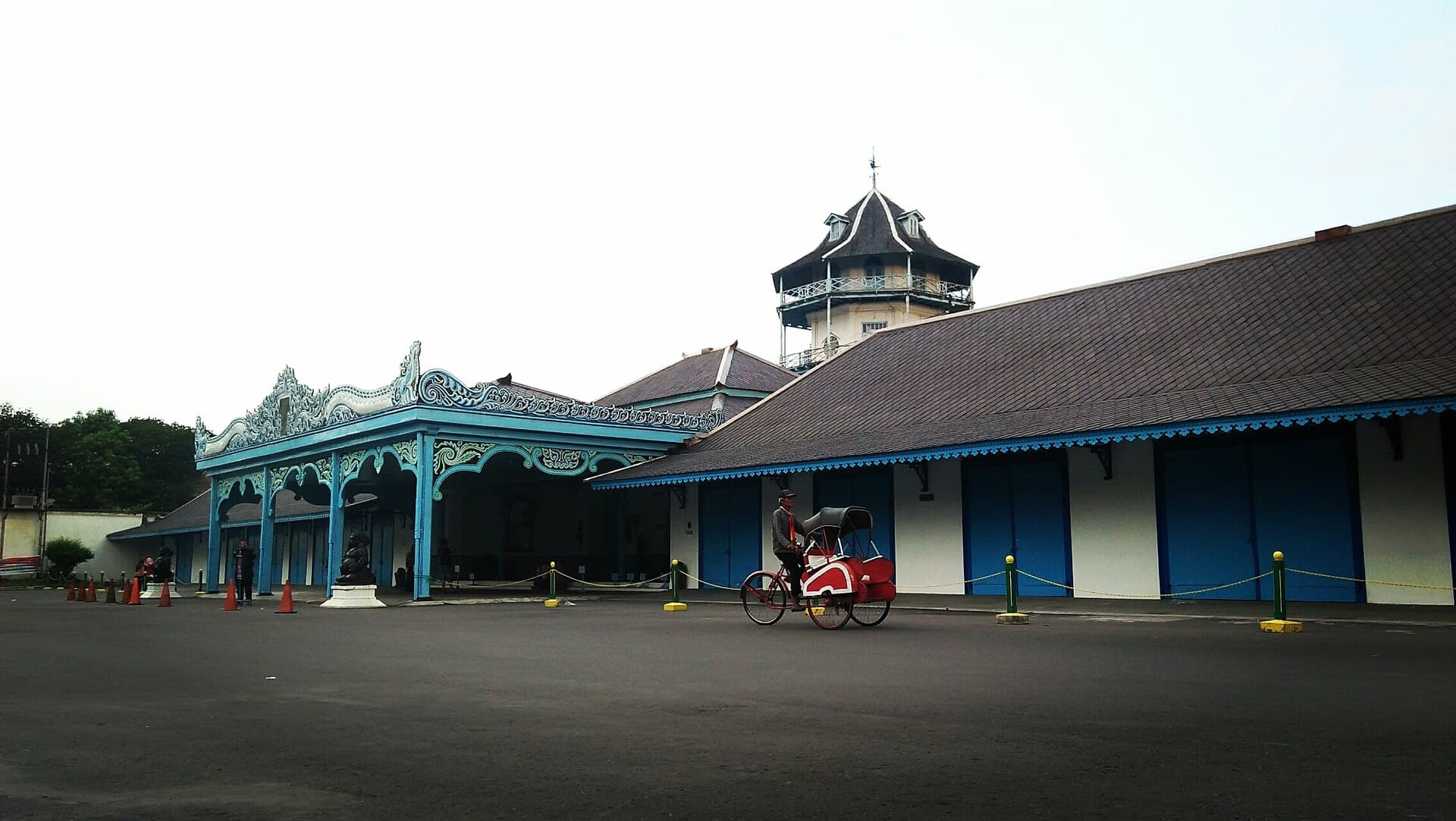 Muhammad rozaqa thoriqo / CC BY-SA 4.0, via Wikimedia Commons
“Solo: Where ancient Javanese courts still share their stories, and batik is a living, breathing art.”
Not the postcards. The stories even locals don't know — whispered in your ear, right where they happened.
Beyond the grand pavilion's painted ceiling, a particular collection offers a glimpse into royal life that's surprisingly intimate.
Along Solo's main thoroughfare, a relic from a bygone era still shares the road with modern traffic, creating an unexpected daily spectacle.
The royal palace is guarded by more than just human sentinels; a sacred herd of animals plays a unique role in the Javanese New Year celebrations.
Discover every secret of Solo
Every address, every reveal in full — in your ear, right where it happened.
You pick your stops. You walk. The voice reveals what the others miss.
No tours available yet. Check back soon — we're preparing them.
Solo, officially known as Surakarta, is a city in Central Java, Indonesia, that offers a more tranquil and authentic Javanese experience compared to its busier neighbors. Often called 'The Spirit of Java,' Solo is deeply rooted in traditional Javanese culture, evident in its royal palaces, traditional arts, and warm hospitality.
This historic city, situated on a fertile plain along the Bengawan Solo River and flanked by volcanic peaks, is a cultural heart. With a population of over 500,000, Solo balances a bustling urban center with charming local character. It's a place where visitors can immerse themselves in centuries-old customs, from intricate batik craftsmanship to melodious gamelan music and traditional wayang puppetry.
The history of Solo, or Surakarta, is intricately linked to the dramatic events of the Mataram Sultanate. The city was founded in the mid-18th century when Pakubuwono II, the ruler of the Mataram Sultanate, was forced to relocate his capital after his previous palace city, Kartasura, was destroyed in an uprising in 1744. A village named Sala was chosen as the new site, and on February 17, 1745, the new palace complex, Keraton Surakarta Hadiningrat, was officially established.
A pivotal moment in Solo's early history was the signing of the Treaty of Giyanti in 1755. This agreement divided the Mataram Sultanate, establishing Solo as the capital of the newly formed Surakarta Sunanate, one of the two principal centers of Javanese power and culture alongside Yogyakarta. Two years later, the Salatiga Agreement in 1757 further divided the Surakarta Sunanate, leading to the creation of the Pura Mangkunegaran, a separate princely state within Solo.
From its inception, Solo flourished as a cradle of refined Javanese culture. The royal courts became significant patrons of the arts, earning the city international recognition for its exquisite batik, gamelan music, traditional wayang puppetry, and classical dance. Even after Indonesia gained independence in 1945, and the Surakarta Sunanate officially became part of the unitary Republic of Indonesia in 1950, the city maintained its status as a vital cultural and educational hub. Solo's commitment to preserving its heritage is evident in its ongoing cultural events and the continued presence of its royal palaces, which remain active centers of Javanese tradition.
Begin your exploration at the Keraton Surakarta Hadiningrat, the royal palace and a living museum of Javanese culture and history. Visitors can tour the palace grounds, which include pavilions, courtyards, and gardens, with a knowledgeable guide. The Pura Mangkunegaran, nearby, offers another glimpse into royal life, showcasing a blend of Javanese and European architecture. Its Pendopo Ageng, a grand open pavilion, is said to be the largest in Indonesia and hosts traditional dance and gamelan performances. The palace museum displays royal artifacts, including ancient weapons, jewelry, and a superb mask collection.
For a deep dive into Solo's renowned textile art, visit the Danar Hadi Batik Museum, which offers an excellent introduction to this celebrated tradition. Explore the Kauman Batik Village and Laweyan Batik Village, where you can observe artisans at work, learn about the intricate batik-making process, and purchase high-quality fabrics directly from producers. The Pasar Klewer is Solo's largest textile market, a bustling hub for batik and other fabrics, where bargaining is expected. For antique enthusiasts, Pasar Triwindu is a trove of vintage items, from old coins to traditional puppets. Do not miss the chance to ride the Sepur Kluthuk Jaladara, a unique tourist steam train that traverses Jalan Slamet Riyadi, Solo's main street.
Solo experiences a tropical climate, making it a lush and green destination throughout much of the year. The dry season, typically from April to October, offers more comfortable weather for exploring the city's outdoor attractions and cultural sites. However, visiting during the rainy season (November to March) can offer cooler temperatures and lush landscapes, particularly around waterfalls and temples outside the city. Major cultural events like the Solo Batik Carnival, usually held in July, offer a vivid spectacle.
The official currency is the Indonesian Rupiah (IDR). While credit cards are accepted at major hotels and modern restaurants, smaller vendors and traditional markets often prefer cash or QRIS payments. Money exchange services are available at Adi Soemarmo Airport and in the city center, particularly around Jalan Slamet Riyadi and Pasar Klewer.
Getting around Solo is convenient with various options. The Batik Solo Trans (BST) bus system covers the inner city with multiple corridors. Taxis are readily available, and ride-hailing apps like Grab and Gojek are popular for longer distances. For a unique experience, consider a cycle rickshaw (becak) for short trips, and be prepared to bargain. Solo is generally safe for travelers, but as with any destination, it's wise to be aware of your surroundings, especially in crowded areas. Modest dress is appreciated, particularly when visiting temples or rural areas.