Sóller's Tramway
The antique tram linking Sóller to its harbor once served a purpose beyond picturesque journeys.
Full story unlocks in the tour
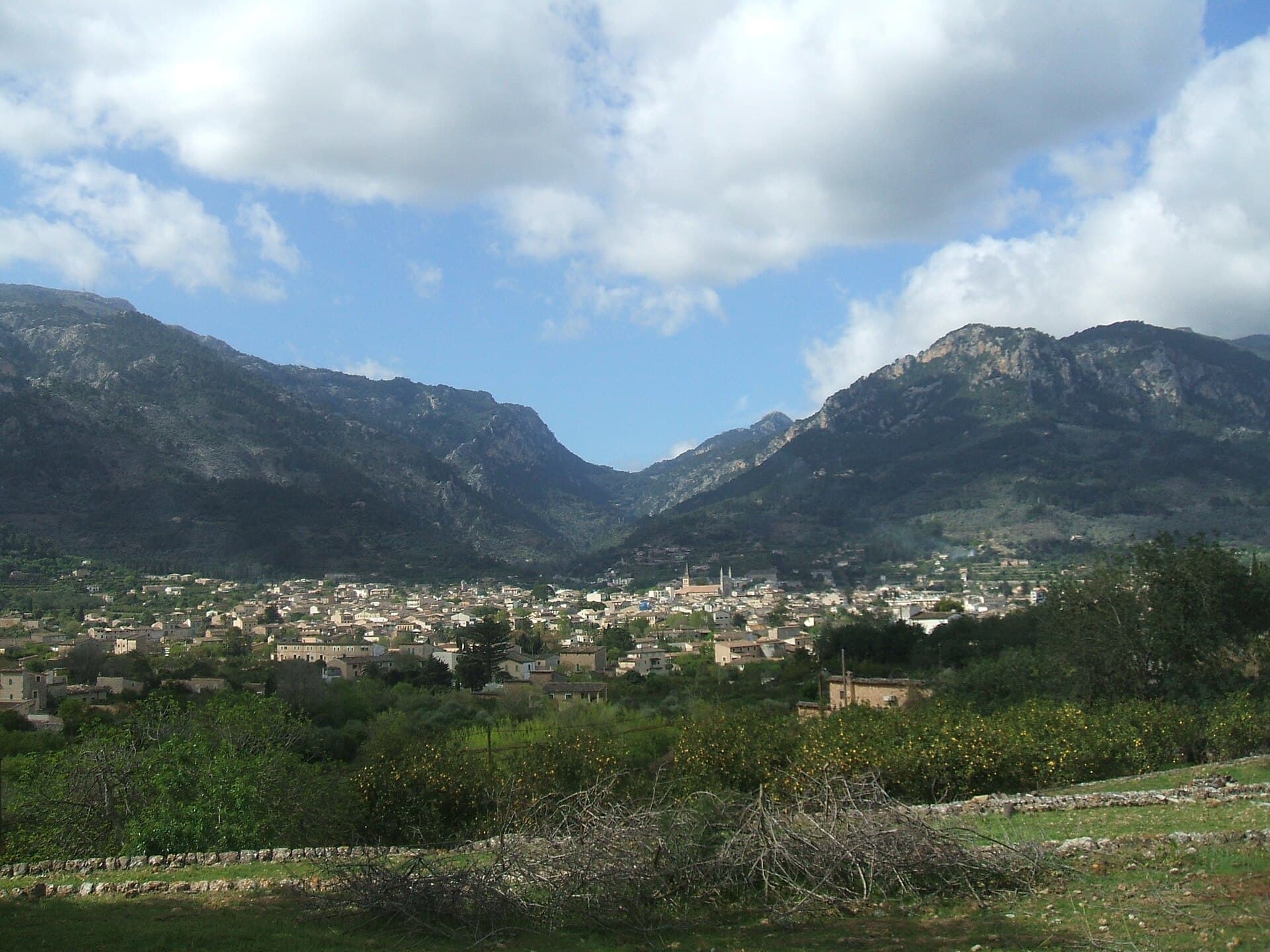 Top Cat 14 / Public domain, via Wikimedia Commons
“Where mountains embrace the sea, and citrus trees narrate their stories.”
Not the postcards. The stories even locals don't know — whispered in your ear, right where they happened.
The antique tram linking Sóller to its harbor once served a purpose beyond picturesque journeys.
This exquisite Art Nouveau mansion holds more than just beautiful art and period furnishings.
For decades, reaching Sóller by road involved a winding, arduous journey, and even after a tunnel was built, a surprising cost was attached.
Discover every secret of Sóller
Every address, every reveal in full — in your ear, right where it happened.
You pick your stops. You walk. The voice reveals what the others miss.
No tours available yet. Check back soon — we're preparing them.
Sóller, a town on Mallorca's northwest coast, rests in a fertile valley often called the 'Valley of Oranges' or 'Valley of Gold.' Surrounded by the dramatic Serra de Tramuntana mountains, a UNESCO World Heritage Site, Sóller offers a distinctive blend of natural splendor, profound history, and unique architecture. Its geographical isolation for centuries, due to the imposing mountains, fostered a strong maritime connection and a singular cultural identity, with close ties to France through trade.
The town itself is a captivating labyrinth of narrow, stone-paved streets, where traditional Mallorcan houses stand alongside modernist buildings, a testament to its prosperous past. The heart of Sóller is the Plaça de la Constitució, a lively square shaded by plane trees and dotted with cafes, where the historic tram glides through, connecting the town to its port. Sóller invites visitors to slow their pace, explore its cultural offerings, and savor the sweet scent of citrus that permeates the air.
Just a short tram ride away is Port de Sóller, a picturesque coastal village with a sheltered harbor and sandy beaches, offering a different facet of the Sóller experience. From hiking trails that weave through olive and citrus groves to boat trips along the rugged coastline, Sóller and its surroundings provide a diverse range of activities for those seeking both repose and adventure.
The Sóller valley holds some of the oldest archaeological evidence of human presence on Mallorca, with remains found in areas like Muleta. Over centuries, various cultures have left their mark, reflected in place names of Pre-Roman, Arab, and Catalan origin. The period of Muslim rule was particularly significant, shaping the region's agricultural character and giving the town its name, believed to derive from the Arabic 'Sulyar,' meaning 'golden bowl' or 'shell,' a poetic description of the fertile valley.
During the Middle Ages, Sóller developed a strong olive-growing tradition in the mountains, creating the terraced landscapes seen today. Horticultural farming flourished in the lower valley, alongside a thriving textile industry. Production in Sóller served local consumption and was exported to France, Valencia, and Barcelona.
Sóller's geographical isolation, caused by the formidable Serra de Tramuntana mountains, meant that for centuries, the sea was its primary connection to the outside world. This led to active trade, especially with southern France, which influenced local dialect and architecture. The cultivation of citrus fruits, particularly oranges, introduced by the Arabs around the 11th century, became a cornerstone of Sóller's economy. By the 18th century, Sóller was a major exporter of citrus, with ships regularly departing from Port de Sóller to French ports like Marseille.
However, the 19th century brought challenges. A devastating tree disease epidemic in 1865 destroyed many orange groves, leading to a wave of emigration to France, Latin America, and other European countries. These emigrants, upon their return, brought back wealth and new ideas, contributing to a period of economic prosperity and a boom in social, cultural, and urban development. This era saw the construction of many modernist manor houses, which still characterize the town's architecture.
In 1905, King Alfonso XIII granted Sóller the official status of a City. A significant milestone was the opening of the railway connecting Sóller with Palma in 1912, finally ending the valley's centuries-long isolation from the rest of the island. The electric tramway between Sóller and Port de Sóller followed in 1913, initially for transporting goods and passengers, and remains a beloved heritage tramway today. The construction of a road tunnel through the Serra de Tramuntana in 1997 further simplified transport links.
Today, Sóller continues to celebrate its heritage, particularly the annual 'Es Firó' festival in May, which commemorates the heroic repulsion of a major pirate attack in 1561. The town also takes pride in preserving its ethnological elements, such as dry-stone terraces and old pathways, closely tied to the Serra de Tramuntana.
The main square, Plaça de la Constitució, is the lively heart of Sóller. It offers an ideal spot to sit at a café, observe local life, and watch the historic tram pass by. Dominating the square is the Church of Sant Bartomeu, with its original Gothic structure and a striking modernist facade designed by Joan Rubió i Bellver, a disciple of Gaudí.
Adjacent to the church, the Banco de Sóller is another notable modernist building by Rubió, showcasing intricate stonework and ironwork. A short stroll from the main square leads to Carrer de Sa Lluna, the primary shopping street, filled with independent boutiques, artisan stores, and traditional Mallorcan architecture. Here, you will find Can Prunera Museum of Modernism, an early 20th-century mansion featuring Art Nouveau architecture and a collection of contemporary art, including works by Miró and Picasso.
For a journey through the valley's natural splendor, take the vintage Ferrocarril de Sóller train from Palma to Sóller, an hour-long scenic ride through tunnels and olive groves. From Sóller, the electric tram continues to Port de Sóller, offering a charming ride through orange and lemon groves to the coastal village. In Port de Sóller, you can relax on the sandy beaches, stroll along the promenade, or take a boat trip to explore the coastline and secluded coves.
The Sóller Botanical Garden, on the outskirts of town, is dedicated to the conservation of Mediterranean and Balearic flora, and its museum houses the Balearic Museum of Natural Sciences. For those seeking active exploration, Sóller is a hub for hiking and cycling, with numerous trails offering expansive views of the Serra de Tramuntana.
The ideal times to visit Sóller are during spring (April to June) and autumn (September to November). During these months, the weather is mild, allowing for comfortable exploration of the town and its surrounding landscapes. Spring brings blooming orange groves, while autumn offers golden mountain hues. The summer months (July to August) are peak tourist season, with warmer temperatures and more crowds, but also a lively atmosphere with festivals. For warm and sunny weather, June, July, August, and September are recommended.
Sóller is readily accessible. You can reach it by car, though parking in the town center is restricted to residents, with designated visitor parking areas at the entrance of town. Alternatively, the historic wooden train from Palma offers a scenic route, taking about an hour. Once in Sóller, the town is best explored on foot due to its compact size and narrow streets. The historic tram provides a charming connection between Sóller town and Port de Sóller.
The official currency is the Euro (€), and major credit cards are widely accepted in shops, restaurants, and hotels. Spanish is the official language, with Catalan also spoken as an official language in the Balearic Islands. Restaurant kitchens typically close around 10:30 PM, and evening activities are more concentrated in Port de Sóller.