Gammel Torv
This quiet town square once bore witness to a pivotal moment in Danish history, a coronation that charted the course of a kingdom.
Full story unlocks in the tour
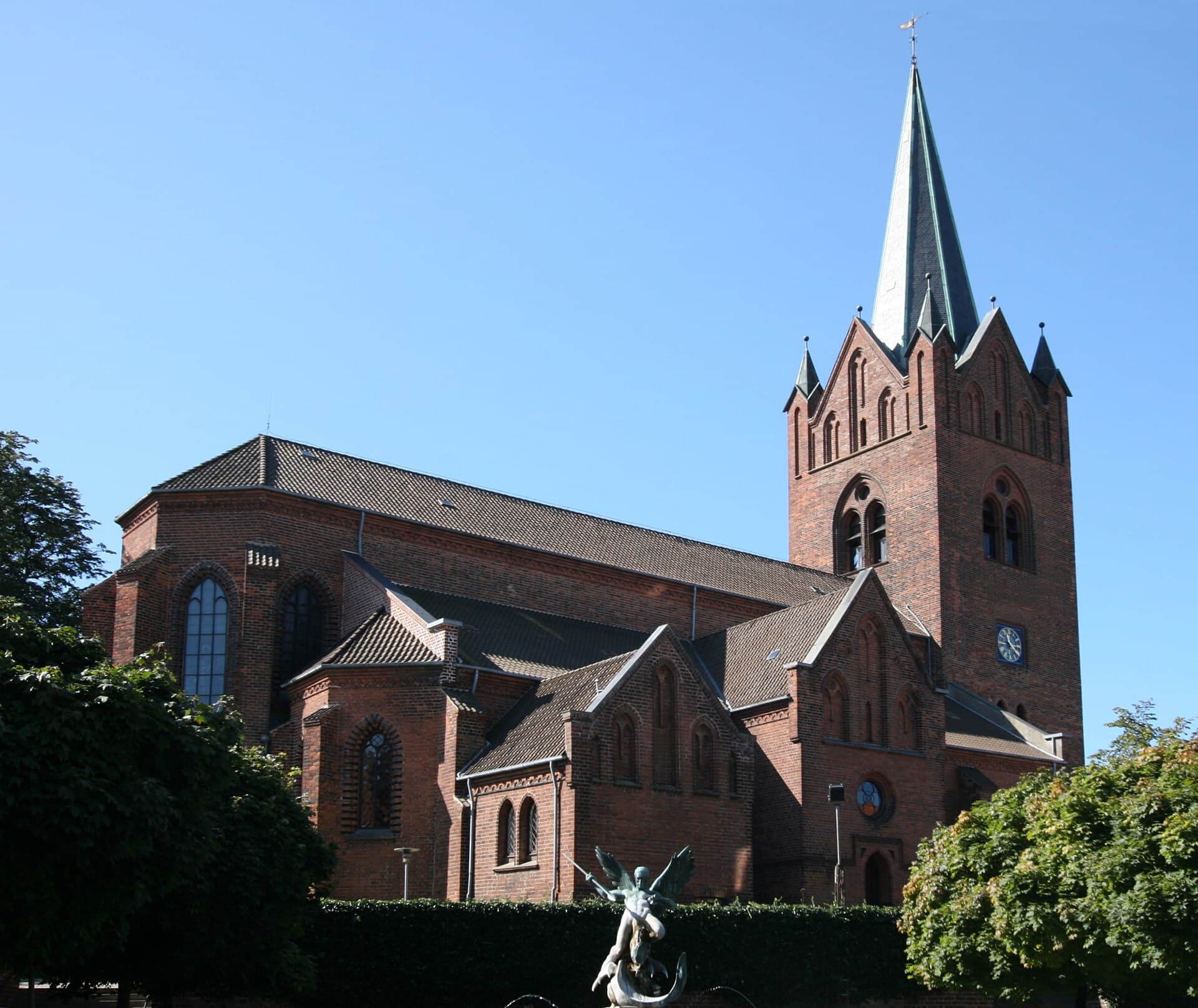 Ib Rasmussen / Public domain, via Wikimedia Commons
“Where the echoes of Vikings meet the enduring spirit of Denmark on Zealand's western shores.”
Not the postcards. The stories even locals don't know — whispered in your ear, right where they happened.
This quiet town square once bore witness to a pivotal moment in Danish history, a coronation that charted the course of a kingdom.
Beyond its guiding beam, this coastal sentinel guarded a surprising secret about how ferries once navigated the densest fogs.
Step inside this museum and you will find more than mere exhibits; you will uncover a street that once welcomed a renowned storyteller.
Discover every secret of Slagelse
Every address, every reveal in full — in your ear, right where it happened.
You pick your stops. You walk. The voice reveals what the others miss.
No tours available yet. Check back soon — we're preparing them.
Slagelse, one of Denmark's most ancient towns, rests on the western expanse of Zealand, approximately 100 kilometers southwest of Copenhagen. Its origins stretch back to the Viking Age, with tangible evidence of settlement and strategic significance from that distant era. Today, Slagelse gracefully intertwines its profound historical roots with a contemporary atmosphere, offering a singular experience that bridges the past and the present.
The city serves as a central point for exploring the surrounding region of Zealand, an island characterized by undulating hills, a varied coastline, and numerous historical locations. Visitors can delve into historical landmarks, museums, and natural landscapes, including ancient forests and coastal stretches, providing ample opportunities for outdoor pursuits and cultural immersion. Slagelse also functions as a vital transport hub, efficiently connected by train and bus services to Copenhagen and other significant Danish cities.
While occasionally overlooked by those traversing the Great Belt Bridge, Slagelse holds a diverse array of attractions for those captivated by Viking history, military heritage, and Danish culture. From ancient fortresses to serene forest lakes, the city and its environs provide a peaceful setting for contemplation and exploration.
## From Viking Stronghold to Market Town Slagelse's long history extends to the Viking Age, establishing it as one of Denmark's oldest towns. Around 980 AD, during the reign of King Harald Bluetooth, the imposing Trelleborg Fortress, a Viking ring fortress, was constructed near the present-day city. This archaeological site illuminates the strategic military planning and daily rhythms of Viking life, with its remnants still visible today.
During the 1000s, a church was erected in Slagelse, and coins were minted within the town, signaling its increasing importance. In the 1100s, Valdemar I founded Antvorskov Monastery, the first Knights Hospitaller monastery in Denmark, in a concerted effort to secure local control and favor. Slagelse was granted market town status by Eric V in 1288, a designation that brought privileges but also initiated competition with neighboring market towns like Korsør and Skælskør.
## Medieval Significance and Periods of Decline Throughout the Middle Ages, Slagelse's strategic position on the main thoroughfare between Roskilde and Funen contributed to its growth and importance. However, the town endured periods of decline due to various conflicts and destructive fires that consumed many of its principal structures. The Reformation led to the waning influence of Antvorskov Monastery, which was eventually claimed by the crown in 1536 and repurposed as a castle.
## Recovery and Modern Development In the 1780s, a new road linking Copenhagen to Korsør was routed through Slagelse, further integrating it into regional transport networks. The arrival of rail lines invigorated the town's economy, leading to the establishment of canning factories, distilleries, and breweries. Today, Slagelse stands as a major city in West Zealand, serving as a crucial point along the E20 traffic artery, which connects Copenhagen with the Great Belt Bridge to Funen and the broader continent. In 2007, the former Slagelse municipality merged with Hashøj, Korsør, and Skælskør municipalities to form an expanded Slagelse municipality within the new Region Zealand.
Begin your journey at the Trelleborg Viking Fortress, a UNESCO World Heritage site and one of Denmark's most significant Viking archaeological remains. Here, you can wander among the ruins of the millennia-old ring castle and glimpse Viking life through a replica village and battle reenactments. For a deeper immersion into local history, visit the Slagelse Museum, which presents recreations of the town from various historical periods, including a street from Hans Christian Andersen's time in the city.
Architectural landmarks include the 12th-century St. Peter's Church, which harmonizes Romanesque and Gothic designs, and the redbrick Gothic St. Michael's Church from the 1300s, a commanding presence in the town center. You can also explore the evocative ruins of Antvorskov Monastery, a monastic complex established in 1164 by Valdemar I.
For outdoor pursuits, Slagelse Lystskov offers ancient beech trees, serene forest lakes like Studentersøen, and a network of paths for walking and cycling. South of Skælskør, the peninsula of Glænø reveals a varied landscape of rolling farmland, coastal bluffs, and quiet beaches, perfect for a contemplative stroll. Families might find joy at Gerlev Play Park, an interactive space featuring traditional games and activities.
The most agreeable time to visit Slagelse for warm-weather activities extends from late June to late August, when average daily high temperatures exceed 17°C (63°F). July typically stands as the warmest month, with average highs around 22°C (72°F). These months offer pleasant conditions for sightseeing and outdoor exploration, with June providing the most sunshine. Spring (April-June) and Fall (September-November) also present mild weather and fewer crowds, ideal for cultural sites and scenic landscapes. Winters are tranquil and cold, with temperatures descending to 5°C (41°F) in February, yet can offer a peaceful time for museum visits.
Slagelse is situated on the island of Zealand, approximately 100 kilometers southwest of Copenhagen. The most straightforward way to reach Slagelse is by train from Copenhagen Central Station, with frequent direct trains completing the journey in about an hour. If traveling by car, take the E20 motorway west from Copenhagen. The Great Belt Bridge provides essential road and rail connections to Funen island.
Within Slagelse, navigating the area is convenient, as the city functions as a significant transport hub. Local bus services are readily available, with a single ticket costing approximately DKK 24. Accommodation options span from cozy guesthouses to contemporary hotels, suiting various budgets. For dining, you will discover numerous cafes and restaurants offering local Danish cuisine. A casual meal might range from DKK 120-250, while a mid-range experience could be DKK 300-500 per person.