Silves Castle
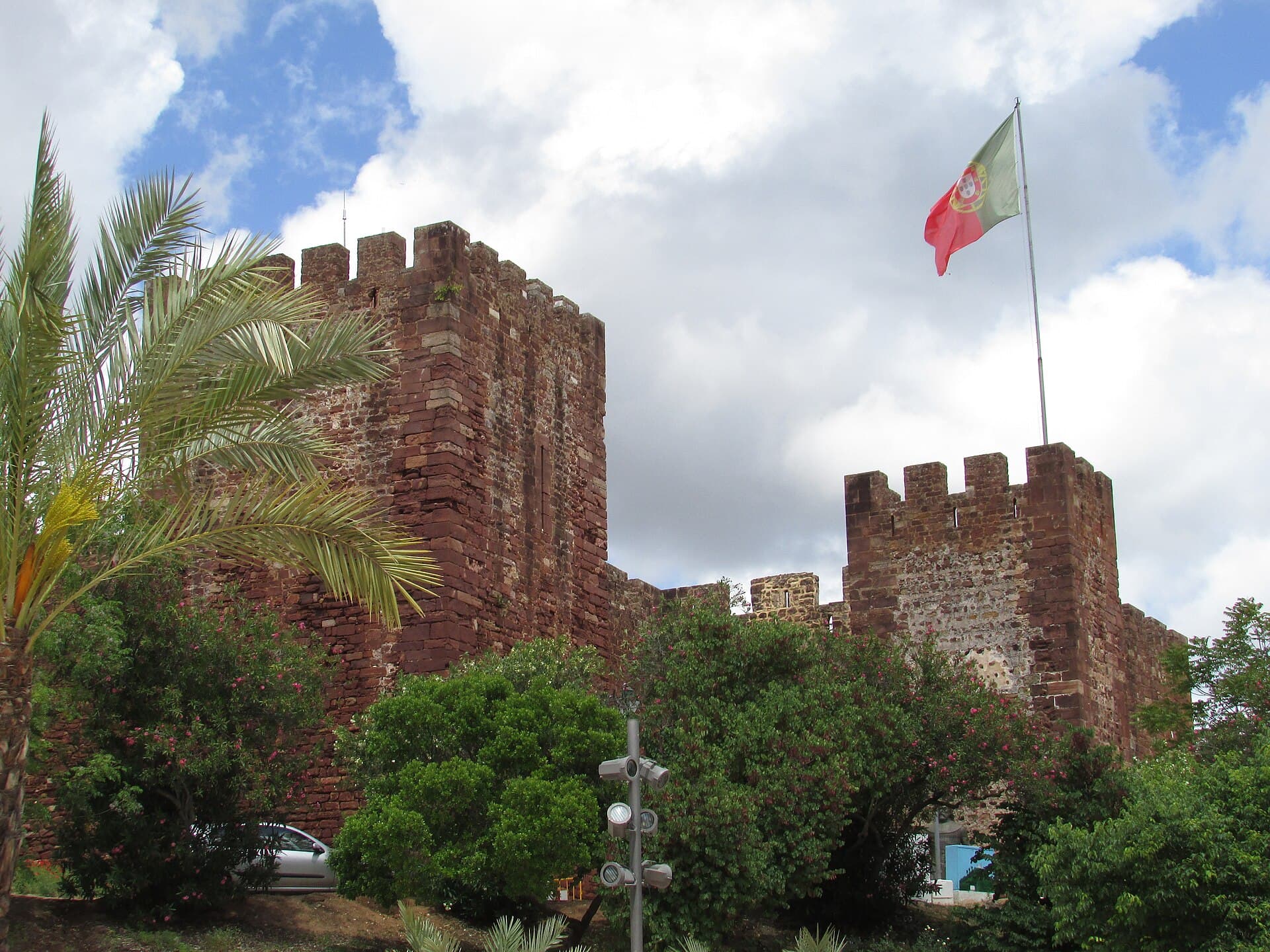
The imposing red walls of Silves Castle hold a secret about its true origins, predating its most famous builders.
Full story unlocks in the tour
 Kolforn (Kolforn) I'd appreciate if you could mail me (Kolforn@gmail.com) if you want to use this picture out of the Wikimedia project scope. This file is licensed under the Creative Commons Attribution-Share Alike 4.0 International license. You are free: to share – to copy, distribute and transmit the work to remix – to adapt the work Under the following conditions: attribution – You must give appropriate credit, provide a link to the license, and indicate if changes were made. You may do so in any reasonable manner, but not in any way that suggests the licensor endorses you or your use. share alike – If you remix, transform, or build upon the material, you must distribute your contributions under the same or compatible license as the original.https://creativecommons.org/licenses/by-sa/4.0CC BY-SA 4.0 Creative Commons Attribution-Share Alike 4.0 truetrue / CC BY-SA 4.0, via Wikimedia Commons
“Where Moorish echoes meet the scent of orange blossoms.”
Not the postcards. The stories even locals don't know — whispered in your ear, right where they happened.
The imposing red walls of Silves Castle hold a secret about its true origins, predating its most famous builders.
The solemn Gothic interior of Silves Cathedral conceals a surprising connection to the battles that shaped the Algarve.
The sweet, juicy oranges of Silves are more than just a local delicacy; their very name in some languages reveals a fascinating historical journey.
Discover every secret of Silves
Every address, every reveal in full — in your ear, right where it happened.
You pick your stops. You walk. The voice reveals what the others miss.
No tours available yet. Check back soon — we're preparing them.
Silves, the ancient capital of the Algarve, offers a journey back in time, far removed from the bustling coastal resorts. This inland town, crowned by its striking red-sandstone castle, feels authentic and unhurried. Its labyrinthine alleys, whitewashed houses, and intricate azulejos (tiles) evoke a complex past, particularly its flourishing Moorish period.
Long before the Algarve became synonymous with sun-drenched beaches, Silves, then known as Xelb, was a significant economic and cultural hub, even rivaling cities like Lisbon, Seville, and Cordoba. Today, with a population of around 11,000, Silves invites visitors to explore its medieval fortifications, stroll along its ancient footpaths, and immerse themselves in a more traditional Portuguese way of life.
## From Iron Age Settlement to Moorish Metropolis Silves' history stretches back thousands of years, with archaeological finds indicating human presence during the Paleolithic and Neolithic periods. Phoenicians and Romans also settled in the area, with the Romans likely constructing the first version of the bridge that still spans the Arade River.
However, it was under Moorish rule, beginning around 716 CE, that Silves truly entered its golden age. Known as Xelb, it became a wealthy and sophisticated city, serving as the capital of the Gharb Al-Andalus, the southwestern region of the Iberian Peninsula. With a population that grew to 30,000, it was a center for scholars, traders, and poets, even earning the moniker "Baghdad of the West" at one point. The Arade River, once navigable, connected Silves to the Atlantic Ocean, making it a vital port for trade in goods like figs, oranges, cork, and timber.
## The Reconquista and Decline The 12th and 13th centuries saw Silves become a focal point of intense battles between the Moors and the newly established Christian Kingdom of Portugal. King Sancho I first conquered Silves in 1189 with the help of Crusaders, but the city was retaken by Moorish forces just two years later. The final Christian conquest occurred in 1249 under King Afonso III, marking a turning point in the Reconquista. This victory, however, inadvertently led to Silves' decline, as its economic ties with the Arab world were severed and trade routes to North Africa were cut.
## Surviving Earthquakes and Embracing Agriculture In 1755, a massive earthquake devastated much of Portugal, including Silves, destroying many buildings, including parts of the castle and cathedral. The earthquake also caused landslides that altered the flow of the Arade River, preventing it from remaining a navigable port. Since then, Silves has evolved into a quieter agricultural town, renowned for its fertile orange groves and a significant cork industry. Despite the changes, the town has preserved its authentic character, offering a glimpse into its layered past.
Dominating the skyline is the Castelo de Silves, a striking red-sandstone fortress considered one of the best-preserved Moorish castles in Portugal. Explore its ramparts, climb its towers, and take in broad views of the town, the Arade River, and the surrounding orange groves. Inside, you can find the remains of an 11th-century Moorish palace and two ancient cisterns, including the Moura cistern, which supplied the city with water until the early 1990s.
Just downhill from the castle stands the Silves Cathedral (Sé de Silves), a significant Gothic structure built on the site of a former mosque. Its austere yet atmospheric interior features Gothic ogival vaults and Baroque side altars, and it houses the tomb of King João II.
For a deeper dive into the town's past, visit the Silves Municipal Archaeological Museum (Museu Municipal de Arqueologia). It is built around a 12th-century Almohad cistern and showcases artifacts from the Paleolithic to the Islamic period, with a strong focus on Moorish daily life.
Stroll through the Old Town Streets, a maze of narrow, winding lanes with whitewashed houses and azulejo details. The Ponte Romana, a 15th-century bridge over the Arade River, offers a pleasant spot for a walk and a glimpse into the town's historical connection to the river.
Do not miss the Torreão das Portas da Cidade, the only surviving city gate, a sandstone tower that once guarded access to the medina.
Beyond the immediate town center, consider a visit to the Cruz de Portugal, a 15th-century carved limestone cross, an excellent example of Manueline sculpture.
The most ideal times to visit Silves are during spring (March–May) and fall (September–October). The weather is comfortable for walking and exploring, and the town is less crowded than in peak summer. While visiting in summer (June–September) is doable, it can be hot, especially midday, so plan castle visits for the morning. August brings the lively Silves Medieval Fair, transforming the town with costumed performers, markets, and shows, though it gets very busy, so book accommodation well in advance. For cooler weather and a more local rhythm, the off-season offers comfortable temperatures and fewer crowds.
Silves is a compact and walkable town, easily explored on foot. It can be visited as a day trip from coastal cities like Lagos, Albufeira, or Portimão, with a 40-minute train ride from Lagos or a 30-minute ride from Albufeira station. The train station is about 1.5 km from the town center, a 30-minute walk. Driving is also an option, with good roads and ample parking available south of the historic center along the river. Public transportation, while available, can be limited.
Allow at least half a day to explore the main sights, including the castle and cathedral, with an hour for the castle and time for lunch and café stops. Many cafés and restaurants cater to locals, offering an authentic Portuguese experience. Silves is also known for its oranges, and you can find local produce at the Municipal Market.