The Mirror Wall
This ancient wall wasn't just for looking at art.
Full story unlocks in the tour
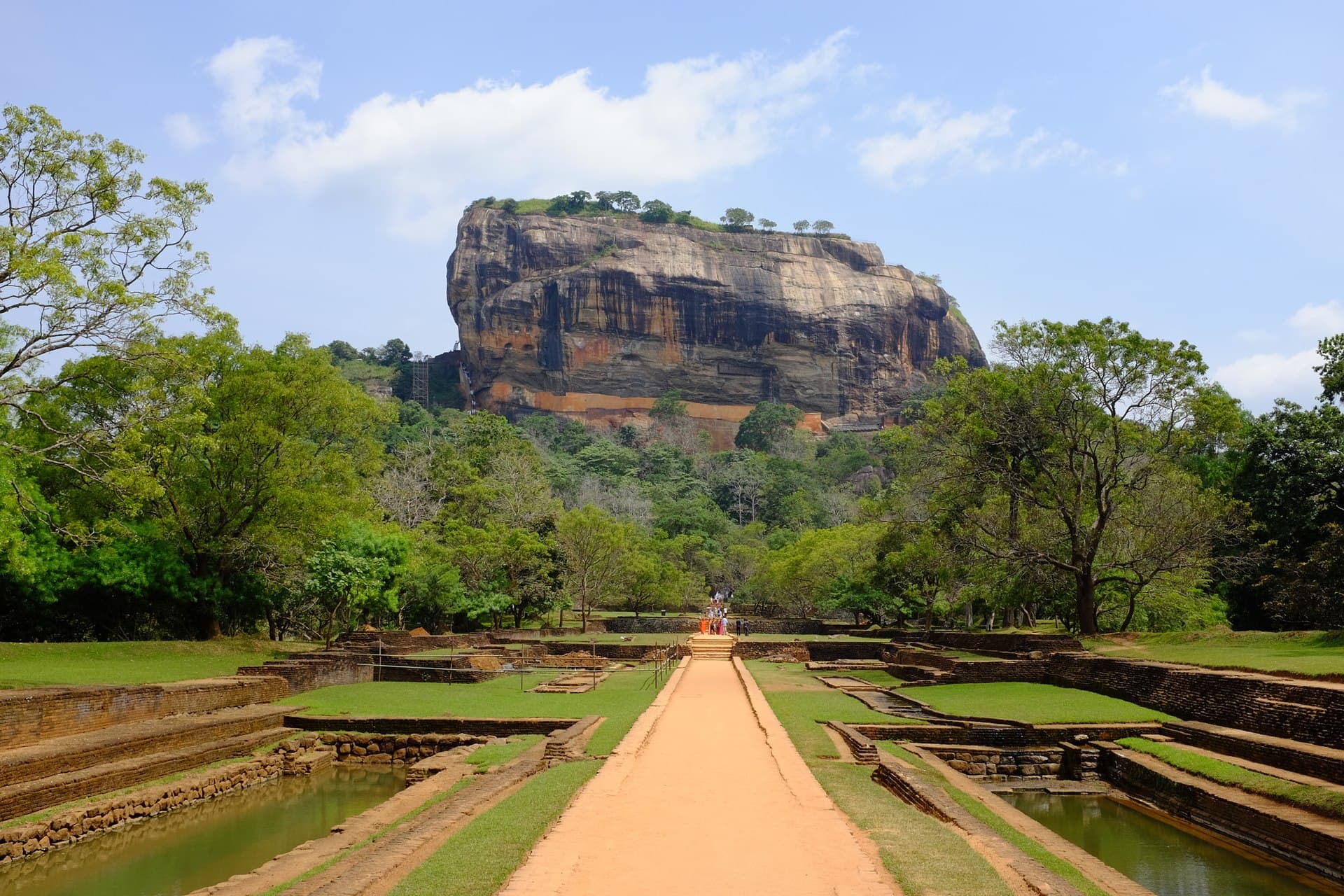 Wrobell / CC BY-SA 3.0, via Wikimedia Commons
“Ascend to a sky palace, where history's drama unfolds on a colossal rock.”
Not the postcards. The stories even locals don't know — whispered in your ear, right where they happened.
This ancient wall wasn't just for looking at art.
The sophisticated hydraulic system here is a marvel of ancient engineering.
The iconic lion paws are just a fraction of what once stood here.
Discover every secret of Sigiriya
Every address, every reveal in full — in your ear, right where it happened.
You pick your stops. You walk. The voice reveals what the others miss.
No tours available yet. Check back soon — we're preparing them.
Sigiriya, also known as Lion Rock, is an ancient rock fortress and palace complex rising dramatically from the plains of central Sri Lanka. This UNESCO World Heritage site is a testament to ancient Sri Lankan ingenuity, combining natural grandeur with remarkable architectural and urban planning achievements. The colossal granite column, approximately 180 meters (590 feet) high, is a prominent landmark in the Matale District, near Dambulla.
More than just a rock, Sigiriya represents a complete ancient city, showcasing sophisticated hydraulic engineering and elaborate landscaping that continues to astonish visitors today. Its compelling history, intricate artistry, and panoramic views make it a significant cultural and archaeological destination, drawing thousands of travelers annually to explore its mysteries and walk through the remnants of a forgotten kingdom.
Evidence suggests the area around Sigiriya was inhabited as early as the Mesolithic Period, around 3000 BCE, with rock shelters and caves occupied by Buddhist monks from the 1st or 2nd century BCE. The transformation of Sigiriya into a royal capital is a tale of ambition and intrigue. According to the ancient Sri Lankan chronicle, the Cūḷavaṃsa, the site was chosen by King Kashyapa I (reigned 477–495 CE) for his new capital after he seized the throne from his father, King Dhatusena, through patricide.
Fearing retribution from his half-brother Moggallana, the rightful heir, Kashyapa sought an unassailable stronghold. He transformed the monolithic rock into a fortified palace, complete with defensive structures, elaborate palaces, and extensive gardens. The name "Sigiriya" itself, derived from "Sinha-giri," means "Lion Rock," a reference to the enormous lion statue that once guarded the entrance to the palace complex. The ruins of Kashyapa's grand city included gardens, monuments, and his palace atop the rock, featuring cisterns cut into the stone.
Kashyapa ruled from his rock fortress for 18 years. In 495 CE, Moggallana returned from exile with an army, defeated Kashyapa, who then committed suicide. After Kashyapa's death, Sigiriya reverted to its earlier purpose, serving as a Buddhist monastery until the 14th century, when it was mysteriously abandoned. The site was later rediscovered by British archaeologists in the 19th century and designated a UNESCO World Heritage site in 1982.
The journey through Sigiriya offers a layered experience, beginning with the meticulously planned Royal Gardens at the base. These ancient landscaped gardens, considered among the oldest in the world, feature symmetrical water gardens with working hydraulic systems, as well as boulder and terraced gardens. The Sigiriya Museum, included in your entrance ticket, provides valuable historical context and displays artifacts found on the site.
As you ascend the rock, you will encounter the famous Mirror Wall, once polished to reflect the king, now etched with centuries of ancient verses. Above this, sheltered in a cliff face, are the renowned Sigiriya frescoes, paintings of female figures, often referred to as the "Sigiriya Maidens" or "Cloud Damsels." These are among the few surviving examples of ancient Sinhalese secular art. The most iconic viewpoint on the climb is the Lion's Paws Terrace, where massive carved lion paws guard the final staircase to the summit. From the top, the ruins of King Kashyapa's palace are visible, offering 360-degree panoramic views of the surrounding misty forests, lakes, and villages. For a different perspective, consider climbing Pidurangala Rock, a nearby hill that offers equally spectacular views, including a perfect vantage point of Sigiriya Rock itself, especially at sunrise or sunset.
The dry season, from December to April, is generally considered the best time to visit Sigiriya for optimal visibility and weather conditions. However, be prepared for hotter temperatures and larger crowds during these months, as it is peak tourist season. March is often cited as ideal for visibility. Alternatively, July to September also offers good conditions. To avoid the midday heat and crowds, aim for an early morning ascent (around 7:00 AM) or a late afternoon climb (after 3:30 PM) to catch the sunset. The site is open daily from 5:30 AM to 6:30 PM, with the ticket office closing at 5:00 PM.
Entry to Sigiriya includes access to the museum, the rock fortress, and the water gardens. The current entrance fee for foreigners is around USD $36. The climb to the summit involves approximately 1,200 steps and is considered moderately challenging, but most people with average fitness can manage it. Comfortable, sturdy walking shoes are essential, and flip-flops are not recommended due to the uneven terrain. Carry adequate drinking water, as there are no shops between the entrance and the summit, and the climb can be hot and humid. Toilets are available at the base and halfway up. While there is no strict dress code for Sigiriya itself, if you plan to visit nearby religious sites like Pidurangala Rock or Dambulla Cave Temple, dress modestly by covering your shoulders and knees. Sigiriya is well-connected by road, with buses running from Dambulla, and it is also accessible by train to nearby stations like Habarana, followed by a tuk-tuk or taxi.