Cathedral of St. James
Observe the exterior of Šibenik's UNESCO-recognized cathedral, and you will encounter a remarkable assembly of faces gazing back.
Full story unlocks in the tour
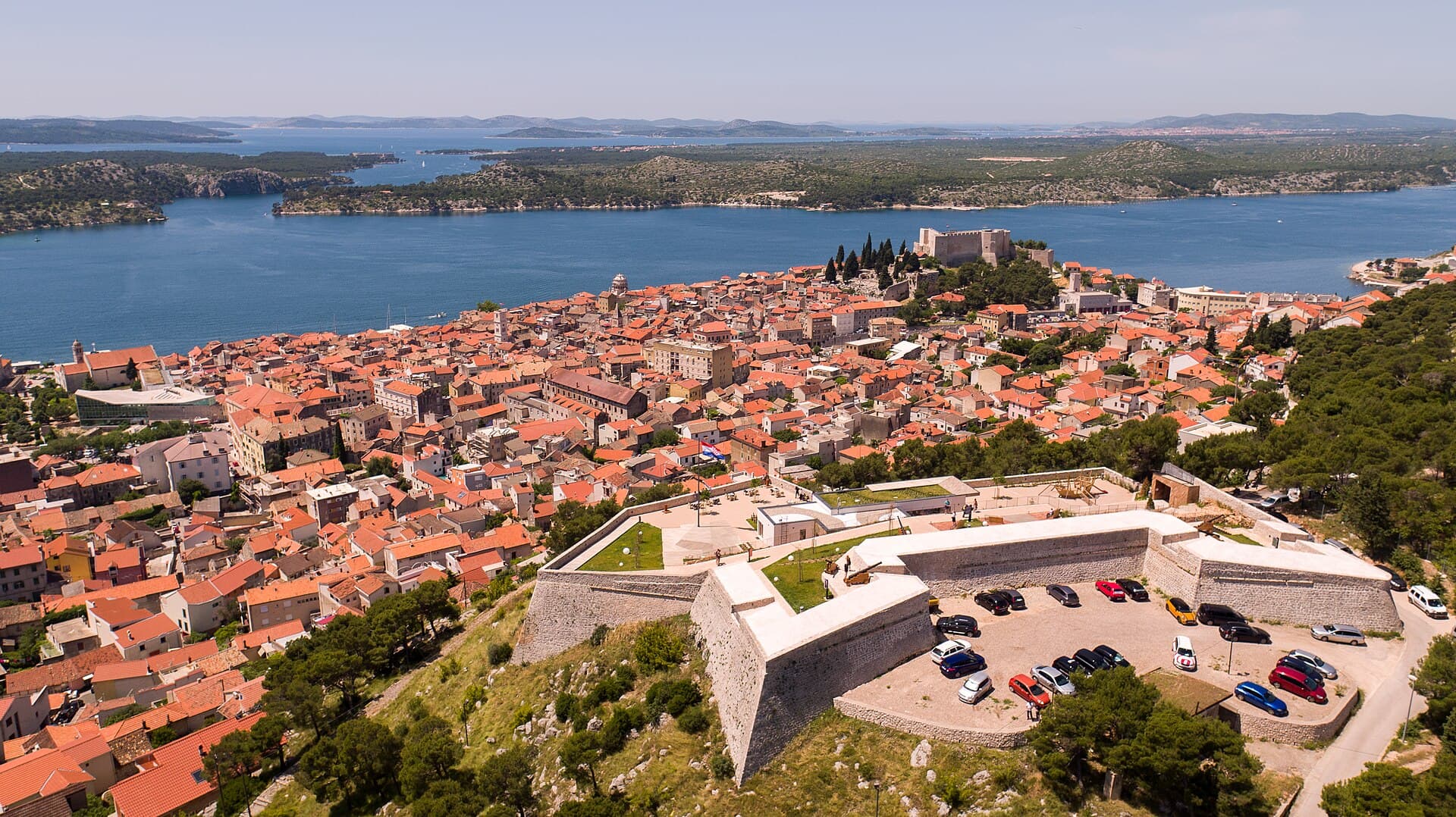 Lady Ivy / CC BY-SA 4.0, via Wikimedia Commons
“Šibenik: Where ancient stones recount their sagas and the Adriatic murmurs its enduring lore.”
Not the postcards. The stories even locals don't know — whispered in your ear, right where they happened.
Observe the exterior of Šibenik's UNESCO-recognized cathedral, and you will encounter a remarkable assembly of faces gazing back.
For nearly a century, a serene green space at the core of Šibenik remained undiscovered.
Šibenik holds a pioneering, yet frequently overlooked, distinction in the annals of electrical engineering.
Discover every secret of Šibenik
Every address, every reveal in full — in your ear, right where it happened.
You pick your stops. You walk. The voice reveals what the others miss.
No tours available yet. Check back soon — we're preparing them.
Šibenik, a city along Croatia's central Adriatic coast, offers an experience distinct from its more frequently visited neighbors. Unlike many Dalmatian towns with Roman or Venetian beginnings, Šibenik was established by Croats, first chronicled on Christmas Day in 1066 in a document by King Petar Krešimir IV, earning it the designation 'Krešimir's Town'. Its old town climbs from the sea in a labyrinth of stone pathways, historic churches, and elevated points that recount centuries of life by the water.
The city is notably marked by its two UNESCO World Heritage Sites: the Cathedral of St. James and St. Nicholas' Fortress, each a testament to its profound cultural and historical importance. Šibenik's strategic placement at the mouth of the Krka River, within a sheltered bay, has shaped its growth and defenses throughout history. This fusion of historical depth, architectural wonders, and a less crowded atmosphere makes Šibenik a rewarding destination for those seeking an authentic Croatian journey.
## From Royal Seat to Venetian Stronghold Šibenik's story commences over a thousand years ago, establishing it as the oldest native Croatian town on the Adriatic coast. It was first documented on December 25, 1066, in a charter from King Petar Krešimir IV, who, for a period, made Šibenik his royal seat. The city initially developed as a fortified settlement around St. Michael's Fortress, strategically positioned on a steep hill 70 meters above sea level, overlooking the Šibenik Bay and the mouth of the Krka River.
In 1169, Šibenik was granted city status. The city's governance transitioned through various powers, including the Byzantine Empire and the Kingdom of Hungary, before it came under Venetian dominion in 1412, a period that endured for nearly four centuries. During this era, extensive fortification systems were constructed to defend against Ottoman incursions. The 15th and 16th centuries saw the construction of the Cathedral of St. James, a monumental architectural achievement crafted entirely of stone, without the use of mortar or wooden structural elements.
## Defiance and Decline The mid-17th century brought a devastating plague pandemic, which significantly reduced Šibenik's population and led to a period of contraction. Nevertheless, the city's fortresses played a crucial role in its defense. In 1646, Barone Fortress and St. John's Fortress were erected in a remarkable 58 days by the people of Šibenik to strengthen defenses against an imminent Ottoman assault. These new fortifications, alongside St. Michael's, successfully repelled a major Ottoman attack in 1647, one of the largest invading forces in Dalmatia since Roman times.
## Modern Era and Resilience After the fall of Venice in 1797, Šibenik became part of the Habsburg Monarchy until the conclusion of World War I. It then experienced Italian occupation before becoming part of the Kingdom of Serbs, Croats, and Slovenes (later Yugoslavia). During World War II, Šibenik was again occupied by Italy and subsequently bombed by the Allies, resulting in the destruction of the City Hall, among other damages. The city endured heavy shelling during the Croatian War of Independence in the early 1990s, but its citizens and the Croatian Army successfully defended it, and damaged historic buildings have since been restored. Today, Šibenik has re-emerged as a significant cultural and tourist destination, celebrated for its preserved heritage and natural splendor.
Commence your exploration at the Cathedral of St. James, a UNESCO World Heritage site and a Renaissance architectural marvel, constructed entirely from stone. Its distinctive building method and the detailed frieze of 71 sculpted faces on its exterior are particularly notable.
Ascend to St. Michael's Fortress, the oldest defensive fortress in Šibenik, offering expansive views of the old town, the bay, and the Krka River estuary. The fortress now serves as an open-air stage for concerts and events.
Continue to Barone Fortress, which provides augmented reality experiences that transport you to the 17th-century defense of Šibenik against the Ottomans. Nearby, St. John's Fortress, the largest and highest land fortress, offers sweeping views and an educational campus.
Do not overlook the Medieval Monastery Mediterranean Garden of St. Lawrence, a rare and meticulously restored garden featuring a medieval cross-path layout with medicinal and aromatic plants. It provides a peaceful setting for a coffee or ice cream.
Wander through the narrow, stone-paved passages of the Old Town, where you will discover appealing architecture, small churches, and secluded pathways. The Šibenik Town Hall, with its Venetian-inspired arches and columns, stands prominently in the Square of the Republic of Croatia.
The ideal period to visit Šibenik for general outdoor activities extends from mid-May to early October, with a peak in the second week of September, when the weather is agreeable and rainfall is minimal. For warm-weather pursuits like swimming and beach visits, late June to late August is perfect, with average sea temperatures exceeding 72°F (22°C). June offers a good balance of pleasant weather and fewer crowds before the height of summer. Spring (April and May) and autumn (September and October) are excellent for sightseeing and exploring national parks, providing comfortable temperatures and lighter visitor numbers.
Šibenik is a city easily traversed on foot, particularly its old town with its intricate medieval pathways. Public transportation is available via municipal buses operated by Autotransport Šibenik, connecting the city to nearby areas, with the main bus station conveniently situated near the city center. The train station is also approximately a 10-minute walk from the city center and the ferry port. Taxis are readily available. The local currency is the Euro (€). Croatian is the official language. Šibenik is generally considered very safe for visitors, including solo female travelers, with low crime rates. Standard precautions, such as being mindful of your belongings in crowded areas, are always advisable.