Sfax Medina
The Sfax Medina conceals a cinematic memory, far from its Tunisian shores.
Full story unlocks in the tour
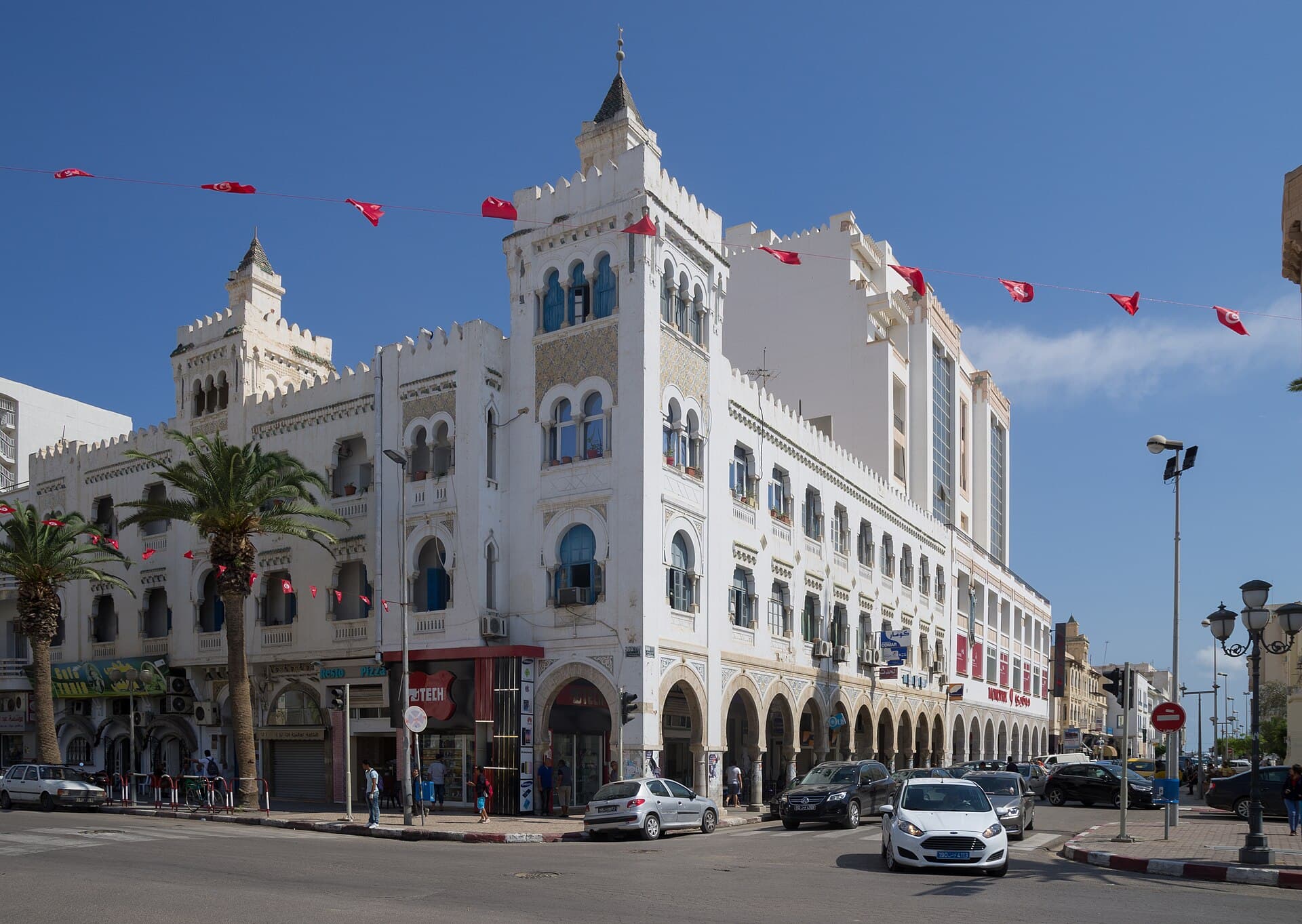 El Golli Mohamed / CC BY-SA 4.0, via Wikimedia Commons
“Sfax: Tunisia's industrious heart, where ancient ramparts meet modern commerce.”
Not the postcards. The stories even locals don't know — whispered in your ear, right where they happened.
The Sfax Medina conceals a cinematic memory, far from its Tunisian shores.
The olive groves surrounding Sfax are not merely expansive; their planting method is a specific adaptation to the arid terrain.
Beyond the daily catch, the Sfax fish market reveals an unexpected, highly sought-after export.
Discover every secret of Sfax
Every address, every reveal in full — in your ear, right where it happened.
You pick your stops. You walk. The voice reveals what the others miss.
No tours available yet. Check back soon — we're preparing them.
Sfax, Tunisia's second-largest city, functions as a bustling port and the nation's economic engine. Situated on the east-central coast, it offers an experience distinct from Tunisia's more frequented tourist destinations. Here, the meticulously maintained Medina, encircled by formidable medieval walls, stands as a testament to centuries of unfolding history and daily existence.
Unlike many polished tourist centers, Sfax offers a genuine and unadorned view into Tunisian culture. It is a city where traditional craftsmanship flourishes in the souks, and the rhythms of commerce and local life unfold without the usual throngs of visitors. From its lively markets to its distinctive culinary traditions centered on seafood and olive oil, Sfax invites the curious traveler to explore a different, more grounded facet of Tunisia.
The story of Sfax extends into antiquity, built upon the remnants of earlier Roman settlements such as Taparura and Thaenae. The city's formal inception is considered to be 849 AD, when the Aghlabid dynasty, then governing modern Tunisia, began constructing powerful fortress walls. These early fortifications, some of which endure today, were notably fashioned from stones and columns salvaged from the ancient Roman city of Taparura. Sfax was strategically envisioned as a naval outpost to safeguard Kairouan, the region's sacred capital, and swiftly developed into a thriving trading port, linking Saharan caravan routes with the Mediterranean.
By the close of the 10th century, Sfax had established itself as an autonomous city-state. Its economic strength was founded upon olive oil production and textiles, with the Great Mosque becoming its spiritual and social core. Nevertheless, its strategic position also rendered it a target for various conquests. In the 12th century, it was seized by King Roger II of Sicily, and in the 16th century, it briefly came under Spanish rule before evolving into a pivotal base for Barbary corsairs within the Ottoman Empire.
The French Protectorate, instituted in 1881, heralded a significant urban transformation. Sfax endured bombardment during the French occupation, and the construction of the modern port commenced in 1895. This period saw the emergence of the "New City" (Ville Nouvelle) with its European-style architecture, creating a striking juxtaposition with the traditional Medina. During World War II, Sfax served as a major base for Axis forces, leading to substantial devastation from Allied air raids before its liberation by British troops in 1943.
Following Tunisia's independence from France in 1956, Sfax rapidly recovered and solidified its standing as the nation's second-largest city and primary economic heart. The discovery of extensive oil fields nearby in 1970 further invigorated its economy, reinforcing its position as an industrial center. Today, Sfax continues to be a vital hub for phosphate, olive and nut processing, fishing, and international trade, contributing significantly to Tunisia's national GDP.
The soul of Sfax is its Medina, among the most authentic and well-preserved in the Mediterranean basin. Enter through monumental portals like Bab Diwan or Bab Jebli, which still serve as bustling entry points where traditional markets spill into the avenues. Inside, the Medina is a maze of narrow, car-free passages filled with souks dedicated to specific crafts, from leatherwork and textiles to jewelry.
The Great Mosque of Sfax, established in 849 AD, stands as a central monument within the Medina. While non-Muslims may not enter the prayer hall, its exterior architecture and courtyard offer a glimpse into its long lineage. For a deeper cultural immersion, explore the Dar Jellouli Museum, a 17th-century palace displaying regional arts and folk traditions, including carved stone friezes and blue ceramic panels. The ancient Kasbah, once a citadel, now functions as a museum dedicated to historical architecture.
Beyond the Medina, the lively fish market, Souk El Hout, is a lively nexus where freshly caught seafood, including tuna, shrimp, and octopus, fills the stalls. For a different rhythm, the Dakar Garden offers a verdant expanse with shaded pathways and palm trees. Sfax also serves as a convenient starting point for excursions to nearby attractions, such as the impressive Roman amphitheater of El Jem, approximately an hour away, or the tranquil Kerkennah Islands, reachable by a brief ferry journey.
The most agreeable time to visit Sfax is during the shoulder seasons, from March to early June and from late September to mid-November. In these periods, the weather is pleasant with comfortable temperatures, ideal for exploring the city's historical sites. Summers, from June to September, can be quite warm, with average daily highs reaching 31°C in August. Winters, from December to February, are mild and can bring rain, offering a quieter and more atmospheric experience.
Sfax-Thyna International Airport (SFA) is situated six kilometers southwest of the city, with taxis providing a swift 10-minute journey to the city center. Train connections are available from Sfax to major Tunisian cities such as Tunis, Sousse, and El Jem. Within the city, taxis offer an economical way to navigate, with most downtown trips costing under 2 Tunisian Dinars.
When visiting Sfax, modest attire is advisable, particularly when entering religious sites. Lightweight, breathable clothing is recommended due to the warm climate, and women might consider carrying a scarf for head covering when visiting mosques. The local currency is the Tunisian Dinar (TND), and while ATMs are accessible, carrying some cash is suggested as not all establishments accept credit cards.