The Canal Royal
Sète's celebrated water jousting is more than just a spectacle; it's a centuries-old tradition with a surprising initial purpose.
Full story unlocks in the tour
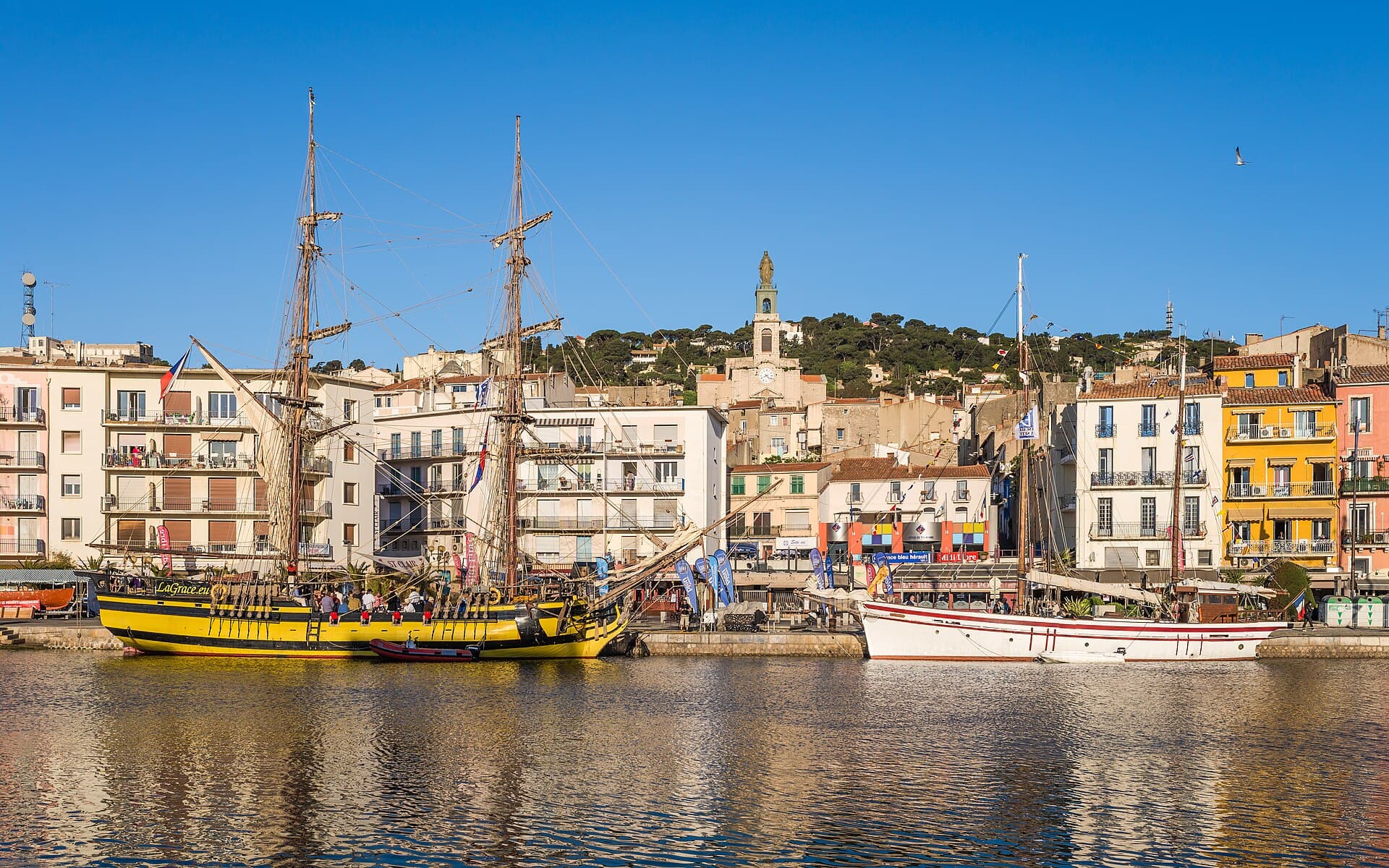 Christian Ferrer / CC BY-SA 3.0, via Wikimedia Commons
“Where canals meet the sea, Sète hums with a salty, artistic soul.”
Not the postcards. The stories even locals don't know — whispered in your ear, right where they happened.
Sète's celebrated water jousting is more than just a spectacle; it's a centuries-old tradition with a surprising initial purpose.
Wander through the lively covered market, and you might discern an unexpected culinary influence that shaped Sète's very identity.
The expansive views from Mont Saint-Clair invite contemplation, but the hill holds a secret regarding Sète's very name.
Discover every secret of Sète
Every address, every reveal in full — in your ear, right where it happened.
You pick your stops. You walk. The voice reveals what the others miss.
No tours available yet. Check back soon — we're preparing them.
Sète, often affectionately termed the 'Venice of Languedoc,' is a captivating port city on France's southern coast, singularly situated between the Mediterranean Sea and the Étang de Thau, a vast saltwater lagoon. Its intricate network of canals, bordered by colorful buildings and traversed by numerous bridges, imbues the city with a distinct character. Unlike many ancient settlements in the Occitanie region, Sète is a relatively young city, established in 1666 by King Louis XIV as a maritime outlet for the Canal du Midi.
This 'singular island,' as it is known by locals, functions as a working fishing port, one of the largest on the French Mediterranean. Its maritime heritage is deeply woven into the cultural fabric of the place. Beyond its active port, Sète offers a thriving artistic community, a rich culinary landscape focused on fresh seafood, and a relaxed, authentic atmosphere that distinguishes it from more overtly tourist-driven destinations. It is a place where the rhythms of daily life are still guided by the sea, offering a genuine glimpse into a Mediterranean way of living.
## The Sun King's Vision and a Port's Birth Sète's recorded history began on July 29, 1666, with the laying of the first stone of the Saint-Louis pier. King Louis XIV and his minister Colbert initiated the project to forge a new commercial gateway to the Mediterranean and a sea exit for the ambitious Canal du Midi, which connected the Atlantic to the Mediterranean. The construction of the port was a considerable endeavor, requiring nearly fifteen years to complete.
## Growth, Trade, and Italian Influence The 19th century witnessed rapid expansion for Sète, with its population tripling between 1820 and 1870. The port flourished, evolving into a major center for the trade of wine, wood, sulfur, cereals, and iron, and was even recognized as the world's leading cooperage port. This era also brought a significant cultural shift with the arrival of Italian immigrants, particularly fishermen from the Amalfi coast, who settled in Sète in the 1850s. Their influence remains strongly felt in the city's cuisine and cultural identity.
## Wartime Challenges and Cultural Rebirth Sète encountered difficulties during the 20th century, including attempts by the British to burn the town between 1807 and 1809, and occupation by German troops during World War II. The Saint-Louis Lighthouse, originally from around 1680, was demolished by German mines in 1944 but was rebuilt in 1948. Following the war, the port underwent significant modernization and renewal, allowing Sète to maintain its standing as a leading fishing port. In 1928, the town's name officially changed from 'Cette' to 'Sète'.
## A Legacy of Arts and Traditions Beyond its commercial and maritime importance, Sète has fostered a strong artistic and cultural identity. It is the birthplace of celebrated poet Paul Valéry and chansonnier Georges Brassens, both of whom are honored with museums in the city. The Théâtre de la Mer, an open-air amphitheater built within a former 18th-century fort, hosts international artists with the Mediterranean as a backdrop. The city's unique tradition of water jousting, first documented in 1666, continues to be a passionate element of Languedoc culture, drawing crowds to its annual Fête de Saint-Louis.
Begin your exploration with a walk along the Canal Royal, the main artery connecting the sea to the Étang de Thau, where colorful fishing boats line the quays. Consider a boat tour to gain a different perspective on the city's waterways and architecture.
Ascend Mont Saint-Clair, which rises 176 meters above sea level, for expansive views of Sète, the Mediterranean, and the Étang de Thau lagoon. Near the summit, visit the Cimetière Marin (Maritime Cemetery), the final resting place of notable figures like Paul Valéry.
Immerse yourself in the local culinary scene at Les Halles de Sète, the lively covered market. Here, you can sample fresh seafood, local produce, and Sète's signature 'tielle' (octopus pie) and 'zézettes' (biscuits made with white wine). For a deeper dive into the city's artistic soul, visit the Musée Paul Valéry and the Espace Georges Brassens, dedicated to Sète's famous sons. If your visit coincides with late August, witnessing the spirited water jousting tournaments during the Fête de Saint-Louis is a quintessential Sète experience.
Sète enjoys a warm, dry Mediterranean climate, making it a pleasant destination throughout much of the year. The ideal time to visit for warm-weather activities, including beaches and festivals, is from late June to late August, when average daily temperatures are highest. July is typically the warmest month, with average highs around 28°C (83°F) and minimal rainfall. The Fête de Saint-Louis, featuring the celebrated water jousting, usually occurs in late August, transforming the city into a lively celebration. Spring (March-May) and autumn (September-October) offer pleasant, milder temperatures, though October can be the wettest month.
Sète is well-connected by train, with services to major cities like Toulouse, Marseille, and Paris. The train station is a short walk from the city center. For navigating Sète, the city center is easily explored on foot. A bus network operates throughout the Thau Archipelago, and boat shuttles offer a distinctive way to traverse the canals. Taxis and car rentals are also available, with parking lots distributed across the city.
Sète is generally considered safe for travelers, including solo female visitors. However, as in any crowded area, it is advisable to be mindful of your belongings in busy spots like markets and train stations to prevent petty theft. At night, remain in well-lit and active areas. The emergency number for police, medical help, or fire services in France is 112.