Pike Place Market Gum Wall
This colorful, sticky landmark holds a secret that's more about protest than public art.
Full story unlocks in the tour
 Jeffery Hayes / CC BY-SA 3.0, via Wikimedia Commons
“Beyond the drizzle, a city of unexpected depths.”
Not the postcards. The stories even locals don't know — whispered in your ear, right where they happened.
This colorful, sticky landmark holds a secret that's more about protest than public art.
Beneath the modern streets of Pioneer Square lies an entire city, preserved in a fascinating, if sometimes eerie, time capsule.
This colossal concrete creature under a bridge isn't just a quirky photo op; it was born from a community's desire to reclaim a neglected space.
Discover every secret of Seattle
Every address, every reveal in full — in your ear, right where it happened.
You pick your stops. You walk. The voice reveals what the others miss.
No tours available yet. Check back soon — we're preparing them.
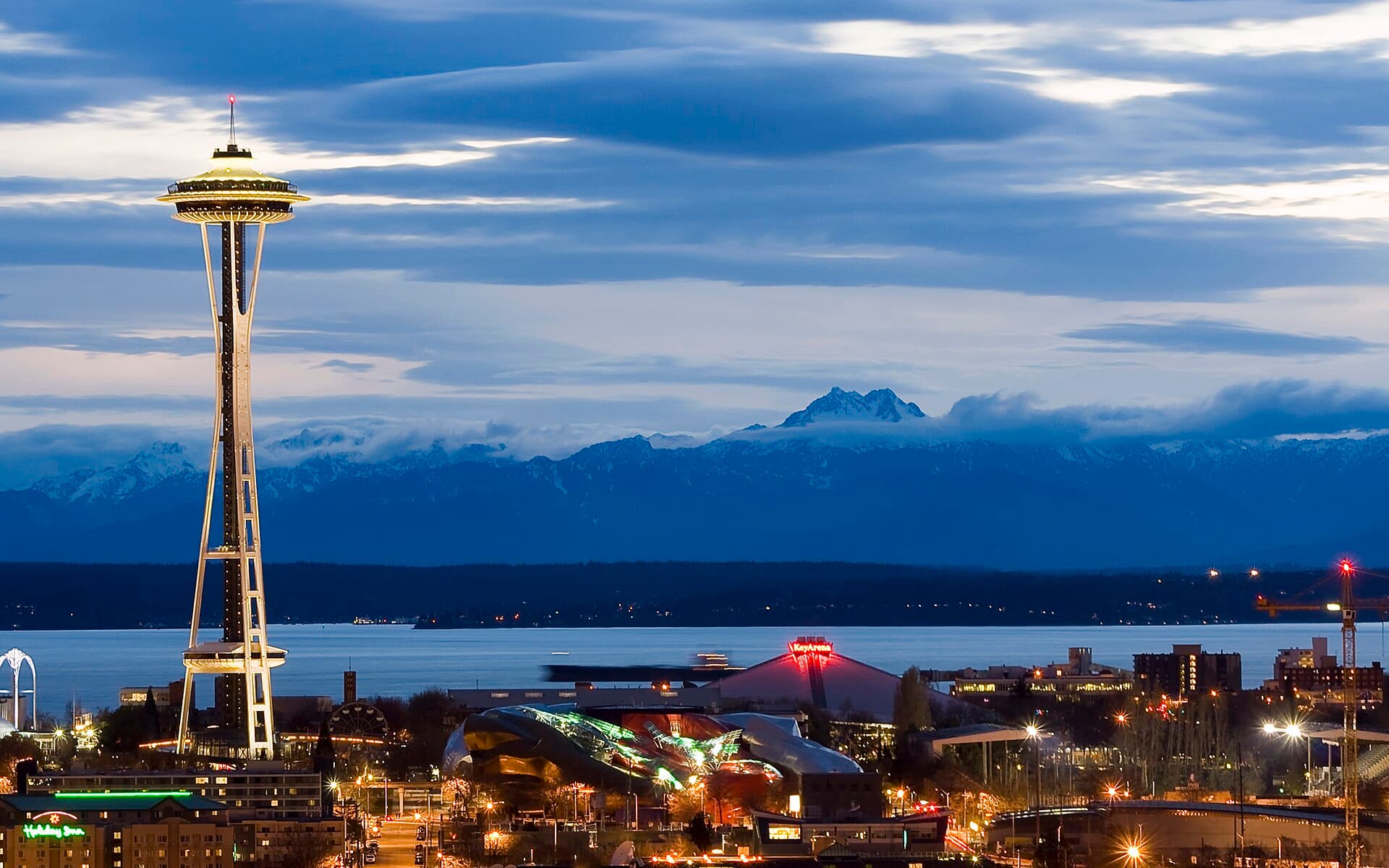
Seattle, often called the Emerald City for its lush, evergreen landscape, is a bustling metropolis cradled between Puget Sound and Lake Washington, with the Olympic and Cascade mountain ranges forming a dramatic backdrop. While its reputation for rain precedes it, the city actually receives less annual rainfall than many major U.S. cities like New York, Houston, or Miami. Instead, Seattle experiences more frequent, lighter drizzles, contributing to its verdant surroundings.
This Pacific Northwest hub is a city of layers, both literally and figuratively. From its pioneering spirit that led to the Klondike Gold Rush boom to its current status as a tech industry powerhouse, Seattle has continually reinvented itself. Amidst the innovation, a rich array of history, art, and natural beauty remains readily accessible, inviting exploration beyond the well-trodden paths.
Seattle's story begins long before the arrival of European settlers, with the Coast Salish peoples, particularly the Duwamish and Suquamish tribes, inhabiting the region for thousands of years. The city itself is named after Chief Si'ahl (Seattle), a respected Duwamish-Suquamish leader who fostered peaceful relations with early settlers. The first white settlers arrived in 1851, initially naming their settlement "New York-Alki," with "Alki" being a Chinook word meaning "by-and-by." They soon moved to the protected deep-water harbor of present-day Pioneer Square, where the village was officially named Seattle.
The city's early economy was driven by the timber industry, with Henry Yesler's sawmill, built in 1853, playing a pivotal role. Logs were skidded down a route that became known as "Skid Road" (now Yesler Way), a term that eventually evolved into "Skid Row," synonymous with impoverished urban areas. In 1889, a devastating fire destroyed much of the city. Rather than simply rebuilding, city engineers seized the opportunity for urban renewal, raising downtown streets several feet to combat flooding, inadvertently creating the Seattle Underground.
The arrival of the steamer Portland in 1897, laden with a "ton of gold" from the Klondike, transformed Seattle into the primary commercial and shipping center for the gold rush, bringing a significant economic boom. The early 20th century saw Seattle continue to grow, with the completion of the Smith Tower in 1914, which stood as the tallest building west of the Mississippi for over four decades. World War I further boosted the city's shipbuilding industry, and later, the Boeing Company, founded in 1910, became a major force, particularly during World War II. More recently, Seattle has experienced another boom driven by tech giants like Microsoft and Amazon, solidifying its place as a global innovation hub.
Beyond the iconic Space Needle, Seattle offers a diverse array of sights. Explore Pike Place Market, a bustling public market established in 1907, known for its flying fish and diverse vendors. Wander through the historic Pioneer Square neighborhood, where you can take an Underground Tour to discover the city's subterranean past. For expansive views without the Space Needle crowds, consider the Sky View Observatory at Columbia Tower, Seattle's tallest building, or the historic Smith Tower with its vintage charm.
Embrace Seattle's green spaces at Gas Works Park, a former gasification plant transformed into a unique park with skyline views across Lake Union. For a classic Seattle experience, take a ferry ride to Bainbridge Island for vistas of the city skyline and the Olympic Mountains. The Ballard Locks are another fascinating stop, connecting Puget Sound with Lake Union and Lake Washington, and featuring a fish ladder where you can observe migrating salmon. Do not overlook the quirky Fremont neighborhood, home to the colossal Fremont Troll.
The best time to visit Seattle for warm-weather activities is from early July to late August. During this period, temperatures are mild, with average highs around 77°F (25°C) and lows around 58°F (14°C). August is typically the clearest and sunniest month, with the least amount of precipitation. While Seattle is known for its rain, it receives less annual rainfall than many other major U.S. cities, with most precipitation occurring as light drizzle rather than heavy downpours. The cooler, wetter season generally lasts from October to April, with November experiencing the most wet days.
Getting around Seattle is convenient, even without a car. The public transportation system includes Link light rail, buses, streetcars, the Monorail, and ferries, all interconnected by the ORCA card. The Link light rail connects Seattle-Tacoma International Airport (SEA) to downtown, with trains running frequently. For shorter trips within downtown and to Seattle Center, the Monorail is a quick option. Buses are extensive, and the Transit GO Ticket app allows for digital ticket purchases and transfers. Tipping etiquette in Seattle generally follows the U.S. standard of 15-20% for good service in restaurants. Seattle has a combined sales tax rate of approximately 10.1% to 10.55%, which includes state, county, and city rates. However, the City of Seattle itself does not collect sales tax directly. Visitor information centers are available at Pike Place Market and the Seattle Convention Center for maps, brochures, and expert advice.