Before Saskatoon became an official city, a commitment was made to construct a vital connection. Less than a year after its grand opening, this bridge became the setting for Saskatoon's only 'maritime disaster'.
Quintin Soloviev / CC BY 4.0, via Wikimedia CommonsSaskatoon
“Saskatoon: Where the swift-flowing river carves a prairie heart.”
Saskatoon, as no one tells it.
Not the postcards. The stories even locals don't know — whispered in your ear, right where they happened.
One of Saskatoon's most recognizable bridges, linking the University of Saskatchewan with the city center, features a particular design element often overlooked.
Just a brief journey north of the city, this National Historic Site reveals a past far older than any European settlement in North America.
Discover every secret of Saskatoon
Every address, every reveal in full — in your ear, right where it happened.
You pick your stops. You walk. The voice reveals what the others miss.
How long do you have in Saskatoon?
No tours available yet. Check back soon — we're preparing them.
The story of Saskatoon
Saskatoon, Saskatchewan’s largest city, is frequently termed the 'City of Bridges' or the 'Paris of the Prairies' due to its numerous crossings over the South Saskatchewan River. The city gracefully curves around a bend in the river, serving as a cultural and economic anchor for central Saskatchewan. Its name originates from the Cree word misâskwatômina, which refers to the sweet, violet-colored saskatoon berry indigenous to the area.
Encompassed by the expansive fields of the Canadian prairies and situated within the aspen parkland biome, Saskatoon presents a fusion of urban vitality and natural splendor. The city is recognized for its welcoming atmosphere, expanding economy, and a deep sense of community. With a population exceeding 266,000, Saskatoon has experienced considerable growth, establishing itself as one of Canada's rapidly developing cities.
From Temperance Colony to Prairie Hub
The story of Saskatoon commenced in 1882 when the Toronto-based Temperance Colonization Society received land along the South Saskatchewan River. Under the guidance of John Neilson Lake, settlers arrived in 1883 with the intention of creating a 'dry' community, free from the trade of alcohol. The initial settlement, located on the east side of the river, was later renamed Nutana.
Economic expansion accelerated with the arrival of the Barr Colonists in 1903 and, significantly, the extension of the railway. Saskatoon's leaders actively campaigned to bring railway lines to the town, transforming it into a principal railway center in western Canada. By 1907, both the Canadian Pacific Railway and the Grand Trunk Pacific Railway had constructed bridges near the community. The promise of a traffic bridge was a pivotal element in the amalgamation of the communities of Saskatoon, Riversdale, and Nutana in 1906, officially establishing the City of Saskatoon with a population of 4,500.
Throughout the early 20th century, Saskatoon experienced swift growth, evolving into a primary distribution center for the surrounding agricultural district. The city's development continued with the founding of the University of Saskatchewan. While reliant on agriculture, the expansion of the mining industry, particularly potash, in the 1970s and 1980s further diversified its economy. Today, Saskatoon is acknowledged not only for its foundational importance as a railway hub but also as a center for education, technology, and culture.
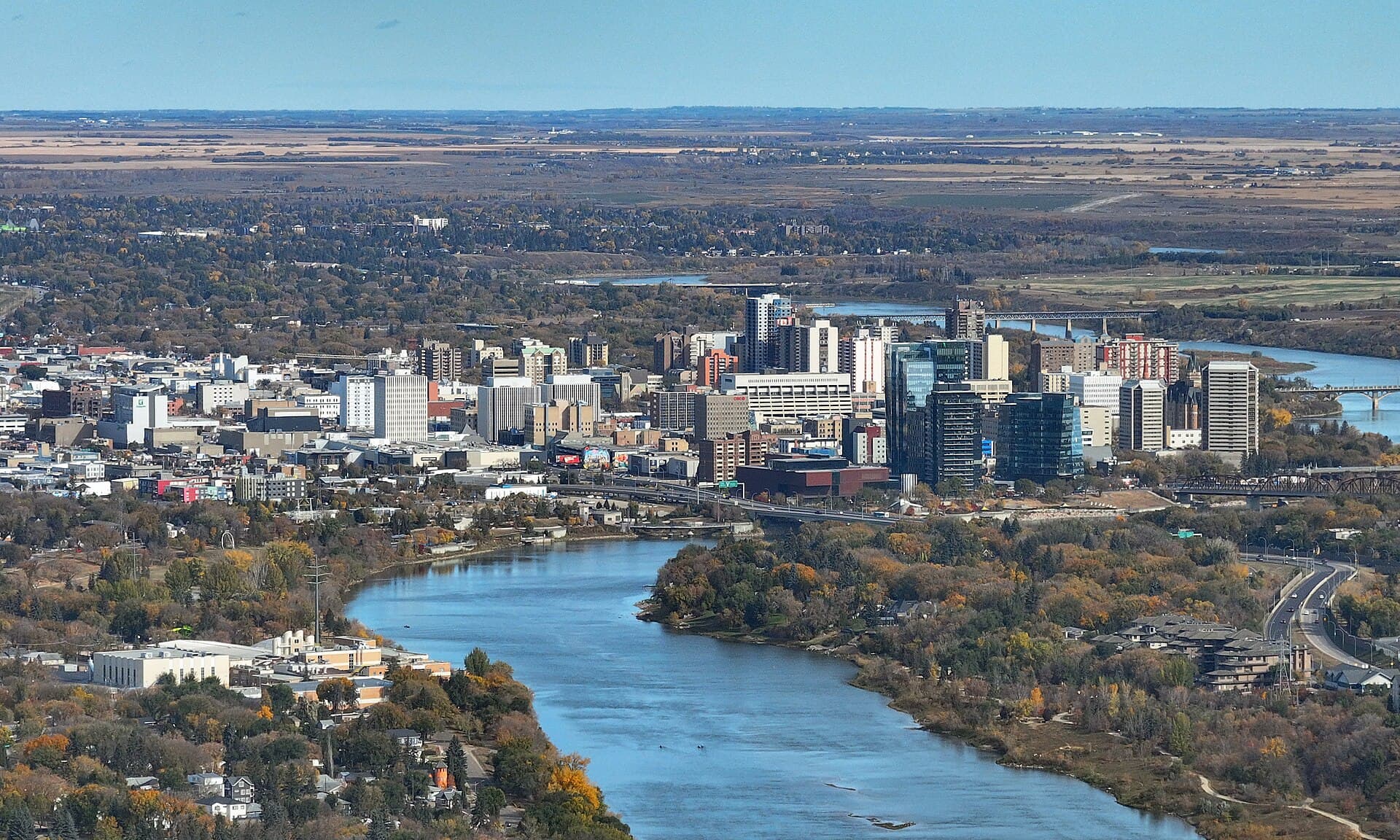
Saskatoon offers a variety of attractions that underscore its natural setting and cultural depth. The Meewasin Valley Trail extends for over 80 kilometers along the South Saskatchewan River, providing opportunities for walking, cycling, and enjoying the riverfront green spaces. The Remai Modern, Saskatoon's primary art gallery, displays Canadian culture through diverse exhibits, including paintings, photographs, and sculptures. Its location by the river makes it a prominent feature of the downtown area.
For a deeper exploration of Indigenous history, Wanuskewin Heritage Park is a National Historic Site and a UNESCO World Heritage applicant, representing 6,000 years of First Nations history. Visitors can explore archaeological sites and learn about Indigenous cultures. The city also contains the University of Saskatchewan, with its notable architecture and sculpture garden. Exploring neighborhoods like Riversdale and Broadway/Nutana reveals appealing boutiques, striking street art, and a lively atmosphere. The Saskatoon Forestry Farm Park and Zoo, Saskatchewan's only CAZA-accredited zoo, presents diverse wildlife exhibits within a historic tree nursery.
Saskatoon experiences four distinct seasons, with warm summers and extended, cold winters. The most pleasant time to visit for warm-weather activities is from early July to mid-August, when average daily high temperatures exceed 65°F (18°C). Summer also brings numerous festivals and events. For those interested in Indigenous culture, May to September is ideal, as many museums and cultural sites are fully accessible. While winters are cold, averaging -2°F (-19°C) in January, Saskatoon is one of Canada's sunniest cities, receiving over 2,300 hours of sunshine annually. September and October offer a good chance to witness the aurora borealis.
Saskatoon is reachable via Highway 16 (Yellowhead) and Highway 11, and features an international airport (John G. Diefenbaker International Airport - YXE) with daily flights to major Canadian and North American cities. VIA Rail also serves Saskatoon, connecting it to the Toronto-Vancouver 'Canadian' route. Public transportation within the city is available, though many prefer taxis, car rentals, or cycling due to the city's relatively flat terrain. Saskatoon presents one of the lowest costs of living among major Canadian cities, with accessible housing, utilities, food, and taxes. The city is recognized for its amiable residents and a welcoming atmosphere, making it a comfortable place to visit.
- What is Saskatoon's nickname?
- Saskatoon is widely known as the 'City of Bridges' or the 'Paris of the Prairies' due to the many bridges crossing the South Saskatchewan River.
- Where does the name Saskatoon come from?
- The city is named after the saskatoon berry, which is native to the region. The name is derived from the Cree word *misâskwatômina*.
- How many bridges cross the South Saskatchewan River in Saskatoon?
- There are eight bridges crossing the South Saskatchewan River within Saskatoon city limits.
- What is the climate like in Saskatoon?
- Saskatoon has a continental climate with four distinct seasons: warm summers and long, cold winters. It is also one of Canada's sunniest cities.
- Is Saskatoon an affordable city to visit or live in?
- Yes, Saskatoon has one of the lowest costs of living among major Canadian cities, with relatively accessible housing, utilities, and other expenses.
- What is Wanuskewin Heritage Park?
- Wanuskewin Heritage Park is a National Historic Site of Canada and a UNESCO World Heritage applicant, preserving over 6,000 years of First Nations history and culture.