El Sardinero Beach
El Sardinero once mirrored societal strata, even upon its sands.
Full story unlocks in the tour
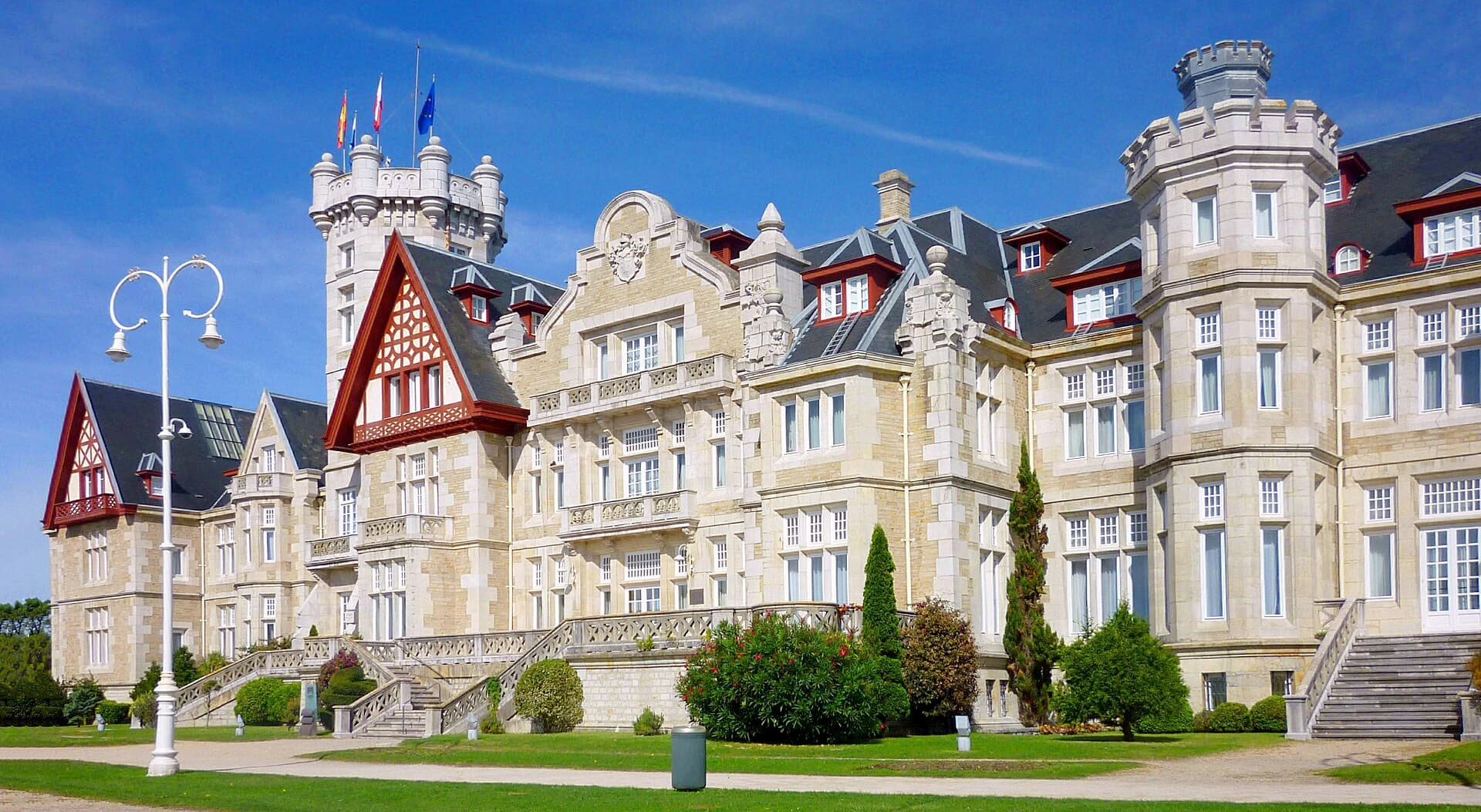 Noreenlam / CC BY-SA 3.0, via Wikimedia Commons
“Santander: where the Cantabrian Sea embraces Belle Époque grace and an enduring spirit.”
Not the postcards. The stories even locals don't know — whispered in your ear, right where they happened.
El Sardinero once mirrored societal strata, even upon its sands.
The city's cathedral guards a secret dwelling beneath its main floor.
The grand royal palace on Magdalena Peninsula began with a more collective spirit than its regal stature suggests.
Discover every secret of Santander
Every address, every reveal in full — in your ear, right where it happened.
You pick your stops. You walk. The voice reveals what the others miss.
No tours available yet. Check back soon — we're preparing them.
Santander, the capital of Cantabria on Spain's northern coast, provides a distinctive blend of urban sophistication, dramatic coastal scenery, and a profound maritime legacy. Unlike many of Spain's more frequented southern cities, Santander presents a greener, lusher landscape where the Picos de Europa mountains meet the Atlantic Ocean. It is a city that has gracefully balanced its past as a strategic Roman port and a favored royal retreat with a modern identity as a cultural and financial center.
With its expansive bay, recognized as one of the most beautiful in the world, Santander invites visitors to explore its diverse facets. From the elegant architecture of its Belle Époque era to contemporary art spaces like the Centro Botín, the city provides a range of experiences. Santander is a place to immerse oneself in the Spanish way of life, savoring fresh seafood, strolling along scenic promenades, and discovering a city that, despite its eventful history, remains a relaxed and captivating destination.
## From Roman Port to Royal Retreat Santander's history stretches back to 26 B.C. when it was founded by Emperor Augustus as Portus Victoriae, or "Port of Victory," serving as a strategic Roman base during the conquest of the Cantabrian tribes. This early maritime significance laid the groundwork for centuries of trade and seafaring.
By the 11th century, Santander began to regain prominence, becoming part of the Kingdom of Castile during the Reconquista. Its port flourished, earning it the nickname "the Liverpool of Spain" due to its bustling trade, exporting wool and importing goods from the Americas. The city's growth continued into the 19th century, with the establishment of Banco de Santander in 1857 and its emergence as a popular tourist and leisure destination, attracting figures like writer Benito Pérez Galdós.
## A City of Resilience and Rebirth Santander's journey has been marked by periods of both prosperity and profound challenges. In 1893, the city was struck by the tragic explosion of the cargo ship Cabo Machichaco in the harbor, an event that claimed at least 500 lives and left a lasting impact on the community. Despite the devastation, the people of Santander demonstrated remarkable resilience in rescue and reconstruction efforts.
Another pivotal moment occurred in 1941 when a devastating fire, fanned by strong winds, destroyed much of the historic old town, including medieval structures. This catastrophe led to the loss of 400 buildings and left thousands homeless. However, Santander rose from the ashes, rebuilding with a modern flair that shaped its current blend of old and new architecture, transforming narrow lanes into wider boulevards. This period also saw the restoration of the Santander Cathedral, which had been damaged by both the 1893 explosion and the 1941 fire.
## The Royal Connection The late 19th and early 20th centuries solidified Santander's status as a favored destination for Spanish royalty. Queen Isabel II visited El Sardinero beaches in 1861, and later, the city gifted King Alfonso XIII and Queen Victoria Eugenie the land on the Magdalena Peninsula for their summer residence. The Palacio de la Magdalena, constructed between 1908 and 1912, served as the royal family's summer retreat until 1930, further enhancing the city's elegant reputation. Today, the palace remains an iconic symbol of Santander, hosting events and offering tours, while the city continues to evolve as the capital of Cantabria.
Begin your exploration at the Palacio de la Magdalena, the former royal summer residence situated on the Magdalena Peninsula. You can stroll the grounds for free, enjoying wide views of the bay and the coastline. The peninsula also features a small zoo with seals and penguins, and replicas of historic ships.
For art and architecture enthusiasts, the Centro Botín, designed by Pritzker Prize-winner Renzo Piano, is a modern masterpiece that seems to float over the bay. It houses art exhibitions and offers impressive views from its rooftop. The Santander Cathedral, a Gothic structure with origins in the 13th century, is notable for its unique two-tiered construction, with a lower church built over Roman ruins.
The city's maritime spirit is evident at the Maritime Museum of Cantabria, showcasing the region's nautical past. For a taste of local life and fresh produce, visit the Mercado de la Esperanza, a bustling market housed in a 19th-century cast-iron structure. And of course, the expansive El Sardinero Beach offers golden sands, a wide promenade, and a touch of Belle Époque grandeur with the Gran Casino.
The most popular time to visit Santander is from May to September, when the weather is warm and ideal for beaches and outdoor activities. June and July offer comfortably warm days, perfect for walks and enjoying the waterfront, with average temperatures around 17-20°C (63-68°F). August is the warmest month, with average highs of 23°C (73°F) and less rainfall, though the city is busier then. For a quieter experience with comfortable conditions for walking and sightseeing, consider spring (March to May) or autumn (October).
Santander is a walkable city, with many sights in the city center easily accessible on foot. Due to its hilly terrain, the city provides several ramps, escalators, and even a cable car to assist with navigation. Santander is well-connected by air, with Severiano Ballesteros Airport just 5 km away offering flights to Spanish and European cities. By sea, Brittany Ferries connects Santander with Plymouth, Portsmouth, and Cork. Train and bus services link Santander to other major Spanish cities like Madrid and Bilbao.
Locals tend to eat lunch between 2-3 PM and dinner even later, around 9-10 PM, so plan your meals accordingly. Parking in the city center can be challenging, especially during summer; paid car parks are available, or you can park further out and use public transport.