Tunnel of Eupalinos
A monumental ancient aqueduct on Samos presents an incredible engineering feat, but its true marvel lies in its construction.
Full story unlocks in the tour
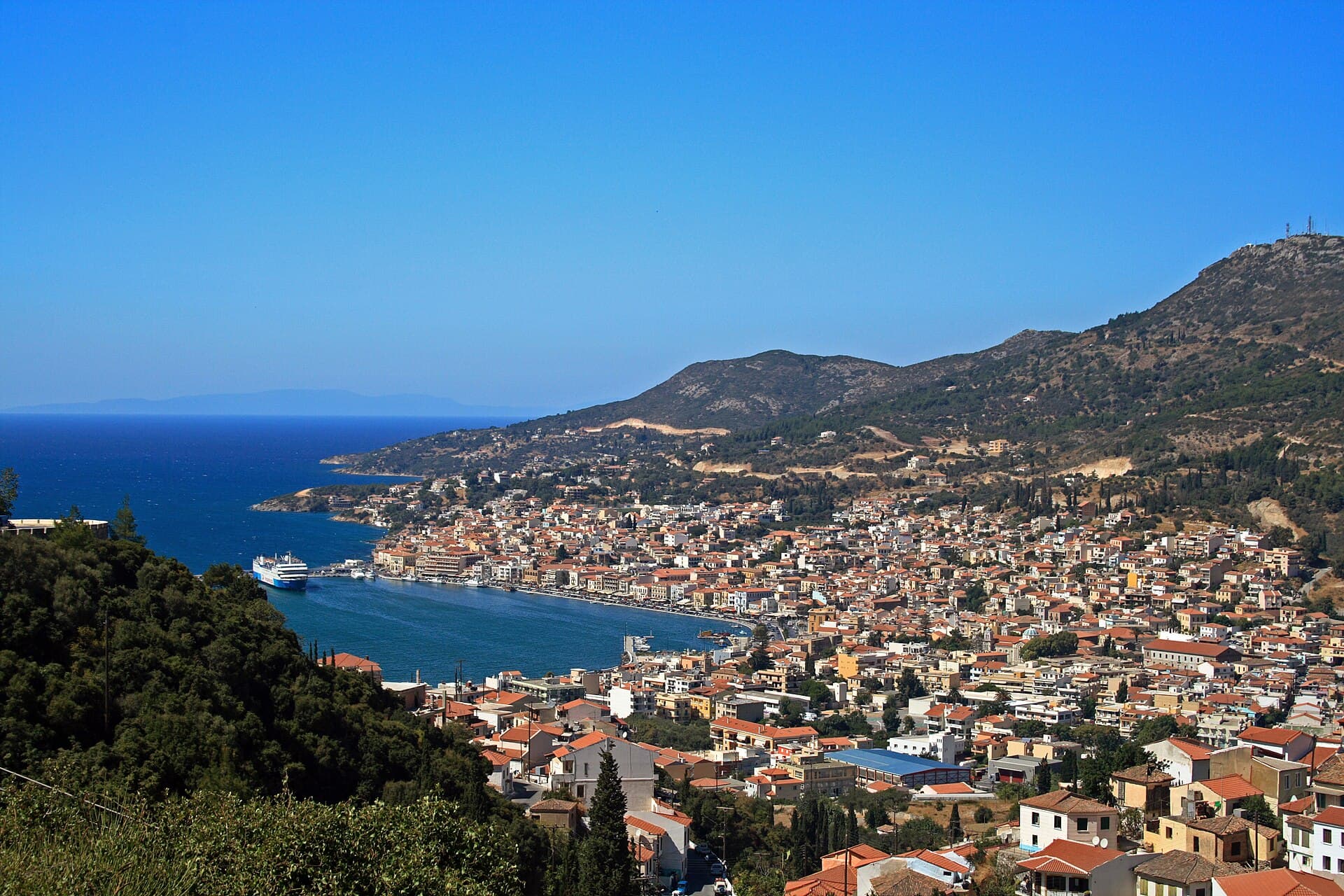 Pe-sa / CC BY-SA 3.0, via Wikimedia Commons
“Where ancient minds met Aegean breezes.”
Not the postcards. The stories even locals don't know — whispered in your ear, right where they happened.
A monumental ancient aqueduct on Samos presents an incredible engineering feat, but its true marvel lies in its construction.
The birthplace of the goddess Hera holds the remains of one of the largest temples in the ancient Greek world, yet its grand scale once served a surprising purpose beyond worship.
Samos is celebrated for its sweet Muscat wine, a tradition stretching back millennia. However, the island's winemaking history includes a period where its prized vintages were almost lost to a devastating historical event.
Discover every secret of Samos
Every address, every reveal in full — in your ear, right where it happened.
You pick your stops. You walk. The voice reveals what the others miss.
No tours available yet. Check back soon — we're preparing them.
Samos, an island in the eastern Aegean, lies remarkably close to the coast of Asia Minor, separated by a narrow strait just 1.6 kilometers wide. This proximity has shaped its varied history, making it a crossroads of cultures and a significant power in the ancient world. The island is characterized by its lush, green landscapes, a striking contrast to many other arid Greek islands, with pine forests, olive groves, and extensive vineyards covering much of its mountainous terrain. Samos is not only celebrated for its natural beauty but also for its profound historical legacy, being the birthplace of influential figures such as the mathematician Pythagoras, the philosopher Epicurus, and the astronomer Aristarchus of Samos, who first proposed a heliocentric model of the universe.
Beyond its intellectual contributions, Samos offers a genuine Greek island experience, blending tangible ancient history with pristine beaches and an authentic wine culture. Its fertile land has sustained vineyards for centuries, producing the well-known Samian Muscat wine that is still exported today. Whether exploring ancient ruins, relaxing on sandy shores, or savoring local delicacies, Samos invites visitors to immerse themselves in a place where history feels alive and the pace of life encourages a deeper connection with its surroundings.
The history of Samos stretches back to the Early Neolithic period, with evidence of human settlements dating to the 3rd millennium BCE. Early colonists included the Pelasgians, Phoenicians, Leleges, and Carians, later succeeded by the Mycenaeans. The island truly began to flourish around the 8th century BCE, becoming an important center of trade and culture within the Ionian Confederation, an alliance of Greek cities. Its strategic location near trade routes allowed Samians to establish colonies and trade extensively with regions around the Black Sea, Egypt, and other Greek cities. The Samians were even credited as the first Greeks to cross the Pillars of Hercules (Strait of Gibraltar).
The 6th century BCE marked a golden age for Samos under the rule of the tyrant Polycrates, who transformed the island into a formidable naval power. During his reign (c. 540 BCE), arts and sciences thrived, leading to the construction of impressive architectural and engineering marvels. Among these were the Eupalinian aqueduct, a remarkable underground tunnel, and the magnificent Heraion, a sanctuary dedicated to the goddess Hera, who, according to myth, was born and raised on the island. These sites are now recognized as UNESCO World Heritage Sites, testaments to the island's ancient grandeur.
After Polycrates, Samos experienced periods under Persian and Athenian influence, and even a brief independence after 394 BCE. During the Peloponnesian Wars, it fell to the Spartans, and later came under Roman, Venetian, and Genoese rule. In 1453, Samos became part of the Ottoman Empire, though it was largely depopulated at the time due to piracy and plague. The Ottomans later repopulated the island, offering privileges like tax exemption and local autonomy to new settlers. Despite these shifting powers, Samos maintained its Greek identity, playing a significant role in the Greek War of Independence (1821–29). Although initially returned to Ottoman suzerainty as a semi-autonomous principality, Samos finally joined Greece in March 1913, following a brief bombardment by Italian warships that led to the Turkish evacuation. Today, Samos continues to celebrate its heritage, with well-preserved ruins and a lively local culture.
Samos offers a blend of historical sites and natural beauty. Begin in Pythagoreion, a UNESCO World Heritage site, where you can explore the ancient fortified city, stroll along the marina, and discover inviting shops and tavernas. Nearby, marvel at the Tunnel of Eupalinos, a 6th-century BCE aqueduct considered an engineering marvel of the ancient world. Another UNESCO site is the Heraion of Samos, the remains of a colossal temple dedicated to the goddess Hera.
For a taste of local life and scenic beauty, visit Kokkari, a picturesque seaside village known for its colorful fishing boats, clear waters, and double-fronted beach. The village is also a popular spot for windsurfers. Samos Town, also known as Vathy, is the island's capital and main port, featuring neoclassical buildings and traditional architecture. Here, you can visit the Archaeological Museum of Samos, the Ecclesiastical Byzantine Museum, and explore the Ano Vathy neighborhood with its charming post-Byzantine church of Ai-Giannaki. Do visit the Museum of Samos Wine to learn about the island's renowned Muscat wine production. For nature enthusiasts, hiking on Mount Kerkis or exploring the island's many caves and ravines offers striking landscapes. Secluded beaches like Mikro and Megalo Seitani are also worth seeking out.
The best time to visit Samos is during the tourist season, which runs from May to October. For beach holidays, June to mid-September offers dry, sunny, and hot weather, with average temperatures between 24 and 33 degrees Celsius. The sea temperature reaches a comfortable 23-24°C from July to September. To avoid peak crowds and higher prices, consider visiting in May-June or September-October, when the weather is still pleasant (around 20-25°C) and wildflowers bloom across the mountains, ideal for hiking. October still provides comfortable weather for outdoor activities, with temperatures averaging 16-20°C.
The currency in Samos, like the rest of Greece, is the Euro (€). ATMs are widely available in most villages, and credit cards are accepted in most shops and restaurants, though it's advisable to carry some cash for smaller establishments or remote areas. The official language is New Greek, but English is widely spoken in tourist areas, and sometimes German or French. Samos is considered a safe destination with a low crime rate. The island has a General Hospital in Samos Town and a health center in Karlovasi, along with pharmacies in various villages. The power plugs are types C and F, with a voltage of 230V and a frequency of 50Hz. While tap water is generally safe to drink, many locals and tourists prefer bottled water due to its high mineral content. Getting around Samos is best done by renting a car or scooter for flexibility, as public bus services are infrequent and do not operate after 8 PM. Taxis are also available but can be expensive for longer distances. Samos International Airport (SMI) connects the island to Athens and Thessaloniki year-round, with additional charter flights from Europe during summer. Ferries from Piraeus (Athens) and Kavala (Northern Greece) arrive at the ports of Vathy and Karlovasi, with journey times ranging from 8.5 to 18 hours. There are also seasonal ferry connections to Kusadasi, Turkey, taking about 1 to 1.5 hours.