Roman Amphitheatre
The arena in Saintes possesses an architectural distinction, setting it apart from many other Roman amphitheatres.
Full story unlocks in the tour
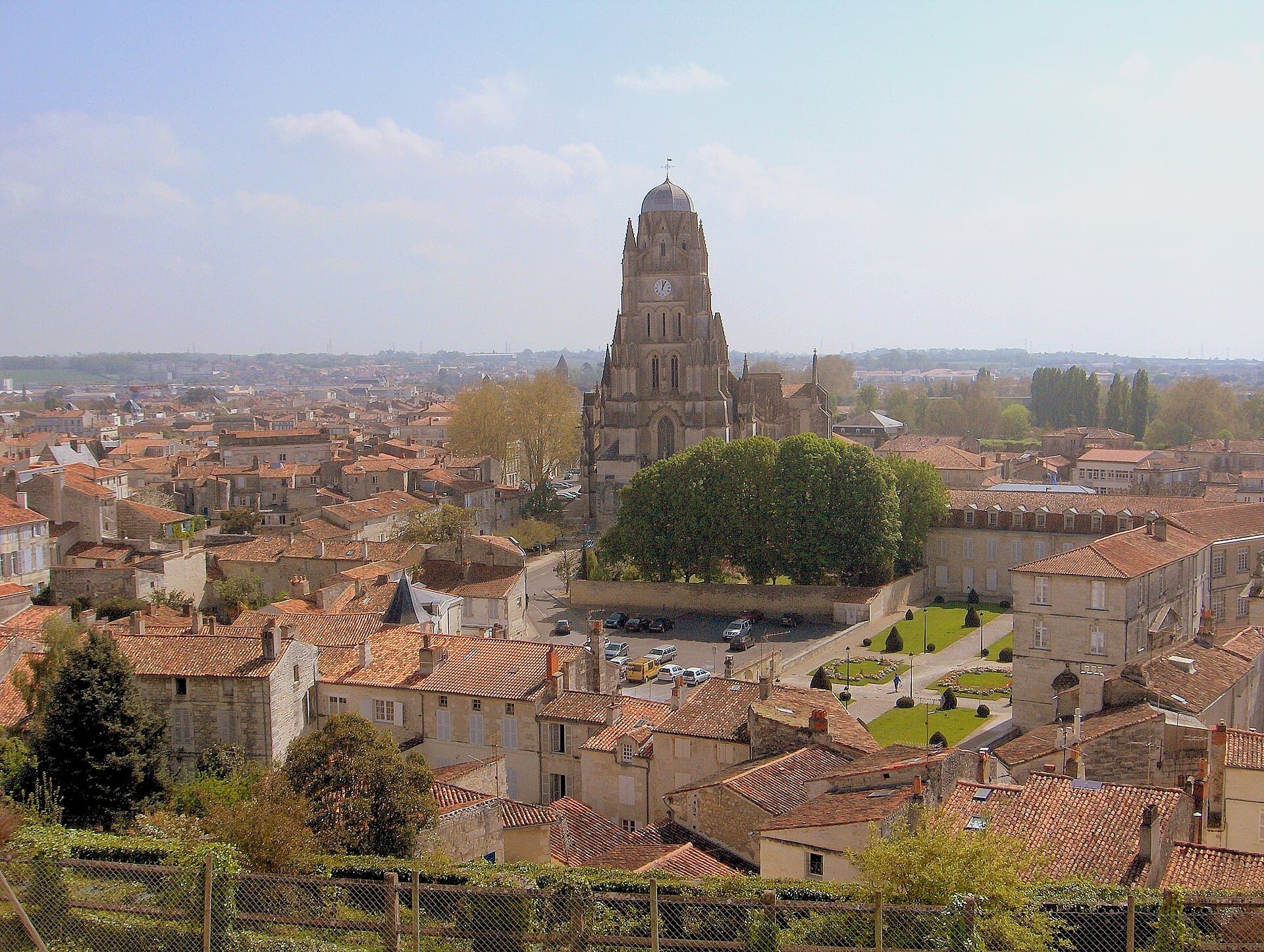 Kokin (corrected version Cobber17) / CC BY-SA 2.5, via Wikimedia Commons
“Where Roman grandeur meets riverside charm and emergent histories.”
Not the postcards. The stories even locals don't know — whispered in your ear, right where they happened.
The arena in Saintes possesses an architectural distinction, setting it apart from many other Roman amphitheatres.
This ancient Benedictine abbey, once a formidable center of education for noblewomen, is said to conceal a secret hoard.
The Arch of Germanicus, a prominent Roman monument in Saintes, nearly met a vastly different end in the 19th century.
Discover every secret of Saintes
Every address, every reveal in full — in your ear, right where it happened.
You pick your stops. You walk. The voice reveals what the others miss.
No tours available yet. Check back soon — we're preparing them.
Saintes, a city in western France along the Charente River, offers a compelling journey through two millennia of time. Originally known as Mediolanum Santonum, it served as the first Roman capital of Aquitaine, leaving behind an enduring inheritance of Gallo-Roman architecture.
Beyond its Roman origins, Saintes evolved into a significant religious center during the Middle Ages, with formidable abbeys and churches marking its landscape. Today, it is recognized as a "City of Art and History," blending ancient ruins with medieval character and a lively cultural scene.
Visitors can wander through pedestrianized streets, admire Renaissance houses, and enjoy the unhurried pace of life by the river. Saintes presents an authentic French experience, less frequented by travelers than some of its larger counterparts, offering a welcoming atmosphere and a chance to truly immerse oneself in its storied past.
## From Gallic Settlement to Roman Capital Saintes began as a thriving settlement of the Santones, a Gallic tribe, before the Roman conquest. After the Romans arrived, it became known as Mediolanum Santonum, meaning "the central town of the plain." Its strategic position at the crossroads of trade routes, including the end of the Via Agrippa from Lyon, and its connection to the Atlantic Ocean via the Charente River, solidified its importance. Under Emperor Augustus, Saintes was established as the first Roman capital of Aquitania, a status it held until power shifted to Bordeaux in the 2nd century.
The Roman influence is still deeply felt in Saintes, with significant structures such as the 1st-century amphitheater and the Arch of Germanicus. The amphitheater, completed between 40 and 50 AD, could host up to 15,000 spectators for gladiatorial combats and animal hunts. The Arch of Germanicus, erected in 18-19 AD, originally marked the entrance to a Roman bridge over the Charente. Other Roman remains include parts of the Saint-Saloine thermal baths and an aqueduct.
## Medieval and Modern Transformations Following the decline of the Roman Empire, Saintes saw a resurgence around Christianity and became an important stop on the Way of St. James pilgrimage route to Santiago de Compostela. The Middle Ages witnessed the establishment of powerful monasteries, including the Abbaye aux Dames, a Benedictine abbey for women founded in 1047. The city's Saint-Pierre Cathedral, dating from the 15th century, was significantly damaged during the Wars of Religion in 1568. The Romanesque church of St. Eutropius, containing the tomb of the town's first bishop, is another notable medieval structure and a UNESCO World Heritage site.
Saintes briefly served as the administrative center of the Charente Inférieure department (now Charente-Maritime) from 1791 until La Rochelle supplanted it in 1810. Despite periods of decline, the arrival of the railway in modern times helped to re-energize the city. Today, Saintes is a market and commercial center, known for its cognac production and agricultural trade, while continuing to celebrate its enduring historical and architectural inheritance.
Begin your exploration at the Arch of Germanicus, a double-arched Roman gateway from 18-19 AD that once marked the entrance to a bridge over the Charente River. From here, stroll along the riverbanks, taking in views of the city. A short walk leads to the Gallo-Roman Amphitheatre, a remarkably preserved 1st-century arena built into a natural valley, where you can walk in the footsteps of gladiators.
Cross the Charente to the right bank to visit the Abbaye aux Dames, a significant Benedictine abbey founded in 1047. This architectural marvel now houses a musical center and offers interactive experiences like Musicaventure and the unique Musical Carrousel. Do not overlook the Saint-Pierre Cathedral, a 15th-century structure with a distinctive bell tower and intricate portal. For a deeper dive into Saintes' Roman past, the Archaeological Museum displays artifacts from Gallo-Roman daily life. Finally, explore the Church of St. Eutropius, an 11th-century Romanesque church with one of Europe's largest crypts, a UNESCO World Heritage site and a stop on the Way of St. James.
The ideal time to visit Saintes for agreeable weather is from April through October. During these months, you can anticipate comfortable temperatures and less rain, perfect for exploring the city's outdoor historical sites and enjoying riverside walks. July and August are the warmest months, with average highs around 28°C (82°F) and clearer skies. For those who prefer milder temperatures and fewer crowds, late spring (May-June) and early autumn (September-October) offer comfortable conditions.
Saintes is easily traversed on foot or by bicycle, especially the old town and riverside areas. The city is accessible by car via the A10 motorway from Paris, and it serves as a main road traffic hub in the region. The Saintes railway station provides train connections. For local travel, the BUSS network operates urban lines, with on-demand services for nearby villages. The primary tourist office is conveniently situated near the Arch of Germanicus, offering maps and information to aid in planning your visit.
Consider lodging at hotels that offer old-school French hospitality, providing a comfortable base for your explorations. Many shops, cafes, and restaurants can be found in the pedestrianized streets behind the market.