The Burning Bush
The bush that Moses encountered, aflame but not consumed, is believed to still exist.
Full story unlocks in the tour
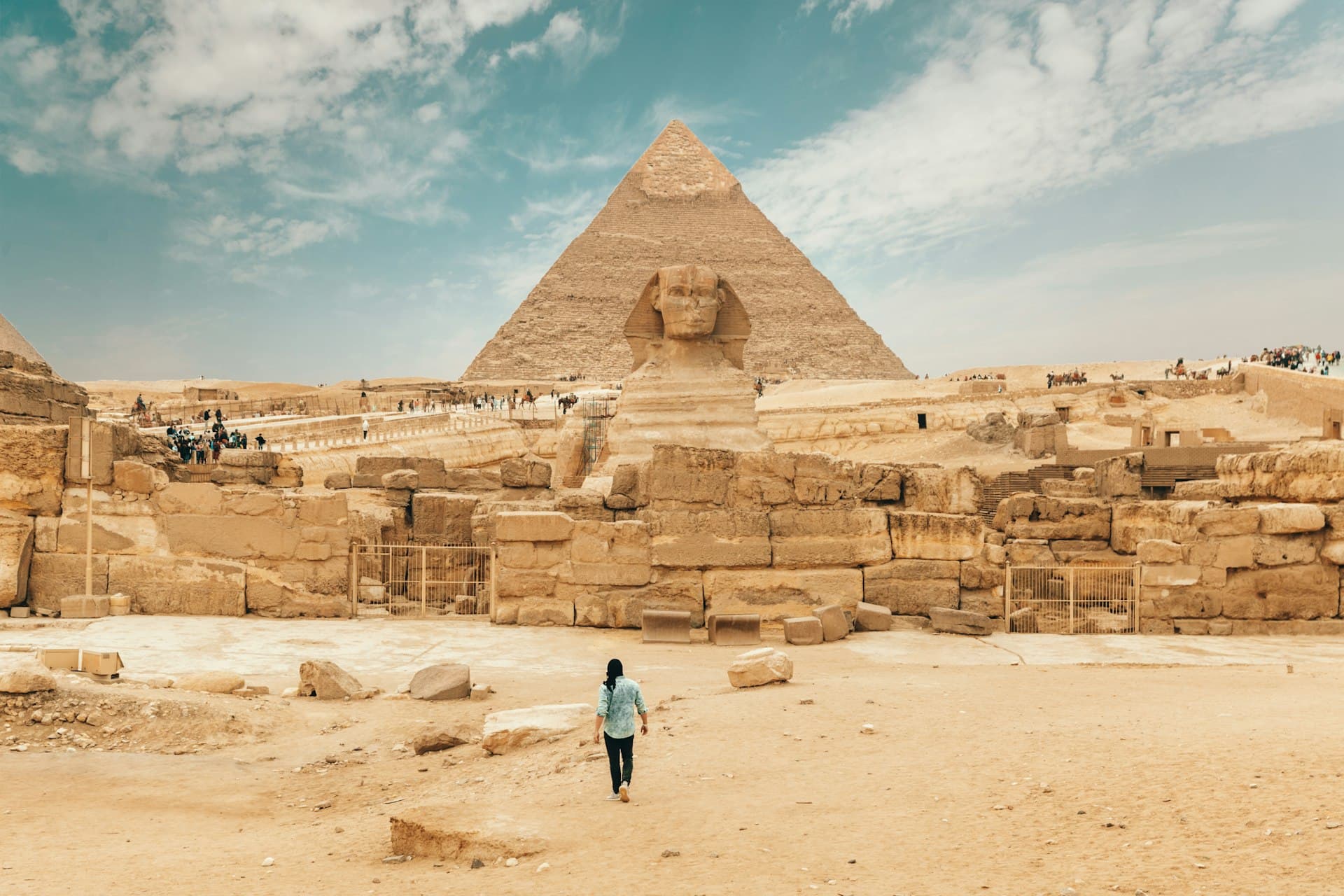 Photo: Spencer Davis / Unsplash
“Where ancient faith meets desert grandeur.”
Not the postcards. The stories even locals don't know — whispered in your ear, right where they happened.
The bush that Moses encountered, aflame but not consumed, is believed to still exist.
This ancient monastery has a unique feature within its walls, reflecting a surprising historical coexistence.
While many climb Mount Sinai for its spiritual significance, few realize the mountain itself has a voice.
Discover every secret of Sainte-Catherine
Every address, every reveal in full — in your ear, right where it happened.
You pick your stops. You walk. The voice reveals what the others miss.
No tours available yet. Check back soon — we're preparing them.
Sainte-Catherine, a town in Egypt's South Sinai Governorate, sits at an elevation of 1,586 meters (5,203 ft) at the foot of Mount Sinai. This high-altitude desert environment is a place of profound spiritual significance for Judaism, Christianity, and Islam, believed to be where Moses received the Ten Commandments. The region's unique ecosystem, part of the Saint Katherine Protectorate, showcases a surprising diversity of wildlife and endemic plant species.
The town itself, sometimes referred to as Al-Milga, is a small Bedouin settlement, serving as a gateway to the surrounding mountains and valleys. The area is a UNESCO World Heritage Site, recognized for its cultural, religious, and natural importance. Travelers arrive to explore ancient religious sites, embark on challenging hikes, and experience the serene, rugged beauty of the Sinai desert.
The history of the Sainte-Catherine region stretches back to Egypt's Pharaonic Era (3200-323 BCE), long before the city itself was established. During this time, the area was part of the Egyptian Empire's province of "Deshret Reithu," a source of valuable turquoise, gold, and copper. Well-preserved ruins of mines and temples from the 12th Dynasty, dedicated to Hathor, the goddess of love, music, and beauty, and from the New Kingdom, dedicated to Sopdu, the god of the Eastern Desert, can be found nearby at Serabit el-Khadim and Wadi Mukattab.
Monastic life in the Mount Sinai area is documented as early as the 4th century. The city of Sainte-Catherine was formally established between 527 and 565 CE with the construction of Saint Catherine's Monastery. Byzantine Emperor Justinian I ordered its creation, building it around the site traditionally identified as the Burning Bush where Moses encountered God. The monastery was also fortified to protect the hermit monks who had settled there from incursions. Empress Consort Helena, mother of Constantine I, had previously ordered a chapel to be built at the site of the Burning Bush.
Saint Catherine's Monastery is the world's oldest continuously inhabited Christian monastery, an unbroken tradition spanning approximately 1,500 years. Its original Byzantine walls, completed around 565 AD, have never fallen. The monastery has served as a refuge for Christian communities, even incorporating a mosque in 1106 AD to conciliate local Bedouin Arabs. This unique blend of religious history has made it a sacred site for Judaism, Christianity, and Islam.
Over the centuries, the monastery acquired its current name after the body of Saint Catherine of Alexandria was said to have been found in a cave in the area and brought to the monastery, turning it into a significant pilgrimage site. The monastery's library is renowned, holding approximately 4,500 manuscripts, making it the second-largest collection of early Christian manuscripts after the Vatican. These include rare works like the Codex Sinaiticus and Syriac Sinaiticus, along with a vast collection of early Christian icons, some predating the 8th century.
The primary draw to Sainte-Catherine is Saint Catherine's Monastery, a UNESCO World Heritage Site. Within its ancient walls, you can visit the Chapel of the Burning Bush, the holiest spot, where visitors are asked to remove their shoes. The monastery also houses the Well of Moses, where Moses is said to have met his future wife, Zipporah, and which still serves as a water source. The monastery's library, though often not fully accessible, contains an extraordinary collection of ancient manuscripts and icons.
Beyond the monastery, hiking Mount Sinai (Jabal Musa) is a transformative experience, particularly for sunrise. Many other peaks in the area exceed 2,000 meters (6,600 ft), including Mount Catherine (Jebel Katrina), Egypt's highest mountain at 2,629 meters, offering challenging full-day hikes with a Bedouin guide. Explore the surrounding valleys like Wadi Itlah, with its painted monk hermitage cells, or the ancient turquoise mines and pharaonic temples at Serabit el-Khadim and Wadi Mukattab.
The most favorable time to visit Sainte-Catherine is during the cooler months, specifically November, April, and October. These months offer comfortable temperatures, clear skies, and fewer crowds. Spring (March to May) and autumn (September to November) are generally mild and pleasant, with spring bringing blossoming desert plants. Avoid July and August if you prefer to escape the valley heat, though early morning starts can still make the Mount Sinai hike manageable.
Sainte-Catherine is approximately 500 km (5–6 hours) by road from Cairo and 240 km (3–3.5 hours) from Sharm El-Sheikh. A small airport in Sainte-Catherine handles select domestic flights from Cairo. While day trips from Sharm El-Sheikh are possible, an overnight stay in Sainte-Catherine is recommended to fully experience the monastery and the Mount Sinai hike.
When visiting Saint Catherine's Monastery, dress modestly, covering shoulders and knees out of respect. For hiking Mount Sinai, a registered Bedouin guide is mandatory. Dress in layers, as temperatures can vary significantly between day and night, especially at higher altitudes. Warm layers, a heavy jacket, gloves, and a hat are essential for cold winter nights and sunrise hikes.