The harbour quay
Long before the yachts, a body washed up on this shore in a boat steered by a rooster and a dog. The town took the dead man's name.
Full story unlocks in the tour
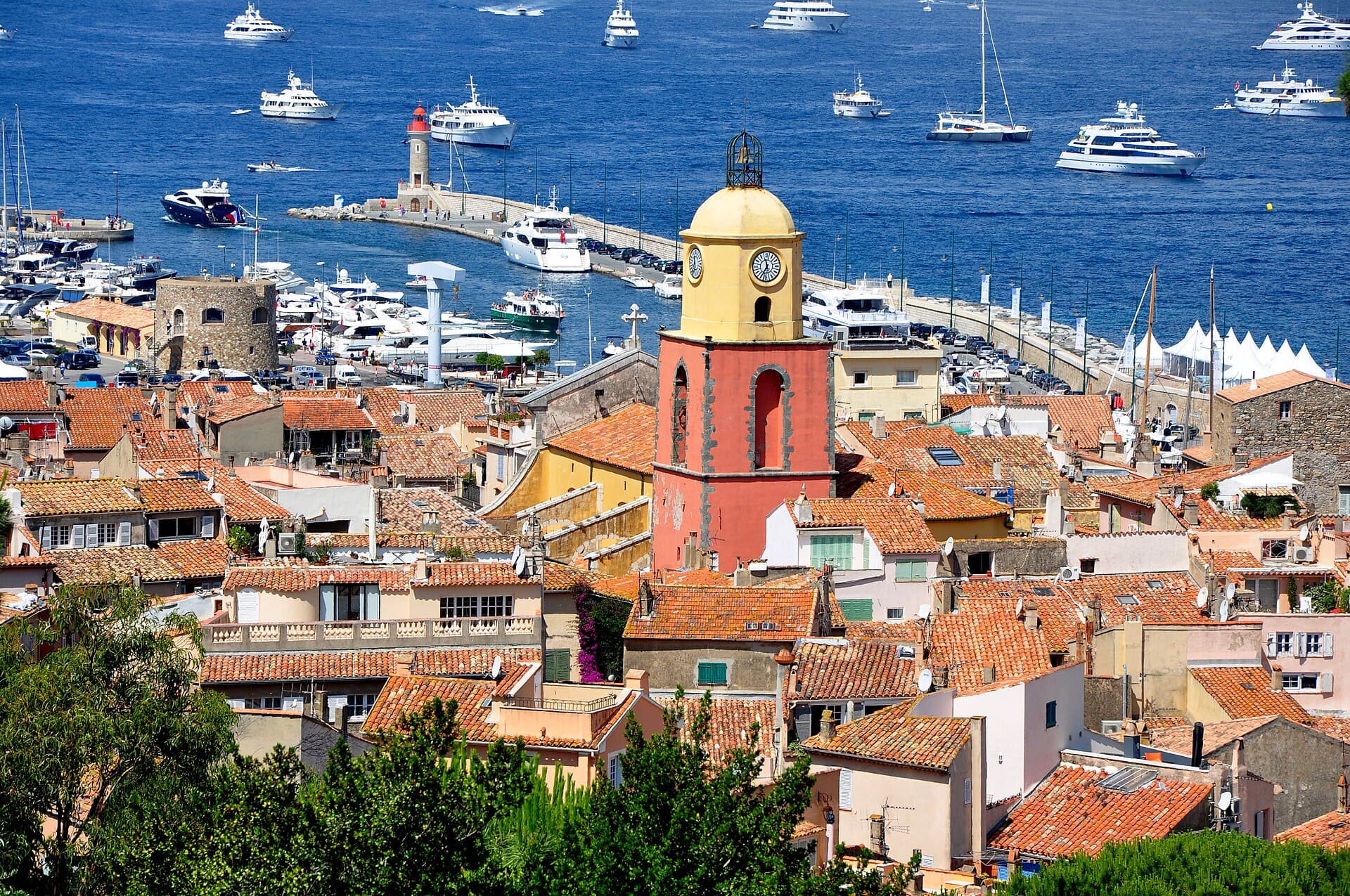 Starus / CC BY-SA 3.0, via Wikimedia Commons
“A fishing village that learned to hide in plain sight.”
Not the postcards. The stories even locals don't know — whispered in your ear, right where they happened.
Long before the yachts, a body washed up on this shore in a boat steered by a rooster and a dog. The town took the dead man's name.
In 1615, this harbour saw faces no one in France had ever seen before. They stayed only a few days, blown in by bad weather.
A painter sailed his yacht into this bay in 1892, looking for somewhere to anchor. The light stopped him. He never really left.
Discover every secret of Saint-Tropez
Every address, every reveal in full — in your ear, right where it happened.
You pick your stops. You walk. The voice reveals what the others miss.
No tours available yet. Check back soon — we're preparing them.
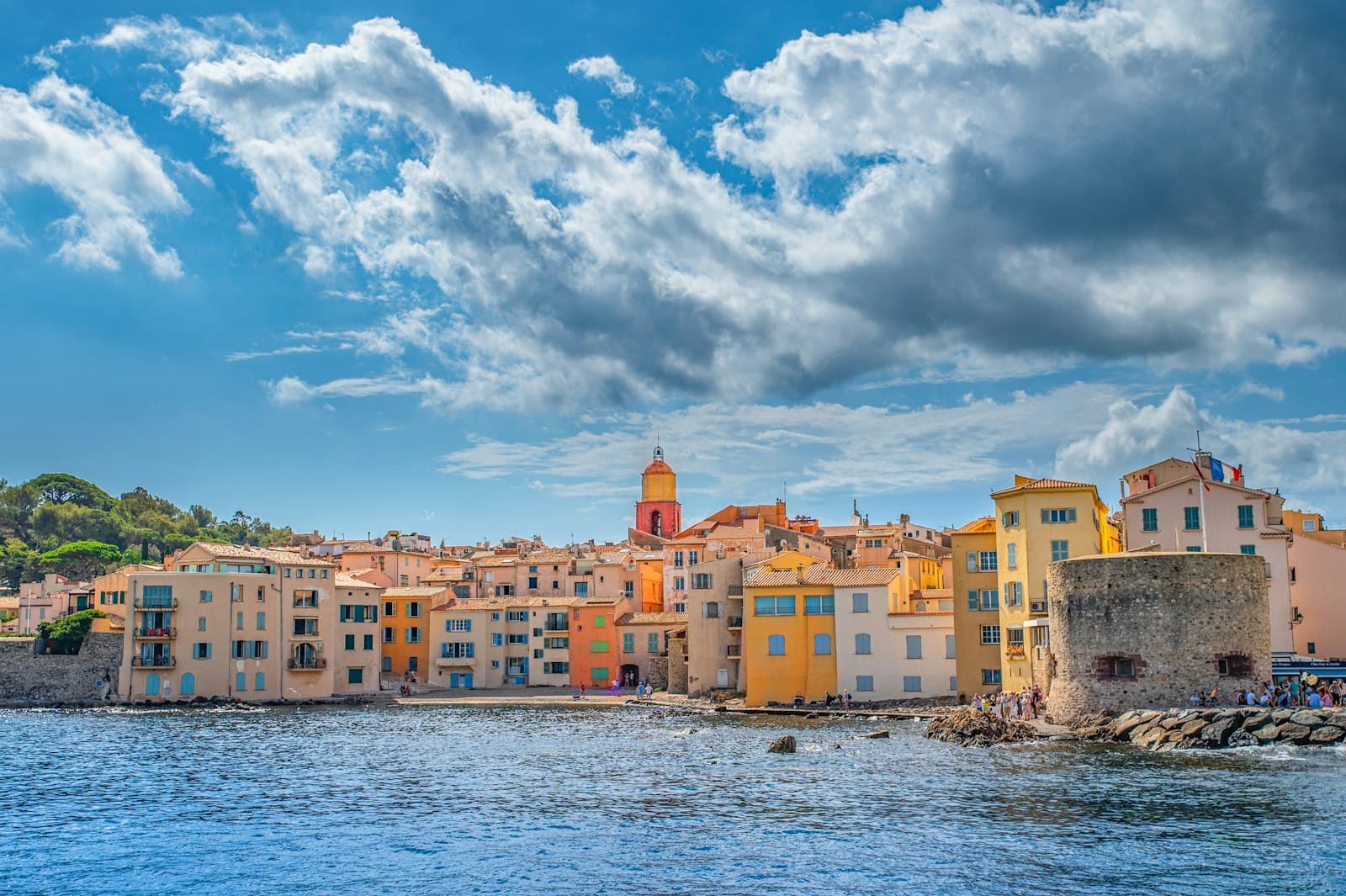
Most people arrive in Saint-Tropez already certain they know it: yachts shouldered together along the quay, a name that has become shorthand for money. That town is real, and it occupies maybe three hundred metres of waterfront in July. Walk one street back and you find something older and quieter — a fishing village that has been here since the 15th century, with cobbled lanes climbing toward a hilltop fort, a square where men still throw boules under hundred-year-old plane trees, and a chapel full of paintings that changed the course of modern art.
The trick to Saint-Tropez is timing and direction. Turn away from the harbour. Climb. The further you get from the boats, the more the place gives back: ochre façades, a working market, a coastline you can walk for hours where the only sound is the sea against rock.
Saint-Tropez takes its name from Torpes of Pisa, a Roman officer beheaded under Nero around 65 AD. Legend says his body was set adrift in a boat with a rooster and a dog and washed up on this shore, where the village adopted his name. The town the Romans knew faded; the modern one was effectively refounded at the end of the 15th century, rebuilt and fortified against the Barbary pirates who raided this coast. In 1558 the inhabitants formed their own militia — the origin of Les Bravades, the gunpowder-and-musket procession still held every May.
For four centuries the men of Saint-Tropez went to sea. By the 1500s they traded across the eastern Mediterranean; by the 1800s Tropézien sailors worked ships on every ocean. The town produced the admiral Bailli de Suffren (1729–1788), whose statue stands on the port. In September 1615 a Japanese embassy led by the samurai Hasekura Tsunenaga was blown ashore here — the first recorded contact between France and Japan.
The modern reinvention began not with film stars but with painters. Paul Signac sailed in in 1892, fell for the light, and brought Matisse, Bonnard and Marquet south after him. On 15 August 1944 Saint-Tropez became the first town on its coast liberated in Operation Dragoon. Then, in 1956, Brigitte Bardot walked through Roger Vadim's And God Created Woman, and the fishing village became a legend it has been negotiating with ever since.
La Ponche — the original fishing quarter, just east of the port below the Citadelle. Its name comes from the Provençal la pouncho, "the point." Narrow lanes, colour-washed houses, the small fishermen's beach where Bardot's film shot scenes.
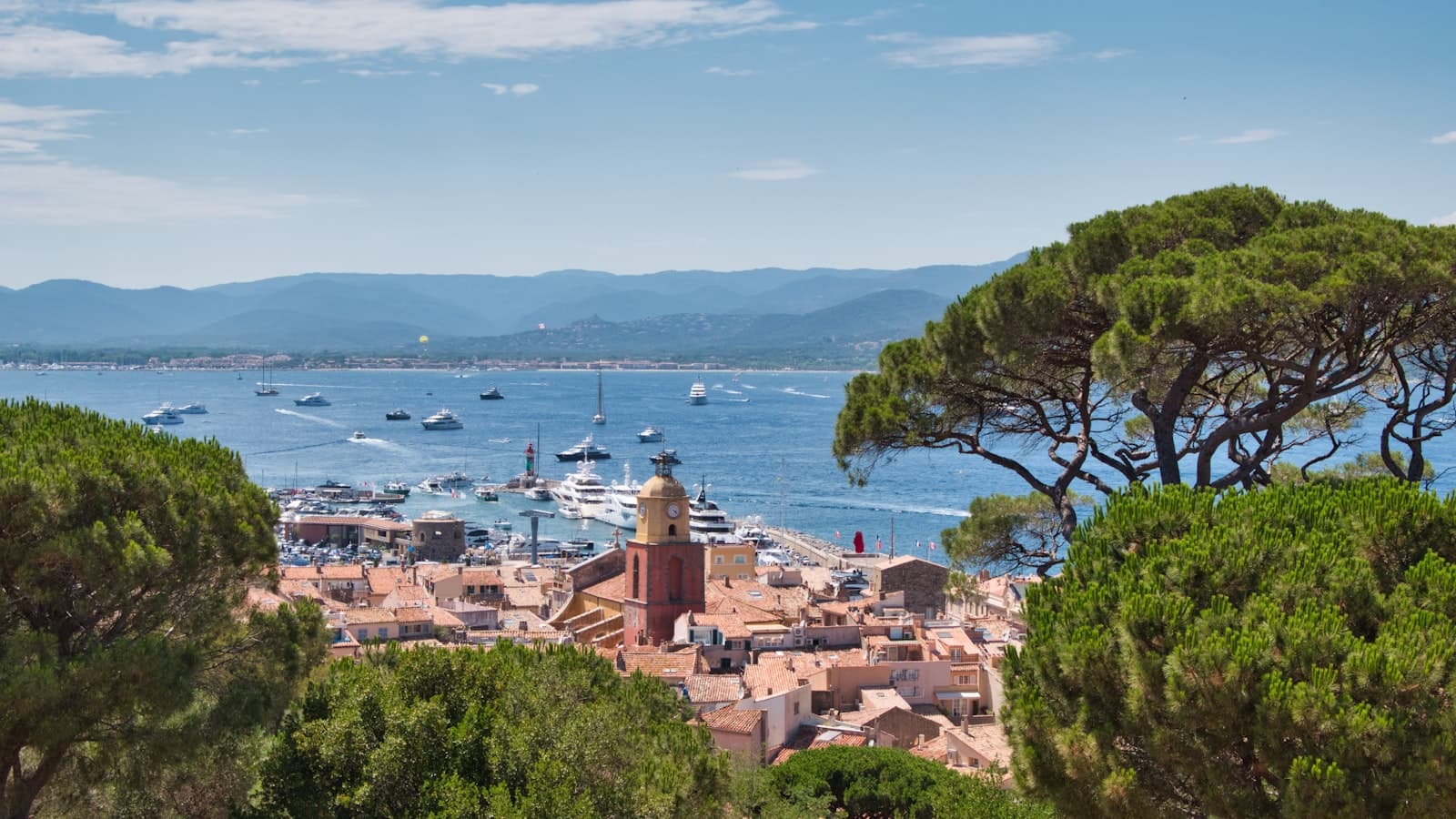
La Citadelle and the Musée d'histoire maritime — the 17th-century hilltop fortress, its hexagonal keep built between 1602 and 1608. The maritime museum inside tells the story of Tropézien sailors, traders and the 1944 landings, and the ramparts give the best wide view over the bay.
Musée de l'Annonciade — a 16th-century chapel by the port holding pointillist, Nabi and Fauve works by Signac, Seurat, Cross, Matisse and others, much of it from Georges Grammont's 1955 gift.
Place des Lices — the heart of local life: market on Tuesday and Saturday mornings, pétanque under the plane trees, and the café where artists once gathered.
The Sentier du Littoral — the coastal footpath, once patrolled by customs officers. From the port you can walk for hours toward the beaches of the peninsula and on to Cap Camarat, whose 1838 lighthouse is the second tallest in France.
May to early June and September are the sweet spots: warm sea, working light, and the town breathing normally. If you come in mid-May, Les Bravades (16–18 May) fills the streets with costumed musketeers firing blanks in honour of the patron saint — loud, local, and nothing to do with the jet-set.
July and August are when the harbour myth comes true: maximum crowds, maximum prices, road traffic that can turn a short drive into a long one. The town is genuinely beautiful then too, but you'll share it. Mornings are your ally in summer — the market and the lanes are calm before the day-trippers arrive.
Winter is quiet to the point of shuttered, but the light Signac chased is still here, and the coastal path is yours alone.
Getting here: Saint-Tropez has no train station. The nearest is Saint-Raphaël, on the Nice–Toulon line, with TGV connections. From there, a boat shuttle crosses to Saint-Tropez in about an hour (around €15 one way, €27 return) and skips the notorious summer road traffic. There are also buses (line 7601, roughly 1¼ hours) and taxis.
Getting around: The town itself is small and best walked — the port, La Ponche, the Citadelle and Place des Lices are all within ten or fifteen minutes on foot. Wear shoes that handle cobbles and a climb.
Money and crowds: Waterfront prices match the waterfront image. Step a few streets inland for normal cafés and bakeries. In summer, arrive early and park outside the centre.
The walk: Lume's audio walk is yours for a flat 9€ — one city, no subscription. Put in your headphones, start near the port, and let the fishing village underneath the legend come back into focus.