Reversing Falls Rapids
The dramatic reversal of the river's flow is well-known, but what lies beneath the surface is even more surprising.
Full story unlocks in the tour
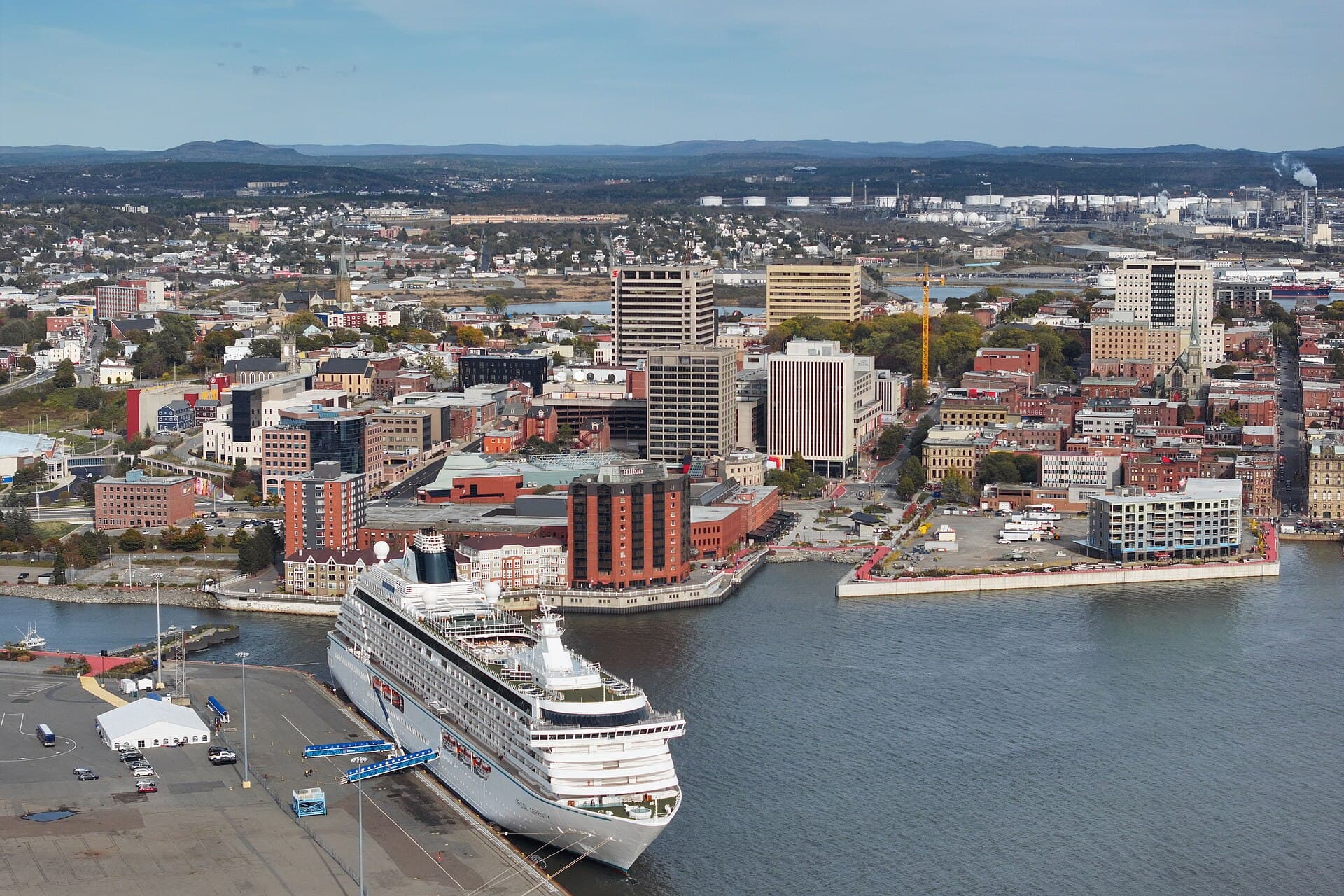 Quintin Soloviev / CC BY 4.0, via Wikimedia Commons
“Where the world's highest tides meet Canada's oldest city.”
Not the postcards. The stories even locals don't know — whispered in your ear, right where they happened.
The dramatic reversal of the river's flow is well-known, but what lies beneath the surface is even more surprising.
This 19th-century defense tower served many purposes, but one of its roles during a major global conflict might surprise you.
The market's distinctive roof is a nod to the city's maritime heritage, but its resilience during a catastrophic event is a testament to its construction.
Discover every secret of Saint John
Every address, every reveal in full — in your ear, right where it happened.
You pick your stops. You walk. The voice reveals what the others miss.
No tours available yet. Check back soon — we're preparing them.
Saint John, New Brunswick, stands as Canada's oldest incorporated city, formally established by royal charter on May 18, 1785. Resting on the Bay of Fundy, where the Saint John River converges with the expansive sea, the city unfolds a singular blend of urban history and striking natural phenomena. Here, Victorian-era architecture rises beside a bustling modern port, Canada's third-largest by tonnage.
The city extends a unique experience, inviting visitors from exploring its historic uptown avenues to observing the renowned Reversing Falls Rapids, where the formidable Bay of Fundy tides dramatically shift the flow of the Saint John River. Often known as 'The Port City,' Saint John's identity is profoundly interwoven with its maritime legacy and the constant ebb and flow of the world's highest tides.
The Saint John area was originally home to the Wolastoqiyik (Maliseet) and Mi'kmaq First Nations for thousands of years. In 1604, French explorer Samuel de Champlain landed at the harbor on the feast day of St. John the Baptist, bestowing the river with his name. The location became a crucial point for trade and defense during the French colonial era, with Fort La Tour serving as a pivotal battleground during the Acadian Civil War.
Following the Seven Years' War, British forces secured control of the region. A significant turning point arrived in May 1783 with the influx of thousands of United Empire Loyalists, refugees seeking refuge from the newly formed United States after the American Revolutionary War. This arrival of over 10,000 Loyalists led to the founding of Parr-town and Carleton, two communities that merged in 1785 to form the City of Saint John, making it Canada's first incorporated city. The city's motto, 'O Fortunati Quorum Jam Moenia Surgunt,' translates to 'O Fortunate Ones Whose Walls Are Now Rising,' reflecting this period of expansion and establishment.
Throughout the 19th century, Saint John's year-round ice-free harbor cultivated flourishing industries such as shipping, shipbuilding, and fishing. The city experienced a substantial arrival of Irish immigrants, particularly during the Great Famine of the 1840s, earning it the designation 'Canada's most Irish City.' By 1851, Saint John stood as the third-largest city in British North America. However, economic growth faced a severe blow from a devastating fire in 1877, which consumed over 1,600 buildings and left 13,000 people without homes. Despite this adversity, the city rebuilt and continued to evolve, absorbing neighboring areas and becoming a significant commercial, manufacturing, and transportation hub. While shipbuilding eventually ceased in the 21st century, tourism and the service sector have grown in economic importance.
Begin your exploration in Uptown Saint John, where historic streets are lined with preserved 19th-century architecture. The Saint John City Market, a National Historic Site, invites visitors. It stands as Canada's oldest continuously operating farmers' market, with a distinctive roof resembling an inverted ship's hull. Nearby, King's Square offers a graceful urban park with a historic bandstand.
No visit to Saint John is complete without observing the Reversing Falls Rapids, a natural spectacle where the Bay of Fundy's powerful tides compel the Saint John River to reverse its flow. You can observe this phenomenon from various vantage points, including Fallsview Park or the Reversing Falls Restaurant, which features a glass-floored Skywalk.
For a journey into military history, visit Carleton Martello Tower, a National Historic Site dating from the War of 1812. The tower offers expansive views of the city and harbor. For those who love the outdoors, Rockwood Park is one of North America's largest urban parks, offering 2,200 acres with lakes and over 50 trails. The Irving Nature Park also provides 11 km of trails and opportunities for birdwatching.
The ideal time to visit Saint John for pleasant weather and festivals is during the summer months, from June to August. Temperatures during this period are generally mild to warm, typically ranging from 15 to 25 degrees Celsius (59 to 77 degrees Fahrenheit). July is usually the warmest month, with average highs around 21 to 26 degrees Celsius (70 to 79 degrees Fahrenheit). This is also peak tourist season, so anticipate higher demand for accommodations. The shoulder seasons of spring (April to June) and fall (September to October) also present agreeable weather and fewer crowds.
Saint John is readily accessible by air, with Saint John Airport (YSJ) offering direct flights to major Canadian hubs like Toronto and Montreal. Driving is also a popular choice, with well-connected highways throughout the Maritimes. Once in the city, many of the uptown attractions are within walking distance. Public transportation options are available, and walking tours offer an excellent way to explore the historic areas.
For visitor information, welcome centers are available, including one year-round location at 47 Charlotte Street in the Saint John City Market. The local currency is the Canadian Dollar (CAD). Saint John has a population of over 73,000, and New Brunswick is Canada's only officially bilingual province, with services available in both French and English.