Basilica of Saint-Denis
The French Revolution sought to erase the monarchy, but one royal heart proved surprisingly resilient.
Full story unlocks in the tour
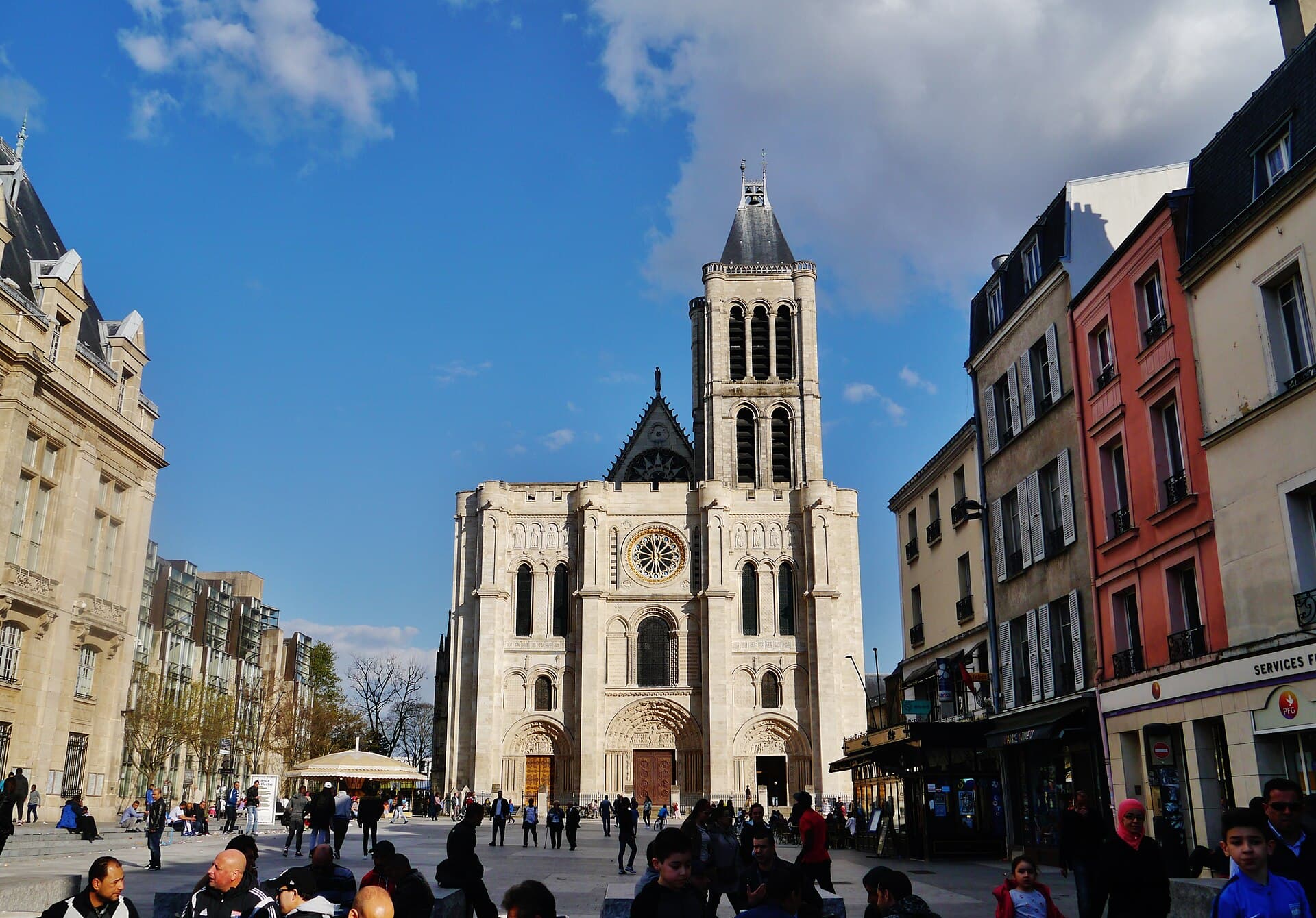 Zairon / CC BY-SA 4.0, via Wikimedia Commons
“Where Gothic grandeur meets urban grit.”
Not the postcards. The stories even locals don't know — whispered in your ear, right where they happened.
The French Revolution sought to erase the monarchy, but one royal heart proved surprisingly resilient.
This iconic stadium, a symbol of French sporting glory, once hosted a concert that literally brought the house down—or at least, a significant part of it.
Along the Canal Saint-Denis, an open-air gallery showcases diverse urban art, but a stark visual contrast reveals a deeper, unspoken narrative of the city.
Discover every secret of Saint-Denis
Every address, every reveal in full — in your ear, right where it happened.
You pick your stops. You walk. The voice reveals what the others miss.
No tours available yet. Check back soon — we're preparing them.
Just north of Paris, Saint-Denis is a city that often remains on the periphery of the typical tourist map, yet it holds a disproportionate amount of France's history and contemporary culture. From its origins as a Gallo-Roman village, it evolved into a pivotal center for the French monarchy and, later, a hub of industry and social movements. Today, Saint-Denis presents a compelling blend of ancient grandeur and modern urban dynamism, offering a unique perspective on French identity.
At its heart stands the magnificent Basilica Cathedral of Saint-Denis, a foundational masterpiece of Gothic architecture and the final resting place for nearly every French king and queen for centuries. Beyond this monumental site, the city pulses with a multicultural energy, evident in its bustling markets and extensive street art. Saint-Denis is also home to the colossal Stade de France, a national symbol of sport and entertainment that has hosted some of the world's most significant events.
While Saint-Denis is a suburb of Paris, it maintains a distinct character, shaped by its deep past and its evolving present. It's a place where historical monuments stand alongside contemporary urban expressions, inviting visitors to delve deeper into France's multifaceted narrative, away from the more familiar Parisian boulevards.
## From Roman Settlement to Royal Necropolis Saint-Denis traces its roots back to a 2nd-century Gallo-Roman village known as Catolacus. Its transformation began around 250 AD when Saint Denis, the first bishop of Paris and patron saint of France, was martyred and buried in the local cemetery. His tomb quickly became a revered pilgrimage site, leading to the construction of a church and the renaming of the settlement to Saint-Denis.
By the 7th century, King Dagobert I transformed the church into the Abbey of Saint-Denis, a Benedictine monastery, further cementing its religious significance. From Dagobert's death in 639 AD, the abbey became the chosen burial place for French monarchs, a tradition that continued for centuries. The current Basilica Cathedral of Saint-Denis, a landmark of Gothic architecture, began its reconstruction in the 12th century under Abbot Suger, an influential advisor to Kings Louis VI and Louis VII. Its innovative design, featuring ribbed vaults and expansive stained-glass windows, allowed for an unprecedented amount of light, earning it the nickname "Lucerna" (lantern).
## Revolution, Industrialization, and Modernity The French Revolution brought a period of profound upheaval to Saint-Denis. In 1793, in a dramatic rejection of the monarchy, the royal tombs in the Basilica were desecrated, and the bodies exhumed and cast into common graves. The city itself was briefly renamed Franciade, reflecting the anti-religious sentiment of the time. However, under Napoleon Bonaparte, the city reverted to its original name in 1803, and efforts to restore the Basilica eventually began.
The 19th century saw Saint-Denis undergo significant industrialization, with numerous factories establishing themselves in the area. This industrial growth also fostered a strong socialist movement, earning the city the nickname "la ville rouge" (the red city) by the 1920s. In more recent times, Saint-Denis has continued to evolve, notably with the construction of the Stade de France in 1998 for the FIFA World Cup, which has become a major venue for sports and concerts. The city has also embraced urban art, with initiatives like Street Art Avenue transforming its public spaces. Most recently, Saint-Denis played a significant role in the Paris 2024 Olympic and Paralympic Games, with new infrastructure and renewed focus on its urban development.
The Basilica Cathedral of Saint-Denis is an essential stop, revered as the birthplace of Gothic architecture and the necropolis of French royalty. Here, you can explore the elaborate tombs and effigies of 43 kings, 32 queens, and 60 princes and princesses, including Louis XVI and Marie Antoinette. The crypt also holds older structures and additional royal tombs. Guided tours and audioguides are available to delve into its extensive history.
For sports enthusiasts, the Stade de France offers a compelling experience. This colossal stadium, built for the 1998 World Cup, has hosted major football and rugby matches, as well as concerts by international artists. Guided behind-the-scenes tours offer access to the stands, locker rooms, and the players' tunnel, alongside a museum showcasing its history.
Along the Canal Saint-Denis, Street Art Avenue offers a dynamic open-air gallery experience. This 4-kilometer route features over 50 frescoes and various urban art forms by local and international artists, with new works added annually. It's ideal for a walk or bike ride.
The Marché de Saint-Denis is the largest market in the Paris Region, a bustling cultural melting pot with 220 permanent retailers. Open on Tuesdays, Fridays, and Sundays, it's a sensory experience offering specialties from around 50 different countries.
Finally, the Paul Éluard Art and History Museum, housed in a former Carmelite convent, provides insights into the city's heritage, art, and industrial past, with collections spanning from medieval artifacts to contemporary art.
The best time to visit Saint-Denis for warm-weather activities and to experience its lively street life and markets is from mid-June to mid-September. During these months, the weather is generally warm, with average high temperatures around 76°F in July. Spring (April-May) and Fall (September-October) also offer pleasant conditions with milder temperatures, ideal for exploring historical sites without the larger summer crowds. Skies are clearest in July, while December tends to be the cloudiest and wettest month.
Saint-Denis is easily accessible from central Paris. You can reach it via Metro Line 13, getting off at the Basilique de Saint-Denis station, or by RER Line D, which takes 15-20 minutes. The RER B and Tramway T1 and T8 also serve the area, particularly for reaching the Stade de France. Paris transport travel cards are valid in Saint-Denis.
While entry to the Basilica itself is generally free, there is a fee to access the royal necropolis (tombs, choir, and gardens), which functions as a museum. This fee is waived for EU nationals aged 18-25, visitors under 18, and those with a Paris Museum Pass. Guided tours of the Stade de France are available in both French and English.
It's advisable to exercise standard awareness, especially in crowded areas like the market. When visiting religious sites like the Basilica, respect local customs by covering shoulders and knees. Comfortable walking shoes are recommended, especially for exploring the extensive Street Art Avenue or the large market.