Sagunto Castle
The expansive Sagunto Castle holds a secret within its ancient walls, a testament to its enduring strategic importance.
Full story unlocks in the tour
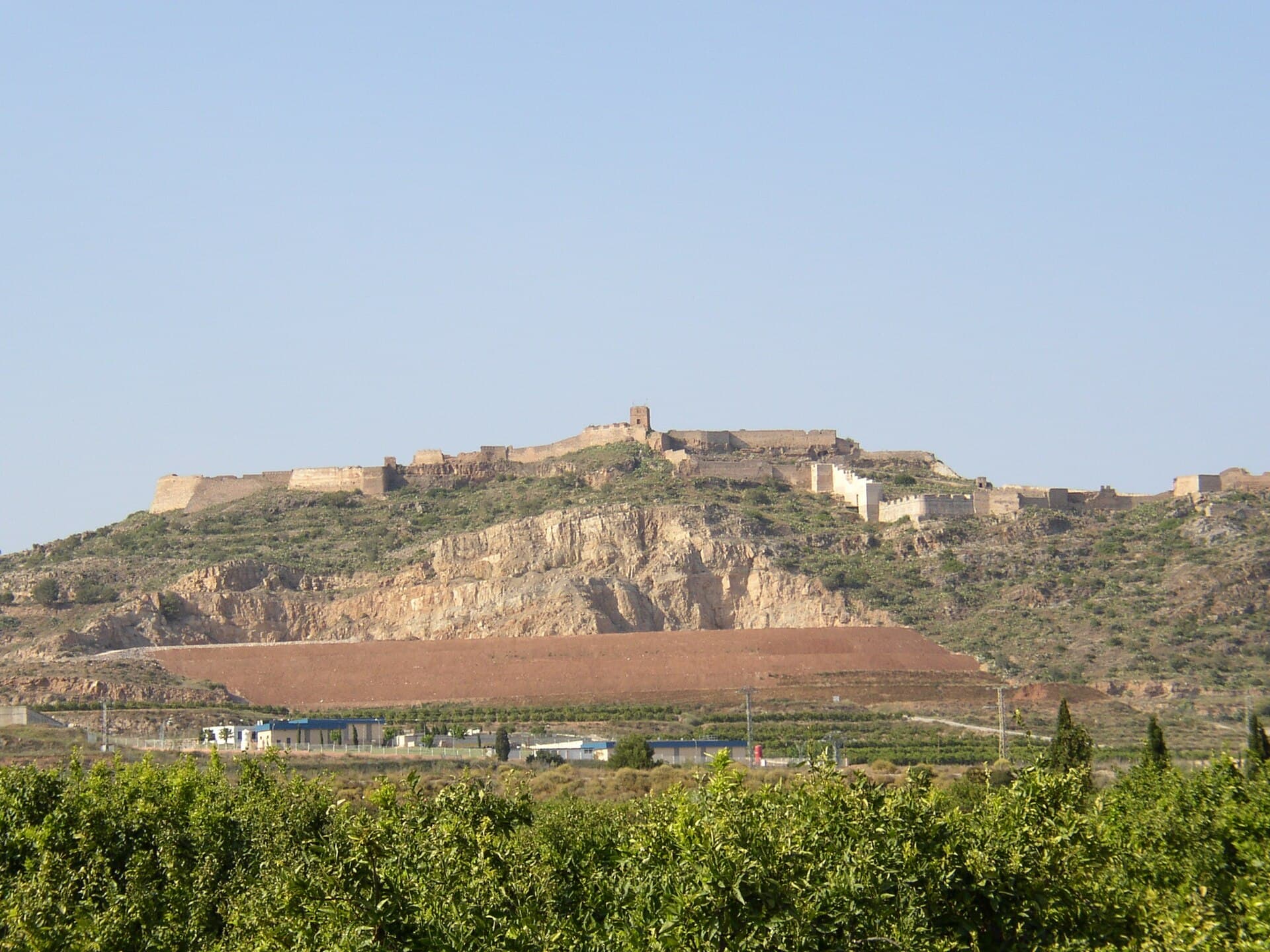 User:Pelayo2 / CC BY-SA 3.0, via Wikimedia Commons
“Where ancient stones recount empires and enduring spirit.”
Not the postcards. The stories even locals don't know — whispered in your ear, right where they happened.
The expansive Sagunto Castle holds a secret within its ancient walls, a testament to its enduring strategic importance.
The Roman Theatre, a marvel of ancient engineering, has a controversial modern chapter.
Sagunto's Jewish Quarter, one of the best-preserved in Spain, holds a poignant reminder of its past.
Discover every secret of Sagunto
Every address, every reveal in full — in your ear, right where it happened.
You pick your stops. You walk. The voice reveals what the others miss.
No tours available yet. Check back soon — we're preparing them.
Sagunto, a city in the Valencian Community of Spain, offers a profound journey through over two millennia of history. Located approximately 30 kilometers north of Valencia city, it is recognized for the significant remains of the ancient Iberian and Roman city of Saguntum. This historic town, once known as Arse by the Iberians, played a pivotal role in the Second Punic War, famously enduring an eight-month siege by Hannibal in 219 BC, an event that triggered the conflict with Rome.
The city is distinctly divided into two main areas: the historic center, crowned by its monumental castle and Roman theatre, and the modern port area, Puerto de Sagunto, with its expansive sandy beaches. Sagunto's old town has been recognized as a Property of Cultural Interest, reflecting its deep historical layers left by Iberians, Romans, Visigoths, Moors, and Christians.
## From Iberian Arse to Roman Saguntum Sagunto's story begins in the early Iron Age, around the 1st millennium BC, when it was an Iberian settlement called Arse. Its strategic location on the east coast of the Iberian Peninsula fostered trade with Greek and Phoenician colonies, leading to its prosperity. The city formed an alliance with the Roman Empire, which brought it into direct conflict with Carthage. In 219 BC, the Carthaginian general Hannibal laid siege to Arse, a brutal eight-month ordeal that ultimately led to the city's fall and destruction. This event served as the catalyst for the Second Punic War.
## Roman Reconstruction and Flourishing After being retaken by the Romans in 214 BC, the city, now called Saguntum, was rebuilt and flourished. It became a Roman municipium in the mid-1st century BC, a hub of trade and culture, featuring an impressive Roman theatre and a circus. The city's prosperity continued for much of the Roman Empire, leaving behind a significant archaeological legacy.
## Medieval Transformations and Diverse Influences Following the Roman period, Sagunto became part of the Visigothic Kingdom before falling under Muslim rule in the 8th century. During the Islamic period, the castle, then known as Murbĩtar or Morvedre, was significantly fortified with the construction of most of its outer walls. In 1238, Christian King Jaume I incorporated Sagunto into the Kingdom of Valencia, though a majority of the town's inhabitants remained Muslim. By the early 14th century, Sagunto also had a growing Jewish population, which established a cemetery under the castle walls and fortified its quarter for protection. The Jewish community was one of the largest in the Kingdom of Valencia, representing almost a third of the population at one point, and notably, it was the only surviving community in Valencia after the massacres of 1391. The expulsion of Jews in 1492 led to many leaving for North Africa and Naples.
## Modern Era and Industrial Legacy Over subsequent centuries, Sagunto passed between Aragonese and Castilian kings, with the castle undergoing repeated reinforcement and destruction during conflicts like the Spanish War of Succession and the Peninsular War. In the 19th century, Sagunto experienced a major transformation with the rise of the iron industry and the construction of the Port of Sagunto, becoming a significant steel-producing hub. While the last steel oven closed in 1984, one of the three blast furnaces, Alto Horno No. 2, has been restored and stands as a monument to this industrial past. Today, Sagunto continues to honor its deep history through cultural festivals, particularly the Sagunto Theater Festival held annually at the Roman Theatre.
Begin your exploration at Sagunto Castle, a vast fortress spanning over a kilometer along a hilltop, showcasing Iberian, Roman, and medieval remains. Within its seven enclosures, you'll find remnants of the Roman forum, cisterns, walls, and a basilica. From the castle, expansive views extend across the town, the Mediterranean Sea, and the surrounding plains.
Just below the castle lies the Roman Theatre, a 1st-century AD landmark built into the mountainside. This impressive amphitheater, with a diameter of 90 meters and a seating capacity for up to 8,000 spectators, still hosts performances today, notably during the Sagunt a Escena theatre festival in July and August. It was the first archaeological site in Spain to be declared a national monument in 1896.
Wander through the narrow, winding streets of the Jewish Quarter, one of Spain's best-preserved, which retains its original medieval layout. Access it through the Portalet de la Judería. The Sagunto History Museum, located in the Casa del Mestre Peña, a 14th-century building in the Jewish quarter, houses a collection of Iberian and Roman artifacts. Do not miss the Plaza Mayor, the medieval commercial and cultural center, where you can see column shafts from the Roman age and the Gothic Church of Santa Maria.
For optimal weather for outdoor activities and exploring historical sites, consider visiting Sagunto from April to June or September to November. During these periods, temperatures are mild, ranging between 19°C and 24°C, and there are fewer crowds. The warm season, from late June to early September, is ideal for beach activities, though temperatures can reach an average high of 84°F (29°C) in August, with more tourists. October is the wettest month, while July is the clearest and sunniest. Winters are mild, making it suitable for sightseeing without the summer crowds.
Sagunto is easily accessible, located approximately 30 km north of Valencia. You can reach it by car in about 30 minutes, or by a cost-effective and swift commuter train or bus from Valencia. If arriving by train, the historic center is a 10-15 minute walk from the station. The historic center and the port area (Puerto de Sagunto), which has beaches, are about 5 kilometers apart, requiring a local bus or car to travel between them. Entry to Sagunto Castle and the Roman Theatre is free. When visiting the castle and old town, wear comfortable shoes as paths are uneven. Be sure to bring water, especially between May and September, as there are no vending machines inside the castle. Sun protection is also essential due to minimal shade at the castle. Note that many monuments, including the theatre and museums, may have reduced hours or be closed on Mondays.