Saffron Walden Museum
The museum houses an unexpected artifact with a royal connection, far removed from Essex.
Full story unlocks in the tour
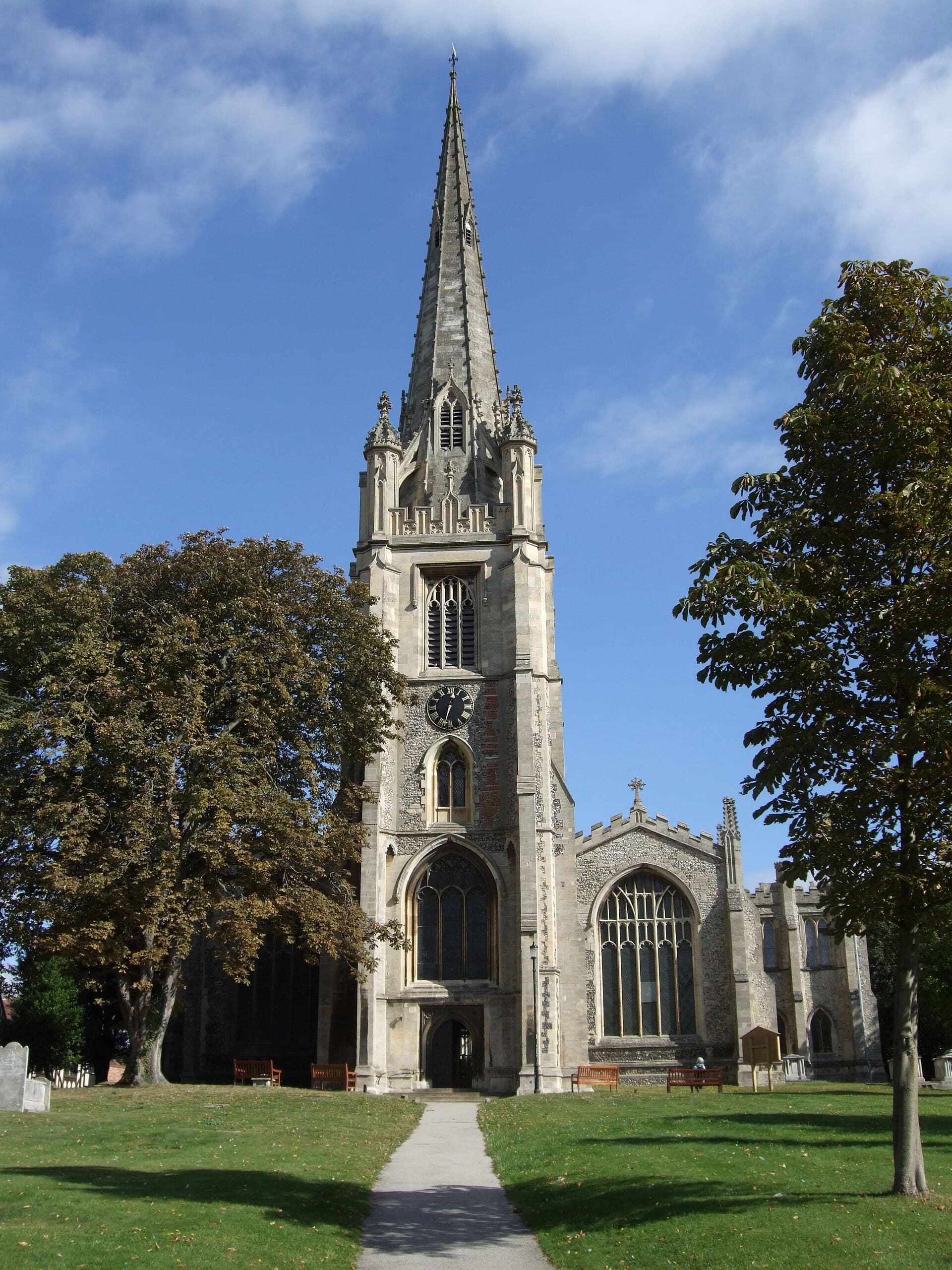 Jim Linwood / CC BY 2.0, via Wikimedia Commons
“Where ancient pathways meet lively market life, and history is etched in every timber frame.”
Not the postcards. The stories even locals don't know — whispered in your ear, right where they happened.
The museum houses an unexpected artifact with a royal connection, far removed from Essex.
There's a local legend about the town's famous turf labyrinth that suggests it has a twin.
Look closely at the decorative plasterwork on one of Saffron Walden's oldest buildings, and you might spot a subtle nod to the town's namesake.
Discover every secret of Saffron Walden
Every address, every reveal in full — in your ear, right where it happened.
You pick your stops. You walk. The voice reveals what the others miss.
No tours available yet. Check back soon — we're preparing them.
Saffron Walden, a market town in northwest Essex, offers a journey through centuries of English history. Its streets are lined with medieval buildings and timber-framed houses, creating a picturesque setting. The town's identity is deeply intertwined with the saffron crocus, a valuable spice that once flourished in the surrounding fields and gave the town its distinctive name.
Beyond its architectural charm, Saffron Walden maintains a lively atmosphere, particularly on market days. The town square, which has hosted markets since 1141, continues to be a hub of activity where locals and visitors browse stalls offering everything from fresh produce to artisan crafts.
Archaeological evidence suggests continuous settlement in the Saffron Walden area since at least the Neolithic period. A small Romano-British settlement and fort are believed to have existed, possibly near Abbey Lane, serving as an outpost to the larger Roman town of Great Chesterford. Following the Norman Conquest in 1066, a stone church was built, and Walden Castle, dating from around 1140, was constructed, possibly on existing fortifications.
The town, originally known simply as 'Walden' (derived from 'valley of the Britons'), began to gain influence in the 13th century when its market was moved from nearby Newport. A formal market charter was granted around 1300, and the town became known as 'Chepyng Walden,' meaning 'Market Walden.' Wool was a primary trading item during medieval times, contributing to the town's early wealth.
The town's most distinctive transformation occurred around 1500 with the extensive cultivation of the saffron crocus. The well-drained, chalky soil and favorable climate proved ideal for growing this delicate and highly prized spice, used for dye, medicine, and food flavoring. The saffron trade reached its peak in the 1500s, leading Henry VIII to formalize the town's name as 'Saffron Walden' in a 1514 charter, which featured five saffron flowers in its margins. The wealth generated from saffron and wool funded the construction of impressive buildings, including the grand St. Mary's Church.
By the late 18th century, the demand for saffron declined due to cheaper imports, and the industry was largely replaced by malt and barley production. However, the town continued to grow throughout the 19th century, with the establishment of a cattle market, corn exchange, and other civic buildings. The influential Quaker Gibson family played a significant role in the town's 19th-century development, financing public buildings such as the Saffron Walden Museum (established in 1835) and contributing to the remodelling of the Town Hall.
Begin your exploration in the Market Square, the town's historic heart, where markets continue to thrive every Tuesday and Saturday. Admire the architectural variety of the surrounding buildings, many exhibiting decorative pargeting. A short walk leads to St. Mary's Church, the largest parish church in Essex, notable for its grand Gothic architecture and soaring spire.
Discover the Saffron Walden Museum, one of the oldest purpose-built museums in the UK, housing diverse collections from archaeology to natural history, and set within grounds that include the ruins of Walden Castle. For a tranquil escape, explore Bridge End Garden, a restored Victorian garden featuring a series of interconnected spaces, including a popular hedge maze.
On the Common, you'll find the Saffron Walden Turf Maze, the largest surviving turf labyrinth in Europe. Following its mile-long path is a unique experience. Just outside the town, the magnificent Audley End House and Gardens offers a glimpse into Jacobean aristocratic life with its opulent interiors and extensive parkland.
Saffron Walden is a charming destination year-round, but the spring and summer months (late June to early September) are particularly pleasant for warm-weather activities, with average daily high temperatures above 66°F (19°C). The gardens are in full bloom during this time, and the town hosts various events. Autumn offers picturesque countryside colors, while winter brings a cozy atmosphere, especially during festive markets.
Saffron Walden is easily accessible from London, just over an hour away by car via the M11 (Junction 8 from London, Junction 10 from Cambridge). By train, travel to Audley End station (on the London Liverpool Street to Cambridge Greater Anglia line), then take a bus, a 25-minute walk, or a taxi into town. The Tourist Information Centre, located at 1 Market Place, is open Monday to Saturday from 9:30 AM to 4:00 PM and offers information on the town, local transport, and a free town trail.
Most accommodation is centrally located. The town center is compact and walkable, making it easy to explore on foot. Market days are Tuesdays and Saturdays.