Balbi's Arch
Observe the Balbi Arch, the main entry to Rovinj's Old Town, and you'll discern two distinct heads carved into the stone. Why do they gaze in opposing directions?
Full story unlocks in the tour
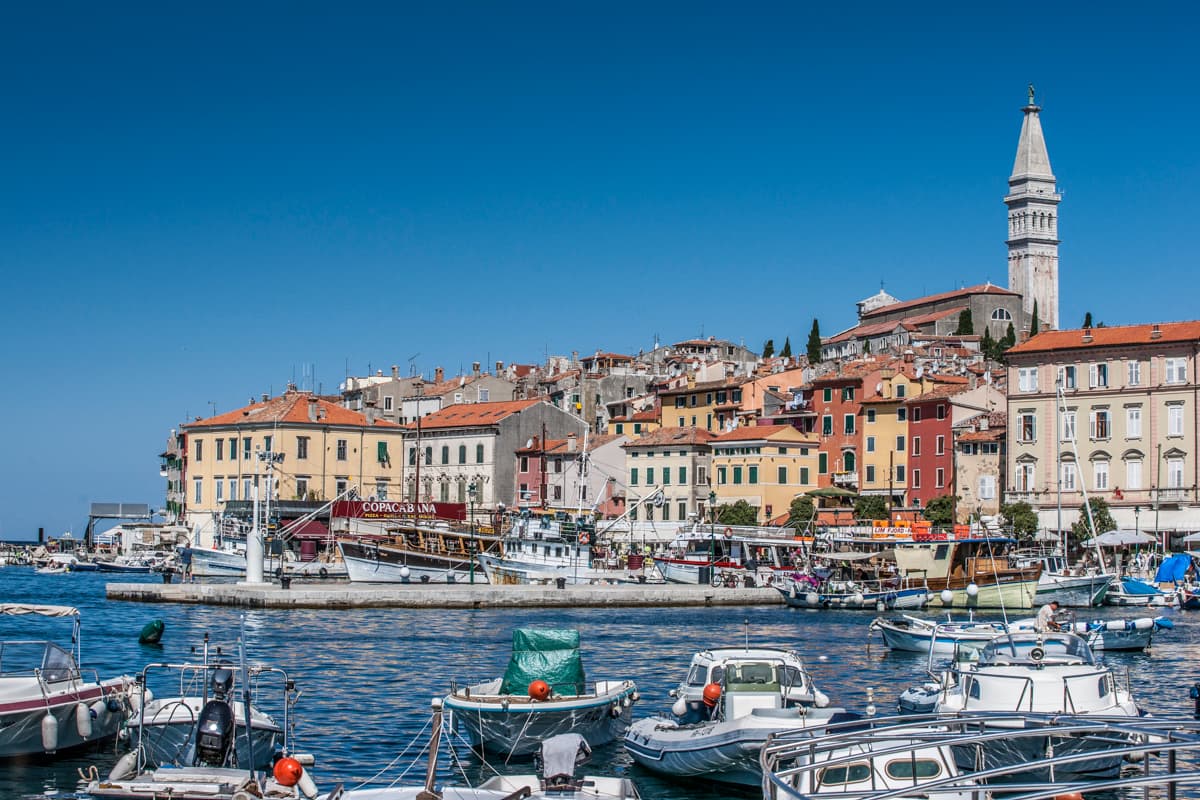 Florian Hirzinger - http://www.fh-ap.com / CC BY-SA 4.0, via Wikimedia Commons
“Sun-drenched squares emerge from winding alleys, where Venetian echoes meet the Adriatic's light.”
Not the postcards. The stories even locals don't know — whispered in your ear, right where they happened.
Observe the Balbi Arch, the main entry to Rovinj's Old Town, and you'll discern two distinct heads carved into the stone. Why do they gaze in opposing directions?
From nearly any vantage point in Rovinj, the statue of Saint Euphemia crowns her church's bell tower. But did you know she serves as a kind of weather oracle?
There exists a bar in Rovinj that has become a local favorite, not merely for its libations, but for its singular gateway to the sea. What renders it so remarkable?
Discover every secret of Rovinj
Every address, every reveal in full — in your ear, right where it happened.
You pick your stops. You walk. The voice reveals what the others miss.
No tours available yet. Check back soon — we're preparing them.
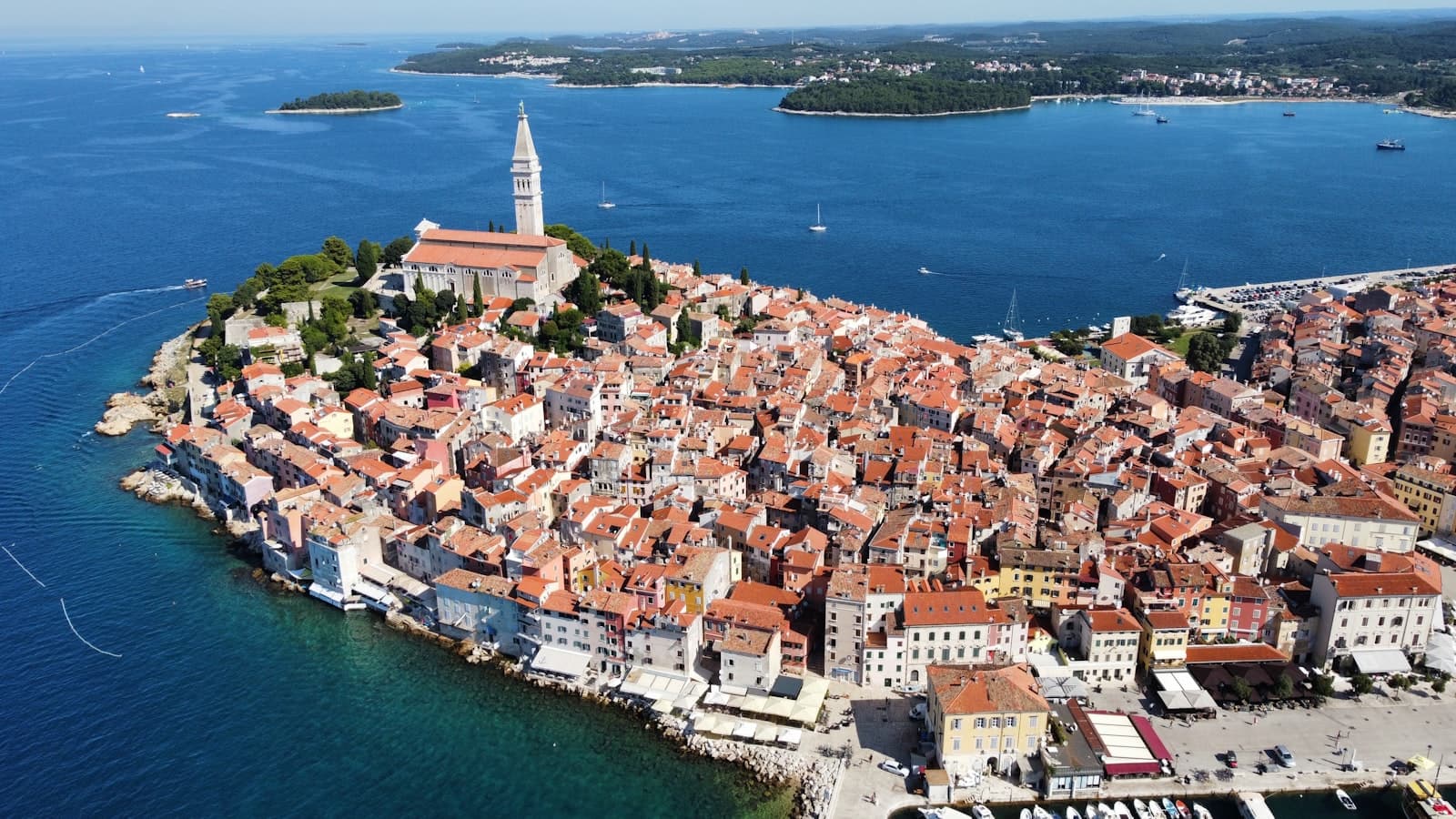
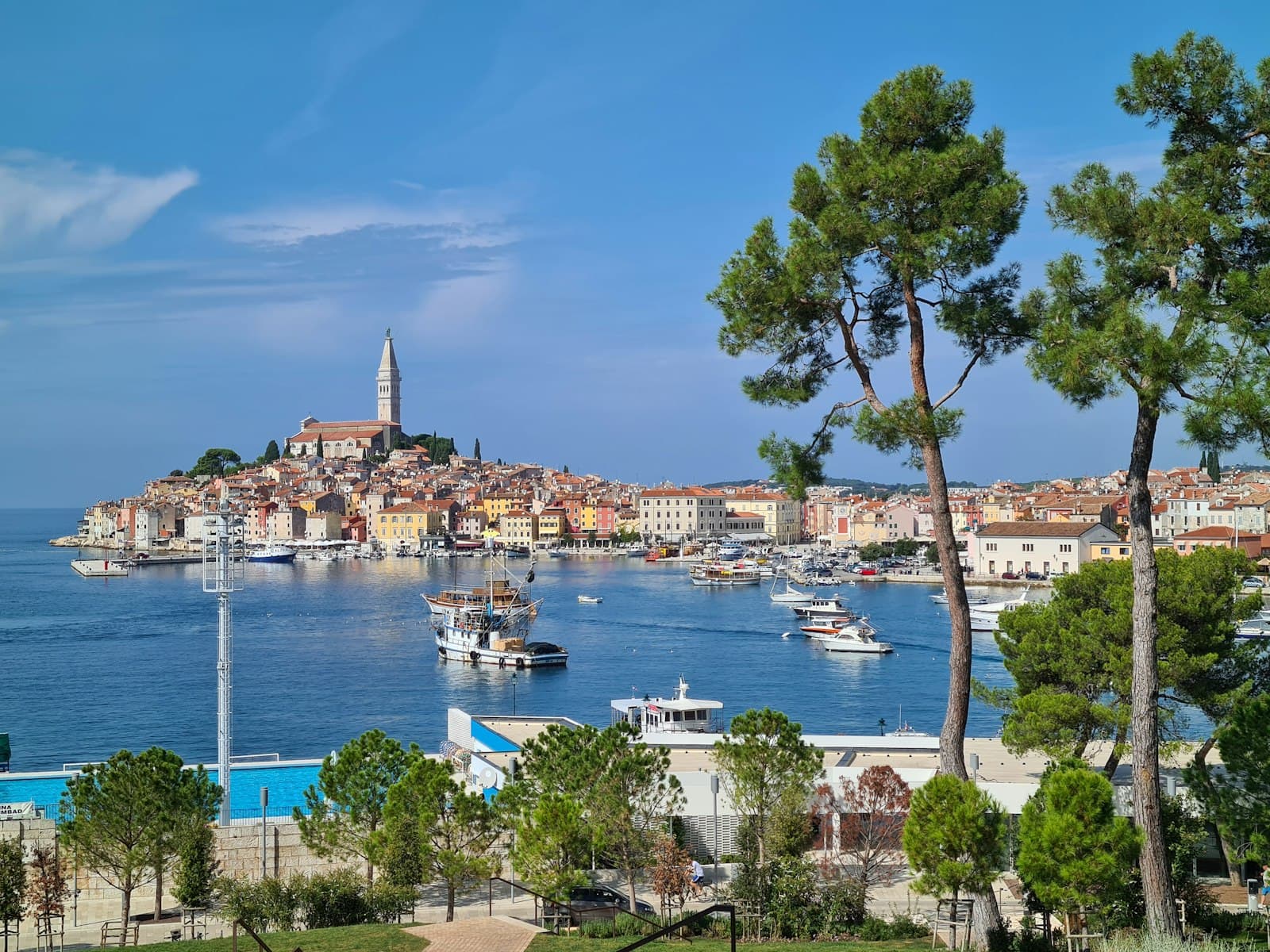
Rovinj, on Croatia's Istrian peninsula, often feels more Italian than Croatian, a legacy of its long Venetian past. Its pastel-colored buildings and winding streets evoke a sense of stepping into a Ligurian postcard. While other Croatian cities like Dubrovnik claim grand medieval fortifications, Rovinj offers a different kind of allure: a car-free Old Town, perfect for getting lost among artisan workshops and vivid art galleries.
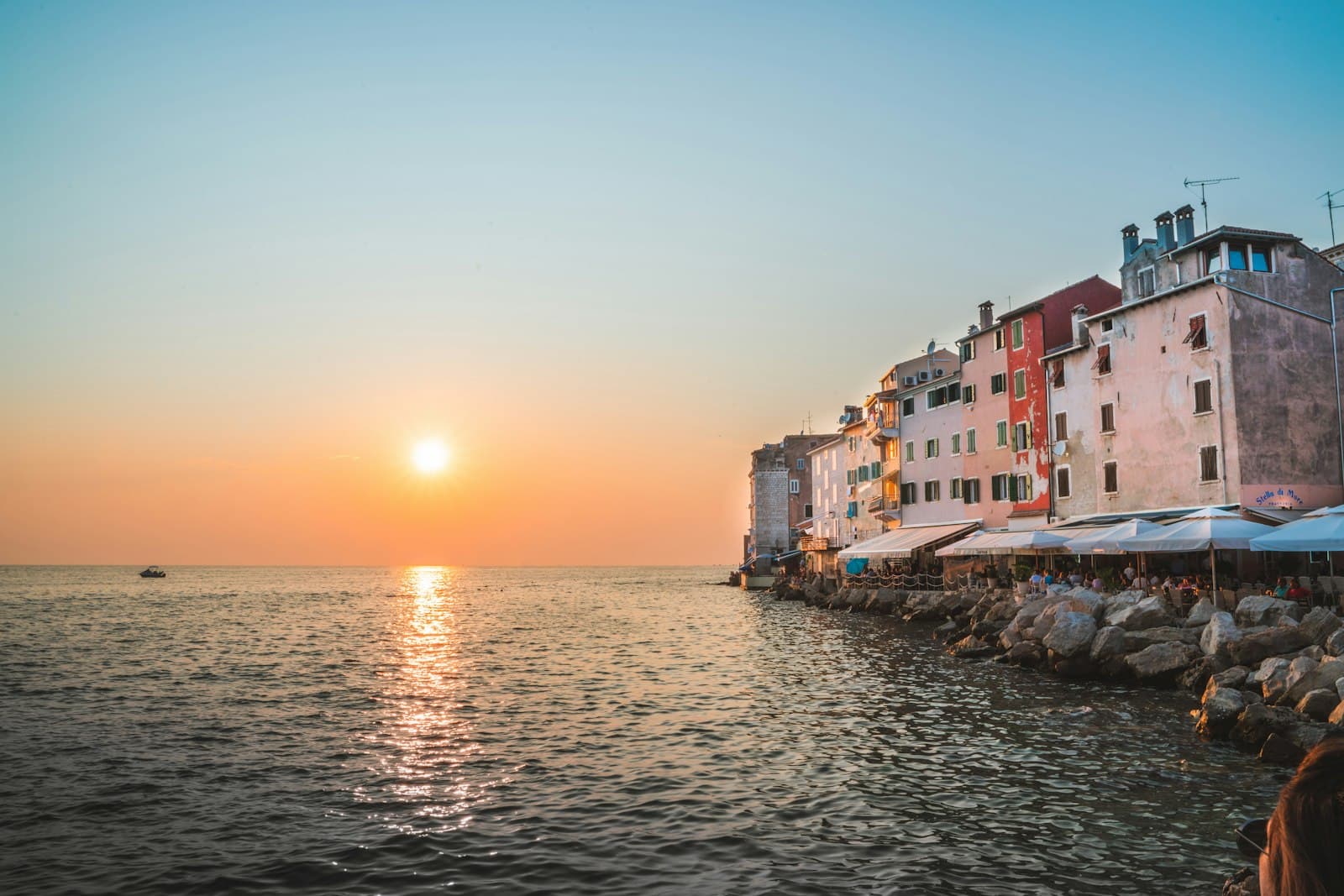
This town is a sensory experience, from the earthy perfume of truffles to the salty breath of the Adriatic. It's a place where you can wander without a map, unearthing small shrines, evocative arches, and laundry fluttering between buildings. The city's position on the west coast promises dramatic sunsets, best savored from a waterfront cafe or a rocky promontory.
Rovinj's origins reach back to antiquity, first appearing as the Roman settlement of Castrum Rubini between the 3rd and 5th centuries AD. Archaeological evidence suggests the area was inhabited even earlier, during the Bronze and Iron Ages, by the Histrian tribe who traded with Greek and Etruscan cultures. After the Roman Empire's peaceful reign, the inhabitants sought refuge on nearby islands like Mons Albanus, St. Catherine, St. Andrew, and Cissa, fleeing incursions from various aggressors. It is believed that the island of Cissa sank during a major earthquake in the 8th century.
The most pivotal period in Rovinj's history began in 1283 when it became part of the Venetian Empire. This era transformed Rovinj into a secure town and a vital maritime center. During Venetian rule, the town was fortified with defensive walls and three town gates, some remains of which are still visible today. The first city statute was proclaimed in 1531. Rovinj's economy flourished, shifting from primarily fishing and farming to include artisans, merchants, and sailors. Its sailors were celebrated for their skill and courage, participating in battles against the Turks in the 16th century.
Originally, Rovinj was built on an island close to the coast. However, in 1763, the channel separating the island from the mainland was filled in, connecting Rovinj to the continent and transforming it into the peninsula we see today. This expansion allowed the town to grow beyond its original walls. By the 17th and 18th centuries, Rovinj was not only the strongest fishing, maritime, and shipbuilding center in Istria but also a significant source of white and gray stone.
Following the fall of Venice in 1797 and a brief Napoleonic interlude, Rovinj became part of the Austrian Empire, a period that lasted until World War I. During the Habsburg Empire, Rovinj experienced a 'prime time,' becoming an industrial center with over 8,000 inhabitants. After WWI, Rovinj belonged to the Kingdom of Italy from 1918 to 1947, when it was ceded to SFR Yugoslavia and became part of SR Croatia. The original Italian name 'Rovigno' was then changed to 'Rovinj.' Following Croatia's independence in 1991, Rovinj has become a significant center within Istria County and a favored destination, known for its thriving economy and growing population of over 14,000 citizens.
Begin your exploration by wandering through the car-free Old Town, a labyrinth of narrow alleys that invite aimless discovery. The architecture, with its rustic character and vivid hues, often draws comparisons to Italy's Ligurian region. Ascend the hill to the Church of St. Euphemia, the town's most prominent landmark. This Baroque church, completed in 1736, safeguards the relics of its patron saint. For a modest fee, climb the 192 creaky wooden steps of the bell tower for unparalleled 360-degree views of the harbor, surrounding islands, and the Adriatic Sea.
Do not overlook Grisia Street, known as the artists' thoroughfare, where galleries and shops display local art and products. The Balbi Arch, a 17th-century Baroque gate, serves as a main entrance to the Old Town and offers a glimpse into Rovinj's Venetian past. Stroll along the Rovinj waterfront, a bustling promenade lined with cafes and restaurants, offering excellent views of the Old Town. For a dose of nature, explore Golden Cape Forest Park (Zlatni Rt), just south of the city. This oldest protected site in Istria offers walking and biking trails, rocky and pebbly beaches, and opportunities for swimming.
Consider a brief boat trip to St. Katarina Island, merely a five-minute journey from the Old Town, for more beaches and a different perspective of Rovinj. For a deeper understanding of local maritime heritage, visit the Batana Eco-Museum, dedicated to the traditional wooden batana fishing boat.
The most opportune time to visit Rovinj is during the shoulder seasons of May, June, and September, and early October. During these months, temperatures are agreeable (averaging 17°C to 25°C), the sea is warm enough for swimming, and the crowds are more manageable than in peak summer. September, in particular, is often highlighted as a 'sweet spot,' with warm sea temperatures, golden light, and fewer crowds after the first week. July and August are the warmest and busiest months, with peak prices and temperatures nearing 30°C. While lively with festivals, be prepared for crowds and higher costs. Visiting in late October to April means cooler temperatures and the possibility of rain, though prices are lower and sunny days are still common in winter.
Rovinj's Old Town is entirely pedestrian, making walking the primary and most enjoyable way to explore its narrow streets. Wear comfortable, sturdy shoes, as the cobblestones can be slippery and the streets are steep. For areas slightly further afield, like Golden Cape Forest Park or the beaches, renting a bicycle is an excellent option, with many rental shops available. Bike paths along the coast are generally flat and scenic.
If you arrive by car, be aware that parking is located just outside the Old Town, as it's a car-free zone. Public garages are available at Valdibora or Porton Biondi. Many accommodations outside the Old Town offer parking or shuttle services. Taxis are available for airport transfers or longer trips, and boat taxis can take you to nearby islands during summer. Croatia uses the Euro, and while cards are widely accepted, it's wise to carry some cash for smaller purchases or market stalls. Tipping 10-15% is customary in restaurants and cafes.