Freedom Square (Svoboda Square)
The iconic Monument of Liberty in Roussé's central square holds a secret about its orientation.
Full story unlocks in the tour
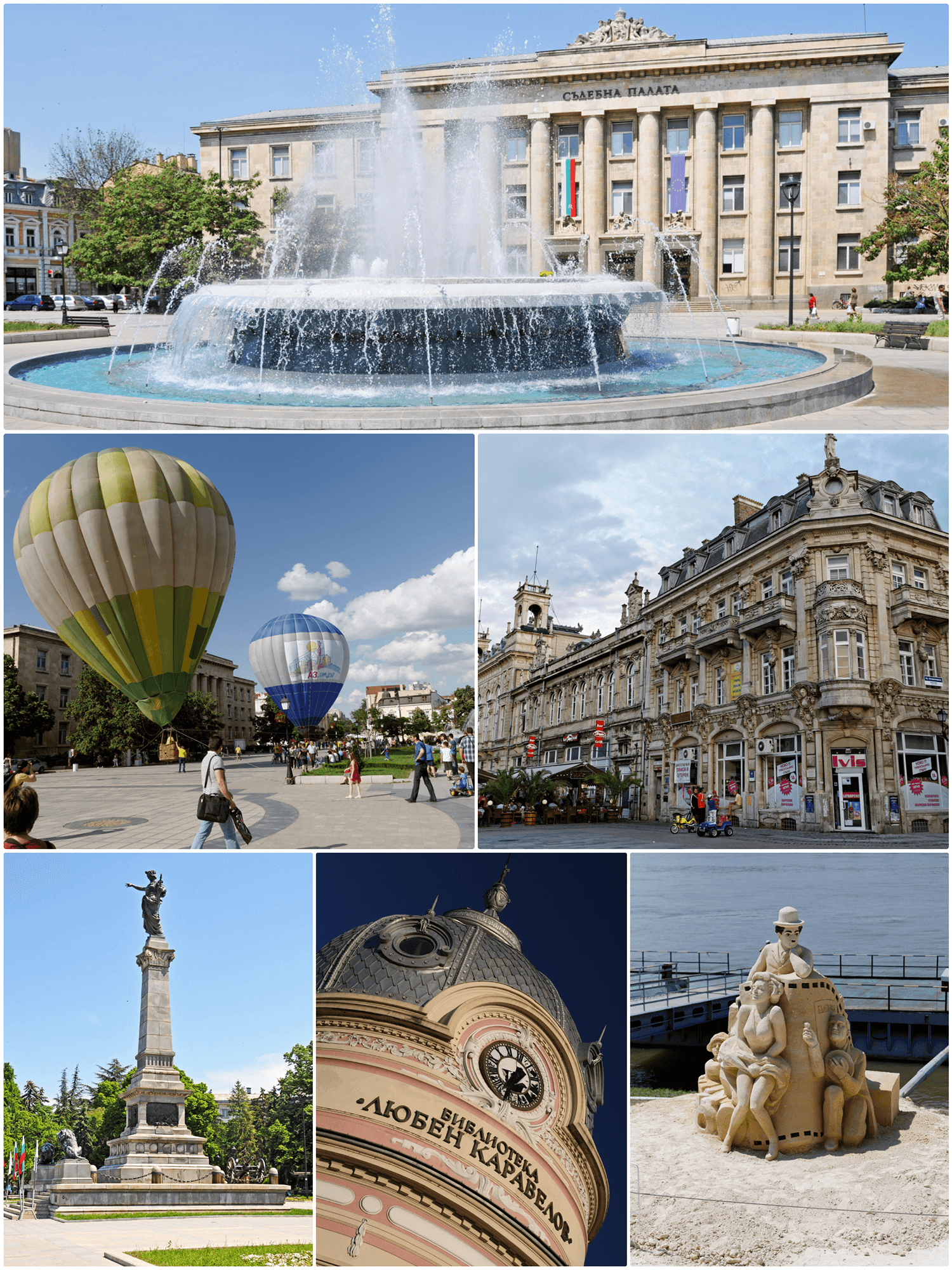 Velislav Varbanov: https://www.flickr.com/photos/varbanov/ Dennis Jarvisː https://www.flickr.com/photos/archer10/ Yeowatzupː https://www.flickr.com/people/46274125@N00 / CC BY-SA 2.0, via Wikimedia Commons
“Where the Danube meets Neo-Baroque grandeur and pioneering spirit.”
Not the postcards. The stories even locals don't know — whispered in your ear, right where they happened.
The iconic Monument of Liberty in Roussé's central square holds a secret about its orientation.
This ancient Roman site holds more than just Roman history beneath its surface.
One of Roussé's oldest churches features an unusual architectural design for its time.
Discover every secret of Roussé
Every address, every reveal in full — in your ear, right where it happened.
You pick your stops. You walk. The voice reveals what the others miss.
No tours available yet. Check back soon — we're preparing them.
Roussé, sometimes called the "Little Vienna" of Bulgaria, is a city where the grand architecture of the late 19th and early 20th centuries tells a story of European influence and pioneering spirit. Situated on the right bank of the Danube River, Roussé is Bulgaria's largest river port and a significant cultural and economic center in the northern part of the country. Its position on the Danube has historically made it a crossroads for trade and ideas, connecting the region with Central Europe and beyond.
The city's elegant central streets, lined with Neo-Baroque and Neo-Rococo buildings, invite exploration on foot. Roussé's atmosphere is a blend of its enduring past and its contemporary role as a hub for innovation and culture. From its ancient Thracian origins to its pivotal role in modern Bulgarian history, Roussé offers a compelling narrative for those eager to delve into its unique character.
The history of Roussé stretches back millennia, with evidence of Neolithic settlements drawn to the area's fertile resources. The city's strategic importance truly began in the 1st century AD, when the Roman Emperor Vespasian established the fortress of Sexaginta Prista, meaning "Port of Sixty Ships." This fortress served as a crucial naval base and part of the Danubian Limes, the Roman Empire's northern frontier, ensuring constant development and a diverse population.
After its destruction by Avars and Slavs in the late 6th century, the area saw a period of decline before re-emerging as a medieval Bulgarian settlement. By the early 17th century, Roussé, then known as Rustchuk under Ottoman rule, had become a significant trade center, its port facilitating commerce between Central Europe and the Balkans. This era also saw the establishment of numerous European diplomatic missions, accelerating the inflow of Western influences and shaping the daily lives of its residents.
The late 19th century marked a transformative period for Roussé. In 1864, it was declared the capital of the Danube Vilayet, an Ottoman province, which spurred extensive modernization. This period saw a flurry of "firsts" for Bulgaria in Roussé: the country's first railway line (connecting Roussé with Varna in 1866), the first private bank, insurance company, chamber of commerce, and even the first film screening. This cemented Roussé's reputation as a progressive European city and a gateway for new ideas and technologies into Bulgaria. After Bulgaria's liberation in 1878, Roussé became the largest city in the newly formed Principality, with its rapid economic growth influencing the city's overall appearance. Wealthy merchants and the city administration invited architects from Austria, Germany, and Italy, leading to the construction of the distinctive Neo-Baroque and Neo-Rococo buildings that earned Roussé its "Little Vienna" moniker.
Begin your exploration at Freedom Square (Svoboda Square), the city's central plaza, dominated by the majestic Monument of Liberty, a work by Italian sculptor Arnoldo Zocchi. Surrounding the square, you'll find the impressive Dohodno Zdanie, a Neo-Baroque building that has housed the National Theatre since 1902. Stroll along Ulitsa Aleksandrovska, the main pedestrian street, to admire more 19th-century architecture.
Delve into the past at the Regional Historical Museum, located in the former Battenberg Palace, which showcases the history of the Danube region. Do not miss the Sexaginta Prista Roman Fortress, an open-air museum exhibiting the remains of the ancient Roman military camp. For a unique cultural experience, visit the Holy Trinity Cathedral (Sveta Troitsa Church), a 17th-century church with an impressive wooden iconostasis.
Beyond the city center, consider a day trip to the Ivanovo Rock-Hewn Churches, a UNESCO World Heritage site featuring medieval cave churches adorned with remarkable frescoes, located about 20 km south of Roussé. Nearby is the Basarbovo Monastery, the only active rock monastery in Bulgaria. For a glimpse into Bulgaria's railway and shipping heritage, visit the National Museum of Transport, housed in the country's first railway station.
The best times to visit Roussé are during spring (April-May) and autumn (September-October) when the weather is mild and comfortable for exploration. Average temperatures in April range from 12-18°C (54-64°F), and in May, they reach 20-25°C (68-77°F). September offers pleasant warmth, averaging around 20°C (68°F), and is one of the driest months. Summer (June-August) can be hot, with temperatures often exceeding 30°C (86°F), making early mornings or late afternoons ideal for sightseeing. Winter (November-March) is typically the most affordable season, with milder temperatures compared to other parts of Europe.
Roussé is easily accessible by bus or train from major Bulgarian cities like Sofia, Plovdiv, Veliko Tarnovo, and Varna. The city also serves as a significant railway hub. For those arriving by air, Bucharest's Henri Coandă International Airport (OTP) in Romania is approximately 75 km north, offering a convenient international gateway. Public transport is available within Roussé, and the city center is pedestrian-friendly. If driving, Roussé is easy to navigate, with parking options available.
The local currency is the Bulgarian Lev (BGN). Electrical sockets are European 2-pin round plugs, with a voltage of 220-240 Volts. While Bulgarian is the official language, English is often spoken in tourist-oriented areas. The Tourist Information Center, located at 61 Aleksandrovska Str., provides guides in Bulgarian and English. Consider bringing insect repellent, especially during warmer months, due to the city's proximity to the Danube.