Puente Nuevo
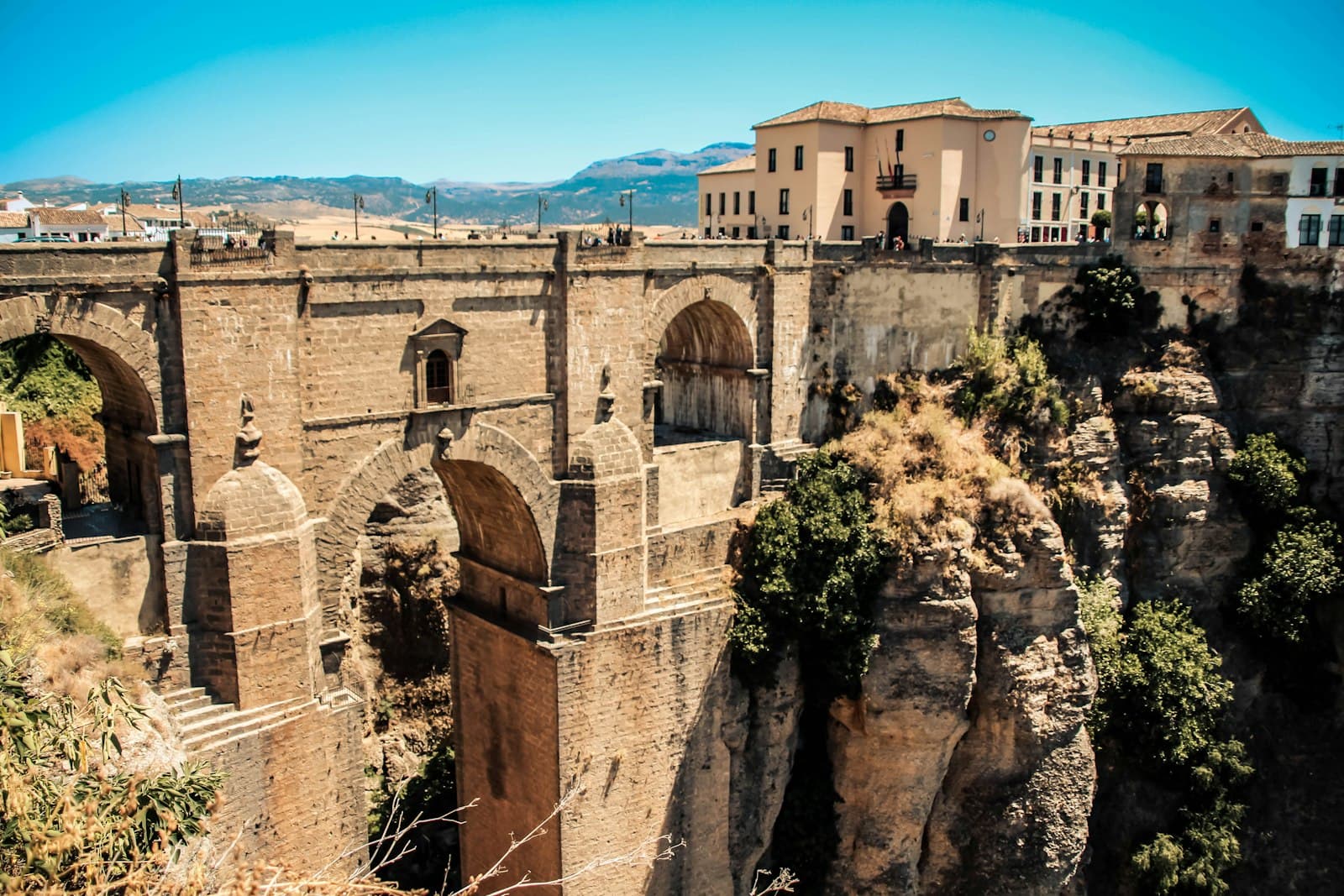
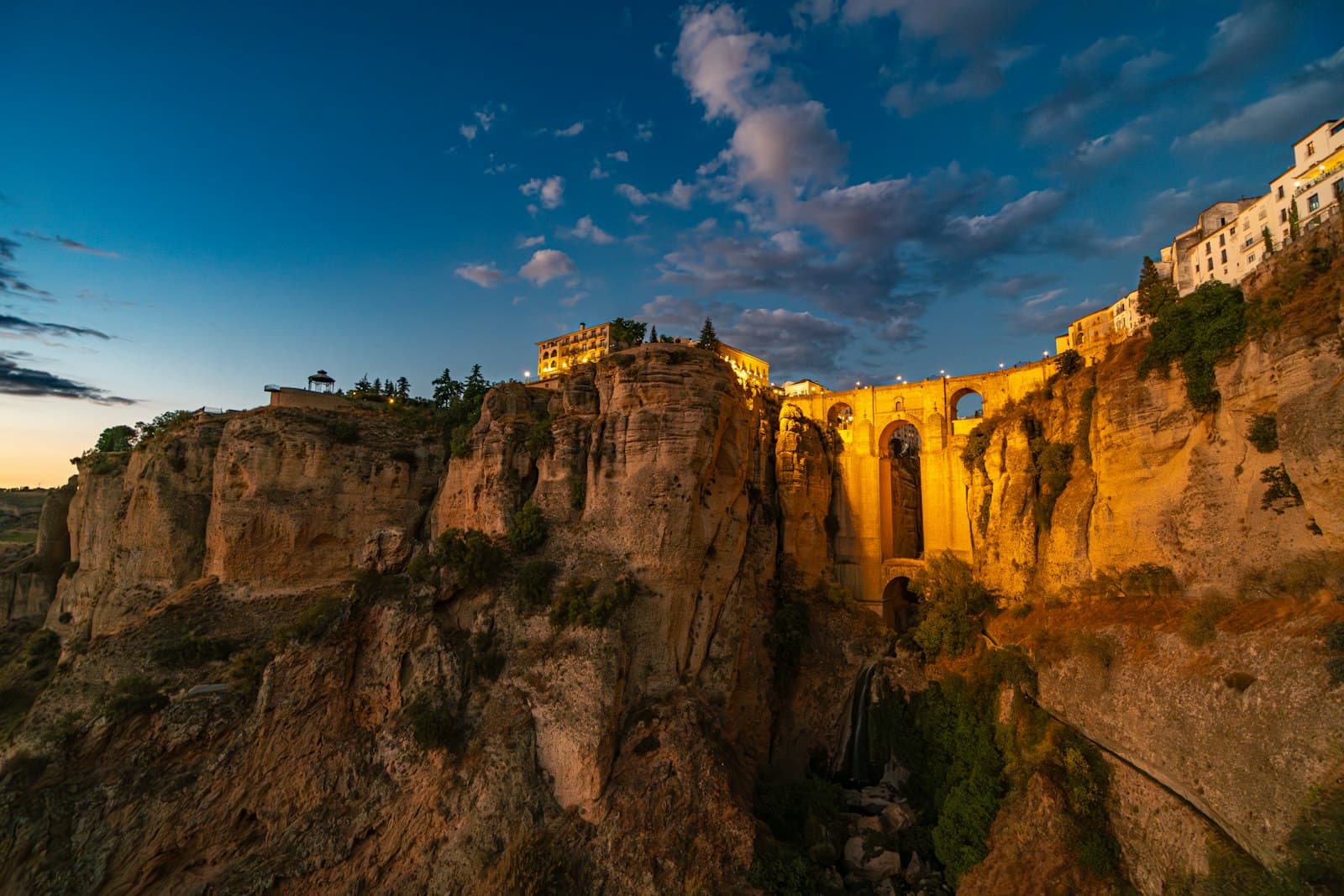
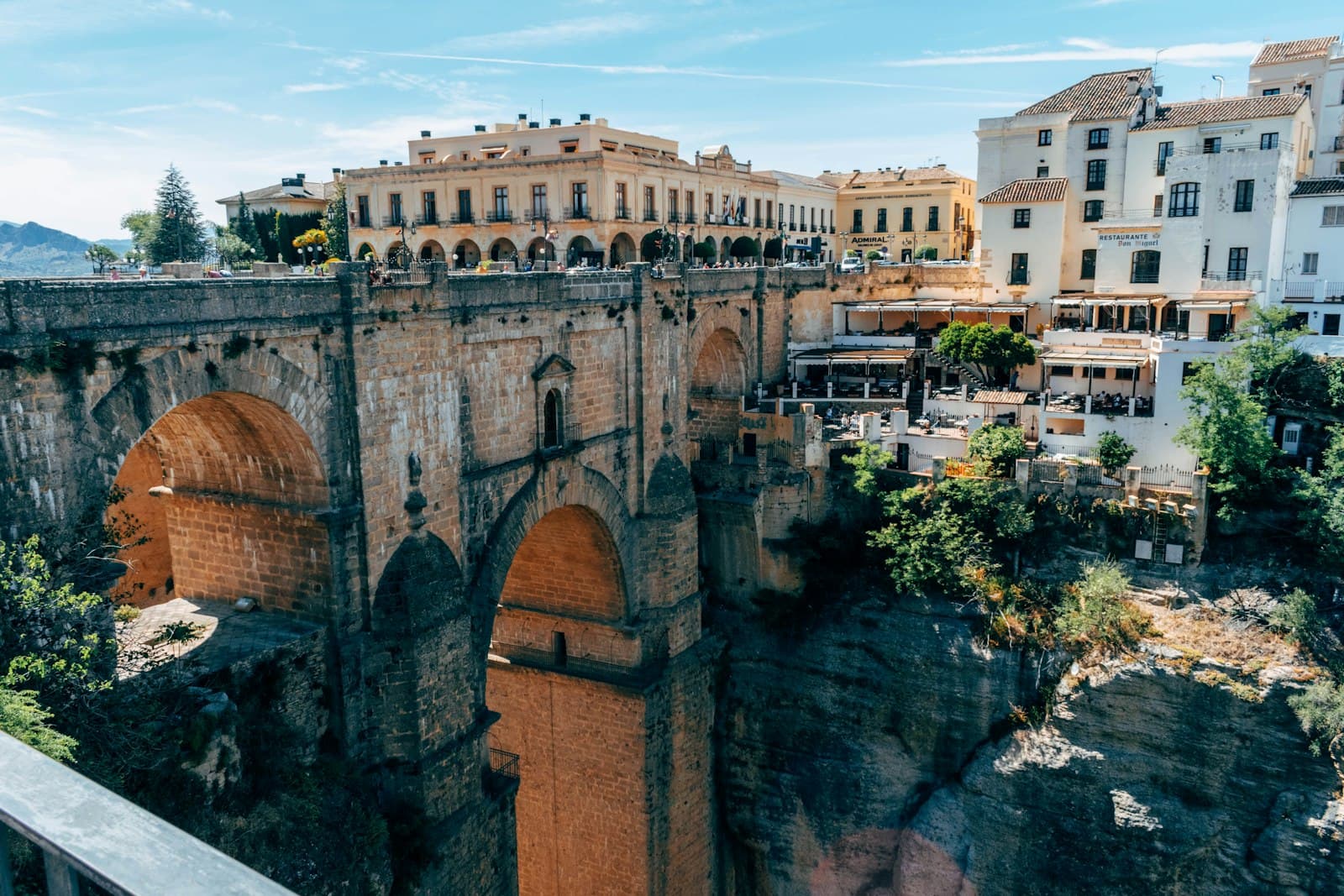
Ronda's celebrated 'New Bridge' isn't just an 18th-century marvel; its very name hints at a darker secret from an earlier, ill-fated attempt.
Full story unlocks in the tour
 kallerna / CC BY-SA 4.0, via Wikimedia Commons
“Where a dramatic gorge cleaves history and legend, high in the Andalusian mountains.”
Not the postcards. The stories even locals don't know — whispered in your ear, right where they happened.
Ronda's celebrated 'New Bridge' isn't just an 18th-century marvel; its very name hints at a darker secret from an earlier, ill-fated attempt.
This venerable bullring is honored as the cradle of modern bullfighting, yet it also holds a singular architectural detail that distinguishes it from nearly every other arena.
Beyond the town's precipitous cliffs, the surrounding mountains were once the domain of figures both feared and romanticized, inspiring narratives that captivated writers like Ernest Hemingway.
Discover every secret of Ronda
Every address, every reveal in full — in your ear, right where it happened.
You pick your stops. You walk. The voice reveals what the others miss.
No tours available yet. Check back soon — we're preparing them.
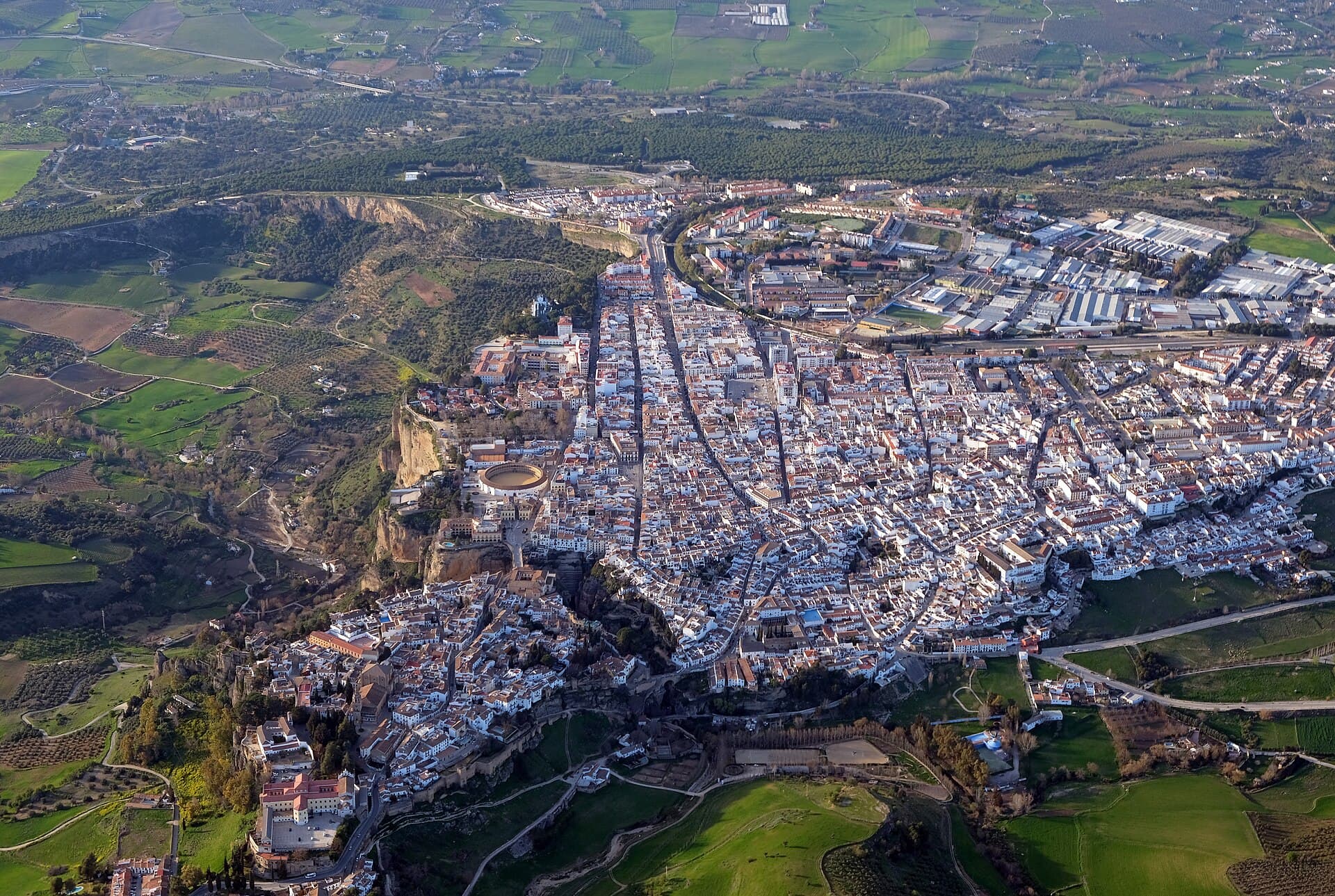
Set dramatically above the El Tajo gorge, Ronda is a town that feels hewn from the very landscape it inhabits. This ancient Andalusian settlement, split into its old Moorish quarter and newer mercantile area by a 100-meter chasm, offers more than just sweeping vistas. It's a place where history is etched into every stone, from its Roman roots to its Moorish legacy and its pivotal role in Spanish culture.
Often dubbed 'The City of Dreams' by poet Federico García Lorca, Ronda has long captivated artists and writers, including Orson Welles and Ernest Hemingway. Its singular position and deep past make it a compelling destination for those seeking to understand the layered heritage of southern Spain.
Ronda's origins stretch back millennia, making it one of Spain's oldest continuously inhabited areas. Archaeological discoveries in nearby caves, such as the Cueva de la Pileta, reveal human presence dating back to the Neolithic period and even Paleolithic cave art from as early as 25,000 BCE. The Celts were among the first documented settlers in the 6th century BCE, bestowing upon the town the name Arunda. Later, the Phoenicians established the settlement of Acinipo, known as 'land of the wines.'
The Romans arrived in the 2nd century BCE during the Second Punic War, utilizing Ronda as a fortified outpost. Under Julius Caesar, Ronda attained city status. While Acinipo flourished as a major Roman municipality, even minting its own coins, it was eventually abandoned by the 6th century CE. Ronda, however, continued its development, becoming a significant town after the decline of the Roman Empire.
The arrival of the Moors in 711 CE marked a period of profound prosperity for Ronda. The city, then known as Izna Rand Onda or simply Onda (City of the Castle), became the capital of Takurunna, one of the provinces of Al-Andalus. Under Moorish rule, Ronda thrived as an independent kingdom, or Taifa, following the collapse of the Caliphate of Córdoba. Many important structures, including the Arab Baths and Mondragón Palace, were constructed or developed during this era, and the city walls were strengthened.
The Christian Reconquest of Ronda occurred on May 20, 1485, when the Catholic Monarchs Isabella and Ferdinand recaptured the city, bringing an end to over seven centuries of Islamic rule. Following the expulsion of the Moors in 1570, Ronda became a completely Christian town, and its urban structure began to assume the form seen today.
The 18th century saw Ronda emerge as the birthplace of modern bullfighting. The Real Maestranza de Caballería de Ronda, a royal riding school established in 1572, played a crucial role in this evolution. Pedro Romero (1754-1839), a native of Ronda, revolutionized the practice by confronting bulls on foot, transforming it into a refined art form. He famously engaged over 5,558 bulls without serious injury, earning him the title of the father of modern tauromachy. The iconic Plaza de Toros, one of Spain's oldest bullrings, was inaugurated in 1785.
During the 18th and 19th centuries, the rugged Serranía de Ronda also became synonymous with 'bandoleros' or bandits. These highwaymen, often driven by poverty or resistance against French occupation, became folk heroes and a popular subject for Romantic writers. Figures like 'El Tempranillo' and 'Pasos Largos' became legendary, contributing to Ronda's colorful and intriguing history.
The 20th century brought further transformations, including conflict during the Spanish Civil War. A renowned scene in Ernest Hemingway's novel For Whom the Bell Tolls is said to have been inspired by an incident in Ronda where Fascist sympathizers were cast from the cliff into the gorge, though the veracity of this is debated. Today, Ronda is a lively town with a population of approximately 35,000, continuing to draw visitors from around the world who come to admire its dramatic landscapes, historical monuments, and unique cultural heritage.
Ronda's dramatic setting ensures that simply walking through the town offers constant visual rewards. The Puente Nuevo is undoubtedly the town's most celebrated landmark, spanning the El Tajo gorge. You can walk across it, and for truly indelible perspectives, take the newly opened route down into the gorge to see the bridge from its base.
Explore the Plaza de Toros de Ronda, one of Spain's oldest and most architecturally significant bullrings. It houses a museum detailing the history of bullfighting and displays impressive period costumes.
Wander through the Old Town (La Ciudad), a labyrinth of narrow Moorish streets, whitewashed lanes, and tranquil squares like Plaza Duquesa de Parcent. Here you'll find the Church of Santa María la Mayor, built upon the foundations of the town's former mosque, with elements of original Islamic architecture still discernible.
Do not overlook the Baños Árabes (Arab Baths), considered the best-preserved in the Iberian Peninsula. Dating back to the 13th century, these thermal baths offer a window into Ronda's Moorish past with their distinctive star-shaped skylights and ancient arches.
For expansive views, stroll along the Alameda del Tajo and its various vantage points, including the Mirador de Ronda. You can also explore the Jardines de Cuenca, terraced gardens offering different perspectives of the gorge and the Puente Nuevo.
The shoulder seasons, April-May and September-October, offer the most agreeable weather for visiting Ronda. Temperatures are mild, wildflowers bloom in spring, and autumn brings golden hues to the surrounding countryside. These months also see manageable crowds. Summers (July and August) are intensely hot, often surpassing 35°C (95°F), which can make sightseeing less comfortable. While still beautiful, the heat and larger crowds in peak summer can be formidable. Winters (December-February) are cooler and quieter, with daytime temperatures around 10-15°C (50-59°F) and nights dropping near freezing. November is typically the wettest month.
Ronda's historic center is eminently walkable, with many key attractions within a short distance of each other. Comfortable walking shoes are essential for navigating its ancient streets and any excursions into the gorge. While you can drive to Ronda, parking within the town can be challenging, especially during high season. Consider parking outside the main town, for example, along Calle Marbella, and walking in.
For those arriving without a car, Ronda is accessible by bus or train from major Andalusian cities like Málaga and Seville. Once there, local walking tours are an excellent way to get oriented and gain insights into the town's history and culture. Many tours last around 1.5 hours and cover the main landmarks efficiently.