The Beatles Ashram (Chaurasi Kutia)
Many know Rishikesh as the 'Yoga Capital of the World', but few realize its unexpected connection to rock and roll royalty.
Full story unlocks in the tour
 VK1983 / CC BY-SA 4.0, via Wikimedia Commons
“Where the Ganges descends from the Himalayas, and the spirit finds its flow.”
Not the postcards. The stories even locals don't know — whispered in your ear, right where they happened.
Many know Rishikesh as the 'Yoga Capital of the World', but few realize its unexpected connection to rock and roll royalty.
This iconic suspension bridge holds a mythological secret about how it first came to be, long before any steel or iron was involved.
While popular waterfalls draw crowds, a truly serene cascade often goes unnoticed, even by those who drive past it daily.
Discover every secret of Rishikesh
Every address, every reveal in full — in your ear, right where it happened.
You pick your stops. You walk. The voice reveals what the others miss.
No tours available yet. Check back soon — we're preparing them.
Rishikesh, often called the 'Yoga Capital of the World,' is a city in the northern Indian state of Uttarakhand, set against the dramatic backdrop of the Himalayan foothills. Here, the sacred Ganges River emerges from the mountains and flows into the plains of northern India. This spiritual center draws pilgrims, yogis, and adventure seekers from across the globe, all drawn to its unique blend of ancient traditions and thrilling outdoor activities.
The city is a significant pilgrimage site for Hindus, with numerous temples and ashrams lining the banks of the Ganges. It is considered a gateway to the Garhwal Himalayas and serves as a starting point for the Char Dham pilgrimage, a sacred journey to four revered shrines. Beyond its spiritual allure, Rishikesh has also gained a reputation as the 'Adventure Capital of India,' offering activities like white-water rafting, bungee jumping, and trekking.
Rishikesh's history is deeply intertwined with Hindu mythology. The name 'Rishikesh' is believed to be derived from 'Hrishikesha,' a name for Lord Vishnu. According to legend, Lord Vishnu appeared in this form to Sage Raibhya Rishi after his intense penance on the banks of the Ganges. Ancient texts like the Puranas and Upanishads mention Rishikesh as a spiritual land, a place where wise men performed penance and sought divine wisdom.
Another significant mythological connection is with Lord Rama, the protagonist of the Hindu epic Ramayana. It is believed that Lord Rama performed penance in Rishikesh to atone for killing the demon king Ravana. His younger brother, Lakshmana, is said to have crossed the Ganges using a jute rope at the spot where the Lakshman Jhula bridge now stands. This act of courage is honored by the bridge, which was initially a jute rope structure before being replaced by an iron suspension bridge in 1929.
Over centuries, Rishikesh evolved into a prominent center for meditation, yoga, and spiritual studies, attracting sages and mystics like Swami Vivekananda and Swami Sivananda. The confluence of the Ganges and Chandrabhaga Rivers in Rishikesh is considered sacred, with a belief that a dip in the Ganges here can cleanse sins and offer healing properties.
Rishikesh gained international recognition in the 20th century, particularly after The Beatles visited Maharishi Mahesh Yogi's ashram in 1968 to learn Transcendental Meditation. This visit brought global attention to Rishikesh, transforming it from a quiet spiritual oasis into an active yoga and wellness destination. The city has since hosted the International Yoga Festival annually since 1999, solidifying its reputation as the 'Yoga Capital of the World.'
Today, Rishikesh continues to be a magnet for spiritual seekers, offering numerous ashrams and yoga centers that provide retreats and training programs. It is also a vegetarian-only and alcohol-free city, reflecting its deep spiritual ethos. In 2015, Rishikesh and Haridwar were designated as India's first 'twin national heritage cities,' further acknowledging their cultural and historical importance.
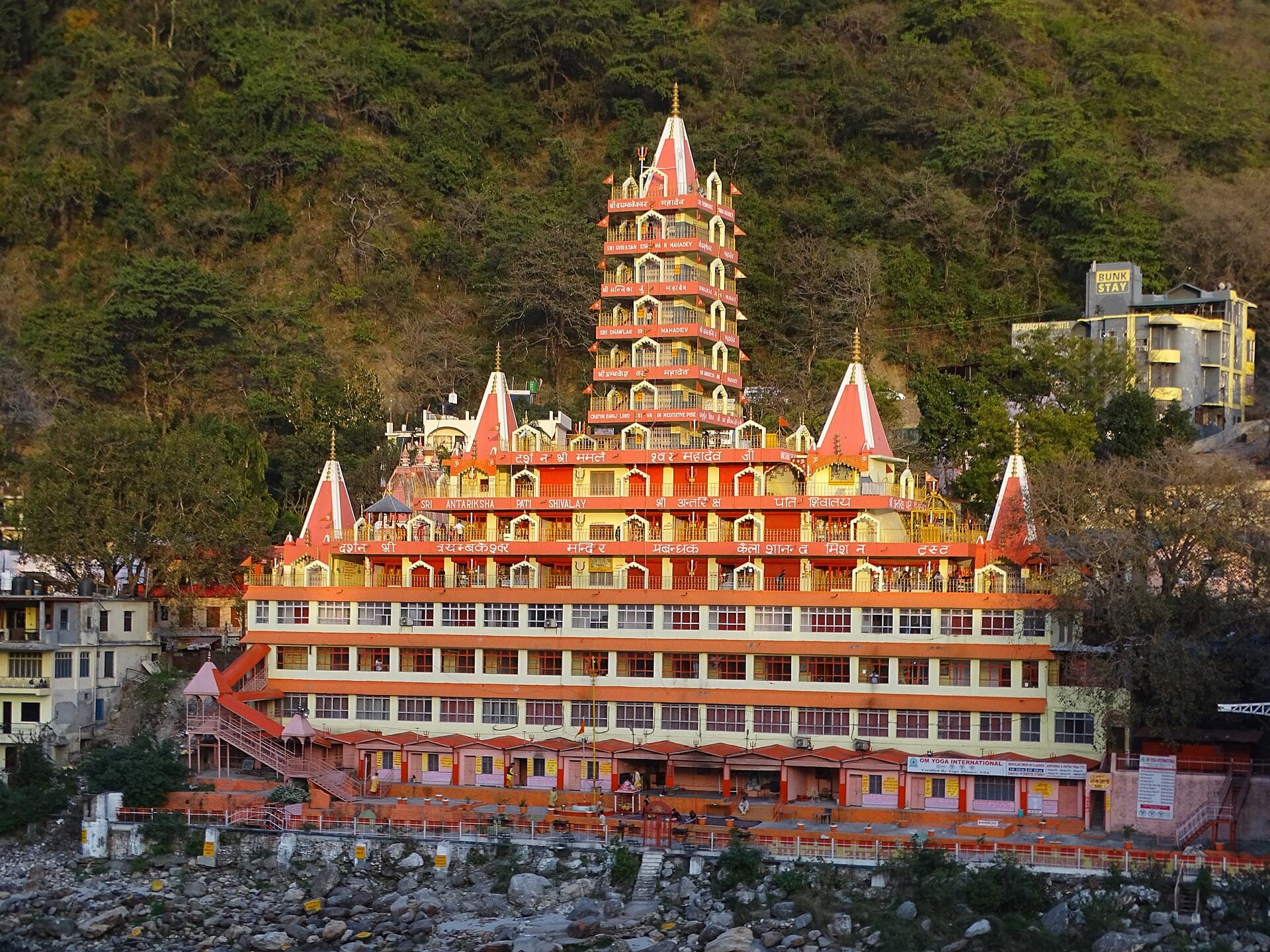
Begin your exploration at the iconic suspension bridges, Lakshman Jhula and Ram Jhula, which span the Ganges and offer sweeping views of the river, surrounding hills, and temples. While Lakshman Jhula is currently closed to vehicular traffic, it remains a significant landmark. Near Lakshman Jhula, visit the Trayambakeshwar Temple, a striking 13-story Hindu temple.
Experience the spiritual heart of Rishikesh by attending the Ganga Aarti, an evening prayer ritual held daily at Triveni Ghat and Parmarth Niketan Ashram, where devotees offer prayers with lamps and chants. For a unique historical perspective, explore the abandoned Chaurasi Kutia, famously known as The Beatles Ashram, where the band once sought spiritual enlightenment.
Beyond spirituality, Rishikesh offers a range of adventurous activities. Engage in white-water rafting on the Ganges, with various stretches catering to different skill levels. You can also try bungee jumping, or trek to natural attractions like Neer Garh Waterfall for a refreshing dip. For tranquil moments, seek out secluded meditation areas along the riverbanks or visit lesser-known viewpoints for captivating sunrise and sunset vistas.
The best time to visit Rishikesh is during the winter months, from October to February, when temperatures are pleasant, ranging from 5°C to 30°C. This period offers clear skies, ideal for sightseeing, yoga retreats, and adventure sports like river rafting. March to April is also a good time, with warmer temperatures (15°C to 40°C) and the celebration of the International Yoga Festival and Holi. The monsoon season, from July to September, brings heavy rainfall, making some outdoor activities challenging, though the landscape becomes lush and green.
Rishikesh is a vegetarian-only and alcohol-free city, a reflection of its spiritual significance. Expect to find a wide array of delicious plant-based options, from traditional Indian thalis to international vegetarian cuisine. The city is well-connected by bus from Delhi, with journeys typically taking 5-7 hours. You can also reach Rishikesh by train or taxi.
Accommodation options range from budget-friendly guesthouses and hostels to luxury resorts and peaceful ashrams, many of which offer yoga and meditation programs. It's advisable to carry cash, as ATMs can sometimes be unreliable. While generally safe, it's wise to be mindful of monkeys, which can be mischievous. Dress respectfully, especially when visiting temples and ashrams.