Riomaggiore's Tower Houses
The colorful, vertically stacked houses of Riomaggiore offer more than just a pleasing view.
Full story unlocks in the tour
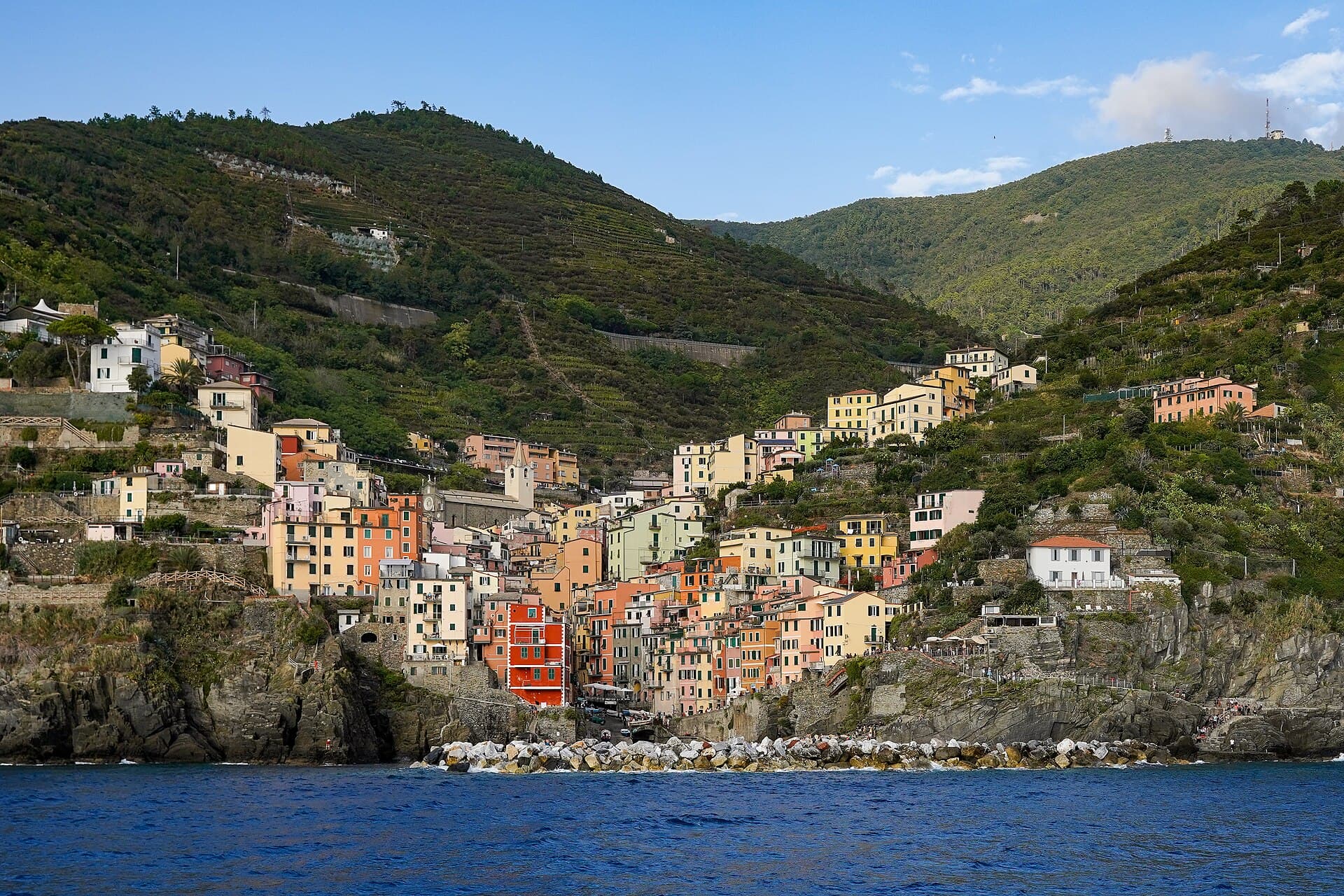 This Photo was taken by Timothy A. Gonsalves. Feel free to use my photos, but please mention me as the author. I would much appreciate if you send me an email tagooty@yahoo.com or write on my talk page, for my information. Please contact me before commercial use. Please do not upload an edited image here without consulting me. I would like to make corrections only at my own source to ensure that the changes improve the image and are preserved.Otherwise you may upload an edited image with a new name. Please use one of the templates derivative or extract. / CC BY-SA 4.0, via Wikimedia Commons
“Where the Ligurian Sea meets a cascade of history and charm.”
Not the postcards. The stories even locals don't know — whispered in your ear, right where they happened.
The colorful, vertically stacked houses of Riomaggiore offer more than just a pleasing view.
Riomaggiore, meaning 'major river,' draws its name from a significant waterway.
Riomaggiore Castle, a formidable 13th-century fortress, has served purposes beyond defense.
Discover every secret of Riomaggiore
Every address, every reveal in full — in your ear, right where it happened.
You pick your stops. You walk. The voice reveals what the others miss.
No tours available yet. Check back soon — we're preparing them.
Riomaggiore, the easternmost village of the Cinque Terre, clings to a steep terraced hillside that descends dramatically to the Ligurian Sea. This village, a riot of sun-drenched facades, is a testament to human ingenuity in a challenging landscape. Its homes, painted in ochre, rose, and terracotta, seem to spill down towards the small harbor, creating a striking visual against the deep blue waters.
The village's layout is a fascinating labyrinth of narrow alleyways, staircases, and tunnels. Life here unfolds at a different pace, dictated by the rhythm of the sea and the demands of the land. Fishermen mend their nets by the water's edge, while terraced vineyards, carved into the hillsides, speak to centuries of winemaking tradition. Riomaggiore offers a profound sense of place, where the natural world and human endeavor intertwine.
The origins of Riomaggiore stretch back to the 8th century, when inhabitants from the Vara Valley sought refuge from invading forces. They established settlements along the coast, laying the groundwork for the village we see today. The name 'Riomaggiore' itself, meaning 'major river,' alludes to the Rivus Maior, a stream that once flowed openly through the valley, now channeled beneath the village's main street.
Throughout the medieval period, Riomaggiore, like its neighboring villages, fell under the dominion of various noble families, including the Fieschi and the Da Passano. Its strategic coastal position made it vulnerable to pirate raids, leading to the construction of defensive structures, including the imposing Riomaggiore Castle. This fortress, dating back to the 13th century, served as a crucial bulwark against maritime threats. Over time, its purpose shifted; during the Napoleonic era, its interior was filled with earth and transformed into a cemetery, a poignant reminder of the village's evolving needs.
The 19th century brought significant changes with the construction of the railway line, connecting Riomaggiore to larger cities and opening it up to the outside world. This development, while bringing progress, also marked the beginning of a gradual shift from a purely agrarian and fishing economy to one increasingly reliant on tourism. Despite these transformations, Riomaggiore has managed to preserve its distinctive character, a blend of ancient traditions and a resilient spirit. Its terraced vineyards, dry-stone walls, and colorful houses stand as enduring symbols of a community that has shaped its environment with remarkable determination.
Wander through the main street, Via Colombo, where local shops offer Ligurian specialties. Descend to the small, rocky harbor, a working port where fishing boats bob gently. For panoramic views, ascend to the Riomaggiore Castle, which now serves as a cultural center. The Church of San Giovanni Battista, a 14th-century Gothic structure, features a rose window and an interior with three naves. Explore the narrow carrugi, the characteristic Ligurian alleyways, which wind between the colorful buildings, offering glimpses into daily life.
Spring (April-May) and early autumn (September-October) offer pleasant weather for exploration, with fewer crowds than the peak summer months. The mild temperatures are ideal for walking the paths and enjoying the coastal scenery. Summer (June-August) brings warm sunshine and lively energy, though the village can become quite busy.
Riomaggiore is largely car-free. The train is the most convenient way to arrive and travel between the Cinque Terre villages. A small bus service connects the train station to the upper part of the village. Wear comfortable shoes suitable for uneven paths and many steps. Many establishments close during the off-season (November-March), so check opening hours if visiting then. ATMs are available, but it's wise to carry some cash.