Latgale Liberation Monument ("Māra of Latgale")
This prominent statue in Rēzekne carries a dramatic past, having been erected and dismantled multiple times.
Full story unlocks in the tour
 Harald Hansen / Public domain, via Wikimedia Commons
“Where ancient echoes meet the spirited heart of Latgale.”
Not the postcards. The stories even locals don't know — whispered in your ear, right where they happened.
This prominent statue in Rēzekne carries a dramatic past, having been erected and dismantled multiple times.
One of Rēzekne's oldest wooden buildings conceals a secret beneath its floorboards.
Beyond its striking Neo-Romanesque architecture, this cathedral is rumored to hold remnants of a turbulent past.
Discover every secret of Rēzekne
Every address, every reveal in full — in your ear, right where it happened.
You pick your stops. You walk. The voice reveals what the others miss.
No tours available yet. Check back soon — we're preparing them.
Rēzekne, often called the "Heart of Latgale," is a city in eastern Latvia, resting on seven hills where the Rēzekne River gracefully winds. It is a place where history feels alive, with medieval castle ruins overseeing the city, yet it also embraces modernity with striking contemporary architecture. This city offers a distinctive blend of cultural heritage, spiritual traditions, and natural beauty, making it a compelling destination for those seeking an authentic Latvian experience.
The city's character is shaped by its multicultural past, with influences from Latvian, Russian, Polish, and Jewish communities evident in its diverse religious buildings and cultural identity. Rēzekne serves as a significant cultural and educational center for the Latgale region, known for its unique dialect, strong Catholic traditions, and a lively arts scene, particularly in ceramics. It is a city that invites exploration, from its active market to its serene riverbanks, offering a glimpse into a side of Latvia beyond the usual tourist paths.
Rēzekne's history extends to the 9th to 12th centuries, when an ancient Latgalian wooden fortress stood on the hill by the river. The city was first documented in 1285 under the German name Rositten, when the Livonian Order constructed a stone fortress on the site, serving as a crucial border post. This strategic location meant the castle faced frequent attacks and occupations by Russian and Lithuanian forces, and it was ultimately destroyed during the Polish-Swedish War in the 17th century, leaving only ruins.
In 1772, Rēzekne was annexed by the Russian Empire during the First Partition of Poland, receiving city rights in 1773. Empress Catherine II approved a city plan in 1778, initiating active construction. The 19th century brought significant development with the construction of the St. Petersburg–Warsaw highway (1836) and railway (1861), transforming the provincial city into an important industrial center. By the eve of World War I, the population had grown to 23,000, with a notable Jewish community comprising about 60% of residents.
The early 20th century was a period of both growth and devastation. In 1917, Rēzekne hosted the Latgalian Latvian Congress, where Latgale decided to join an independent Latvia. During Latvia's first period of independence (1918–1939), Rēzekne flourished as a center of Latgalian culture and education. However, World War II brought immense destruction; the city was severely damaged by Soviet air-bombing in 1944, with two-thirds of its buildings destroyed and the Jewish community largely decimated. After the war, Rēzekne was rebuilt with an emphasis on industrial development, becoming a significant industrial center in the Latvian SSR. Today, Rēzekne is recognized as a center of spiritual life, education, and culture in Latgale, and the seventh largest city in Latvia.
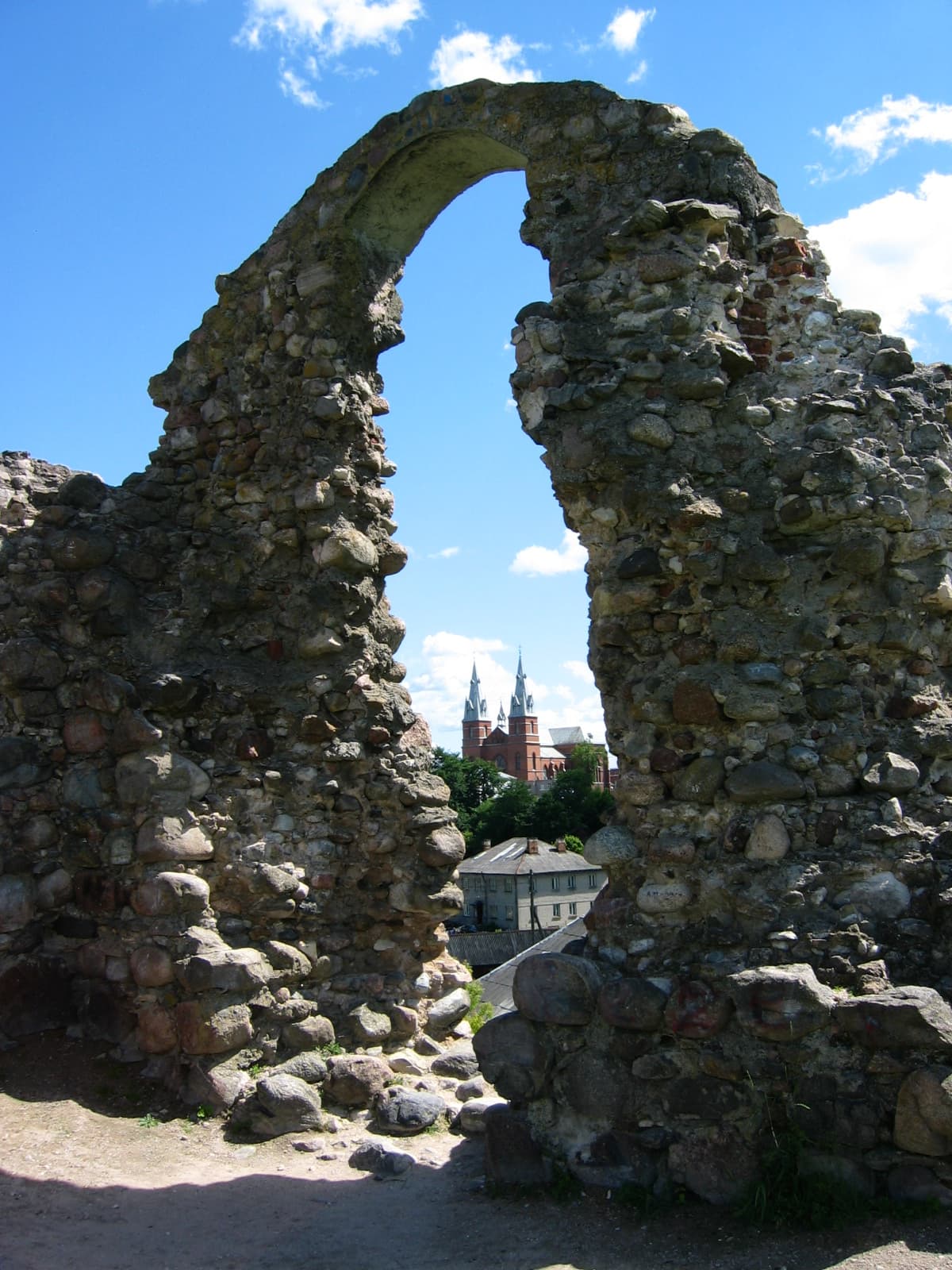
Begin your exploration at the Rēzekne Castle Mound, where fragments of the 13th-century Livonian Order castle walls offer expansive views of the city and the Rēzekne River. A model of the medieval castle Rositten is also nearby, illustrating its former grandeur. Just across the street, the striking modern architecture of the Eastern Latvian Creative Services Centre "Zeimuļs" stands in stark contrast, with its unique design and green roof.
Delve into local culture at the Latgale Culture and History Museum, housed in a 19th-century merchant's mansion. It features exhibits on Latgalian pottery, ancient crafts, and the region's unique language, along with a collection of Latgalian ceramics.
For a spiritual journey, visit the neo-Romanesque Sacred Heart Cathedral, consecrated in 1904, known for its twin spires and stained-glass windows. Another significant religious site is the Rēzekne Green Synagogue, dating back to 1845. It is the oldest wooden building in the city and the only synagogue to survive WWII, now featuring a digital exposition on the local Jewish community.
Do not miss the Latgale Liberation Monument, also known as "Māra of Latgale," a powerful symbol of Latvian statehood and Latgalian identity, located on Atbrīvošanas aleja. Finally, experience the contemporary arts scene at the Latgale Embassy GORS, a modern cultural center hosting concerts, exhibitions, and festivals.
The most pleasant time to visit Rēzekne is during the warmer months, from June through August, when average daytime temperatures range from 20-23°C (68-73°F). This period offers long daylight hours, ideal for outdoor activities and exploring the city's sights. July is typically the warmest month. The shoulder seasons of May and September also provide agreeable weather with fewer crowds. While winters are cold and snowy, with temperatures often below freezing, they offer a quiet, picturesque beauty for those who appreciate winter landscapes.
Rēzekne is situated 242 kilometers (150 miles) east of Riga. The city is well-connected by both bus and train, with multiple daily departures from Riga and Daugavpils. Once in Rēzekne, the city center is compact and walkable, with many attractions within a 20-minute stroll. Local buses are available, running every thirty minutes along three routes, and taxis can be found. For those traveling by car, parking is generally available.
Accommodation options in Rēzekne range from budget-friendly guesthouses to more comfortable hotels. Wi-Fi is widely available in cafes, hotels, and public spaces. Supermarkets like Maxima and Rimi are open most days, though Sunday hours may be shorter. It is advisable to carry small bills for market purchases. While Latvian is the official language, Russian is also widely spoken, and some English is understood in tourist-oriented areas.