Marco Zero
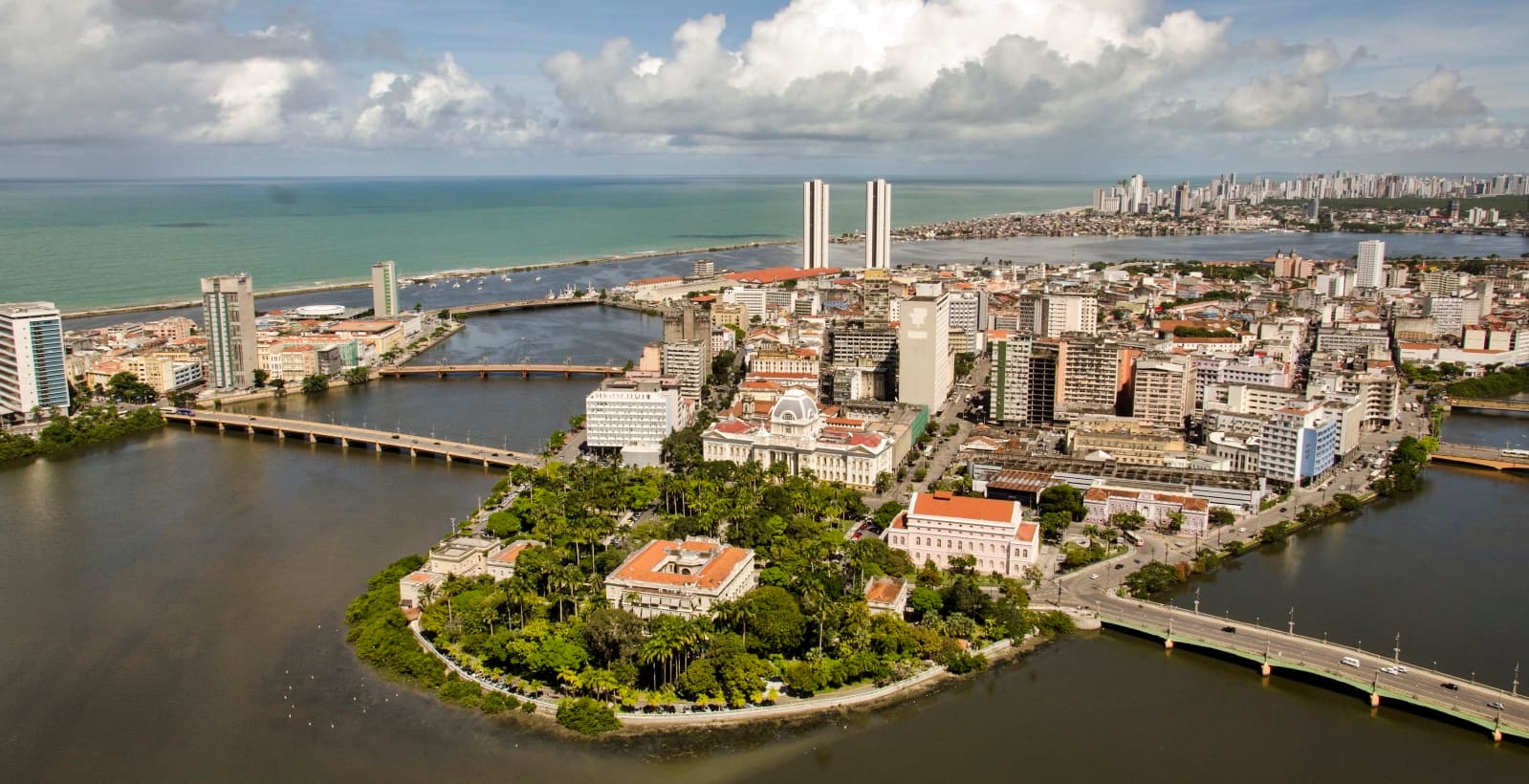
Marco Zero, an emblematic square, is more than a scenic spot; it's a precise geographical marker with a quiet, yet profound, historical function.
Full story unlocks in the tour
 Portal da Copa/ME / CC BY 3.0 br, via Wikimedia Commons
“Where rivers intertwine with history, and an Afro-Brazilian rhythm animates every corner.”
Not the postcards. The stories even locals don't know — whispered in your ear, right where they happened.
Marco Zero, an emblematic square, is more than a scenic spot; it's a precise geographical marker with a quiet, yet profound, historical function.
Recife's renowned urban beach offers warm waters and golden sands, yet a distinctive natural formation dictates when it is truly safe for a swim.
The Capibaribe River, central to Recife's identity as the 'Venice of Brazil,' bears a name that reveals an unexpected connection to local fauna.
Discover every secret of Recife
Every address, every reveal in full — in your ear, right where it happened.
You pick your stops. You walk. The voice reveals what the others miss.
No tours available yet. Check back soon — we're preparing them.
Recife, the capital of Pernambuco in northeastern Brazil, is a city where history flows as freely as its rivers. Known as the "Venice of Brazil" due to its intricate network of waterways, islands, and more than 50 bridges, the city presents a unique urban landscape. This coastal metropolis, situated where the Capibaribe and Beberibe rivers converge before emptying into the Atlantic Ocean, harmonizes colonial Portuguese architecture with a powerful Afro-Brazilian cultural heartbeat.
Recife is not merely a collection of historical structures; it is a lively, evolving city with a distinct pulse. From the energetic rhythms of frevo and maracatu that define its celebrated Carnival to the bustling avenues of Recife Antigo, the city invites exploration beyond the usual tourist routes. It is a place where contemporary tech centers stand alongside historic districts, and local customs are fervently observed.
## From Fishing Village to Dutch Capital Recife's narrative commenced in 1537 as a modest fishing village and port, serving the more affluent colonial capital of Olinda, located just to its north. Its strategic natural harbor, shielded by offshore coral reefs (from which the city derives its name, recife meaning "reef" in Portuguese), made it ideal for maritime commerce, primarily the export of sugarcane.
In 1630, the Dutch West India Company seized Recife from the Portuguese, initiating a 24-year period of significant transformation. Under the governorship of Count Johan Maurits of Nassau-Siegen, the city was renamed Mauritsstad and underwent extensive urban planning. New bridges, canals, and thoroughfares were constructed, establishing the foundation for its distinctive layout and solidifying its nickname, "The Brazilian Venice." This era also saw the founding of the Americas' first synagogue, Kahal Zur Israel, in 1636.
## Portuguese Recapture and Continued Growth The Portuguese reclaimed Recife in 1654 following the Battles of Guararapes. The city continued to thrive as a major commercial center, eventually surpassing Olinda in importance. In 1710, the War of the Mascates erupted, a conflict between Recife's tradesmen and Olinda's magnates over Recife's bid to establish its own municipality. Recife officially became the capital of the province of Pernambuco in 1827.
## Modern Development and Cultural Identity Throughout the 18th and 20th centuries, Recife established itself as a significant regional center, shaped by European architecture, port activities, and a diverse cultural heritage influenced by Portuguese, Dutch, and African peoples. Today, the city is a vital economic engine in Brazil's Northeast, recognized for its software engineering, medical, and pharmaceutical sectors. It also embraces modernity with Porto Digital, a technology hub situated within its historic core. Recife's cultural identity is deeply rooted in its Afro-Brazilian heritage, expressed through its dynamic music, dance, and festivals like Carnival, where frevo and maracatu take center stage.
Begin your journey at Marco Zero Square, the historic core of Recife Antigo and the official starting point for all roads in Pernambuco. From this vantage, you can admire the colorful facades of the old town and take a brief boat trip across the Capibaribe River estuary to the Francisco Brennand Sculpture Park, showcasing ceramic creations by the celebrated artist. Wander along Rua do Bom Jesus, once recognized as one of the world's most beautiful streets, to absorb the ambiance of colonial buildings.
Immerse yourself in culture at the Instituto Ricardo Brennand, a complex housing extensive art collections, including armor, within impressive red-brick castles. For a deeper understanding of Afro-Brazilian heritage, visit the Afro-Brazilian Museum. The Capela Dourada (Golden Chapel), part of the Franciscan Convent of Santo Antônio, displays intricate Baroque architecture.
For a moment of repose, make your way to Boa Viagem Beach, the city's primary urban beach, known for its natural reef pools that emerge at low tide. Always observe local advisories regarding swimming due to shark risks, and prioritize swimming during low tides. Consider a catamaran tour along the Capibaribe River to experience Recife's bridges and cityscape from a fresh perspective. Just a short distance away, the UNESCO World Heritage site of Olinda offers charming colonial avenues and sweeping views.
Recife experiences a tropical climate, consistently warm and humid throughout the year. The ideal time to visit is during the dry season, spanning from September to March. In these months, you will encounter less rain, abundant sunshine, and pleasant temperatures averaging between 27°C and 30°C (81°F to 86°F), perfect for beach days and urban exploration. This period also encompasses the lively pre-Carnival and Carnival celebrations, typically in February or March, which fill the city with music and dance. The rainy season occurs from April to August, with increased precipitation and muggier conditions, which may affect outdoor activities.
Recife is a relatively secure city for visitors, particularly in well-frequented areas like Boa Viagem, Pina, and Recife Antigo during daylight hours. For evening excursions, planning your route and utilizing ride-sharing applications such as Uber or 99 is advisable, as some areas can become quiet after dark. Public transportation includes a subway system and buses, though bus routes may not always be clearly marked at stops. Taxis and ride-sharing services offer greater comfort, especially given Recife's often congested traffic.
The local currency is the Brazilian Real. Major credit cards are widely accepted. Portuguese is the official language, and while some English is spoken in tourist zones, a Portuguese phrasebook can be beneficial. The standard voltage in Recife is 220V, so bring a suitable adapter if necessary. Tipping in restaurants is typically 10-15%, but verify if a service charge is already included in the bill. Brazilians often greet with a single cheek kiss in Pernambuco, even with new acquaintances.