The Well of Râșnov Fortress
Beneath the stone walls of Râșnov, a remarkable feat of medieval engineering lies, a testament to desperation and ingenuity.
Full story unlocks in the tour
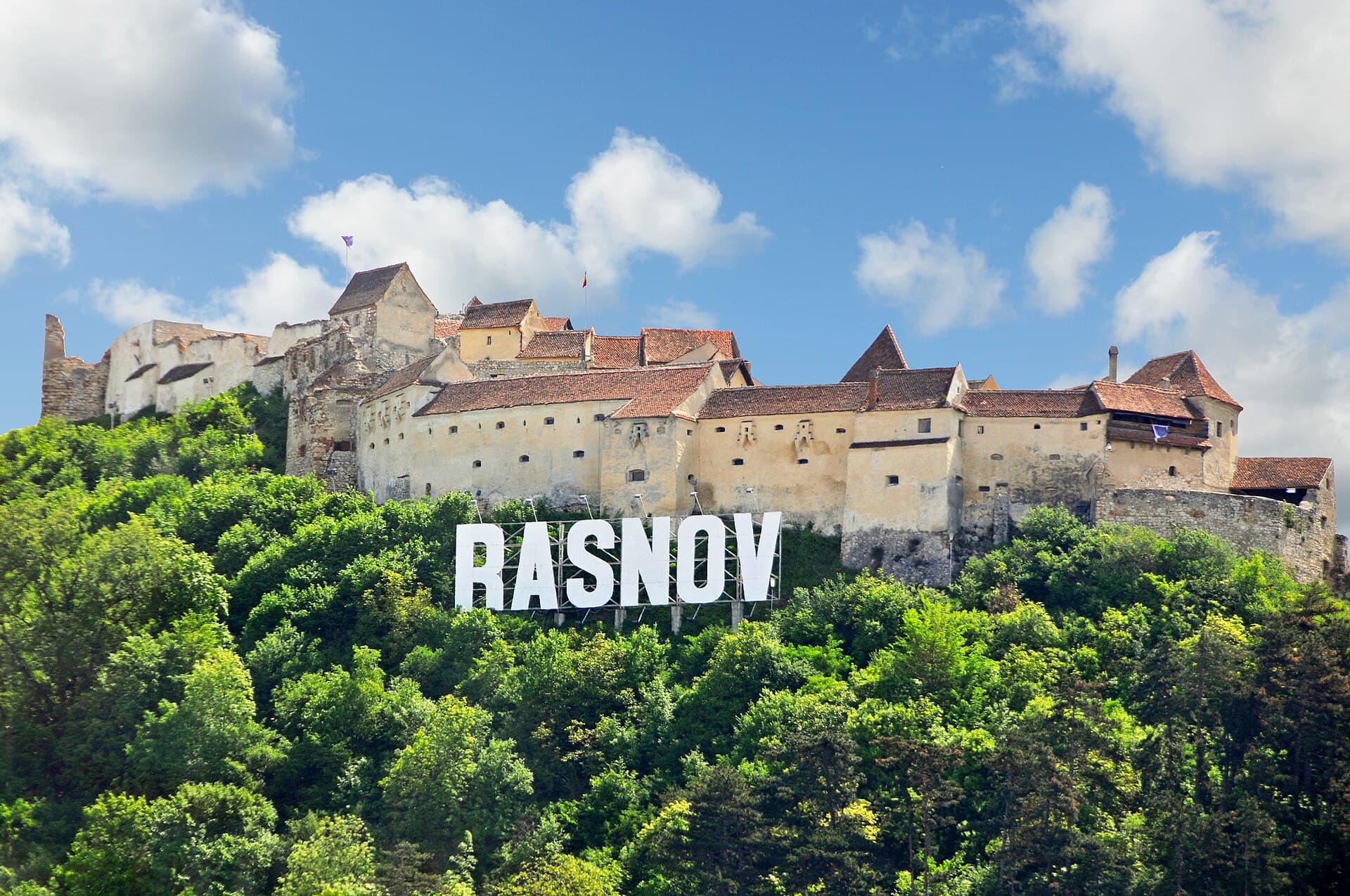 Dennis G. Jarvis / CC BY-SA 2.0, via Wikimedia Commons
“Where medieval walls meet Transylvanian skies.”
Not the postcards. The stories even locals don't know — whispered in your ear, right where they happened.
Beneath the stone walls of Râșnov, a remarkable feat of medieval engineering lies, a testament to desperation and ingenuity.
Imagine a medieval fortress not just for defense, but also for daily life. Even children had their place, and a surprising structure within the walls speaks to their education.
Beyond ancient fortifications, Râșnov holds a prehistoric secret, a world of giants brought back to life.
Discover every secret of Râșnov
Every address, every reveal in full — in your ear, right where it happened.
You pick your stops. You walk. The voice reveals what the others miss.
No tours available yet. Check back soon — we're preparing them.
Râșnov, a town in the heart of Transylvania, Romania, is a place where history feels alive, carved into the very landscape. Dominated by its imposing fortress, the town offers a glimpse into a past shaped by Saxon settlers and constant vigilance against invaders. The air here carries the scent of pine from the surrounding Carpathian Mountains and the echoes of centuries-old tales. It's a destination that appeals to those who seek both dramatic scenery and profound historical resonance, providing a vivid contrast between the ancient and the surprisingly modern.
Beyond the formidable walls of its citadel, Râșnov presents a charming, walkable town with traditional Transylvanian architecture. Its proximity to Brașov and the Piatra Craiului National Park makes it a strategic base for exploring the wider region, offering a blend of cultural immersion and outdoor adventure. Whether you're drawn to the strategic brilliance of its medieval defenses or the fantastical world of its dinosaur park, Râșnov promises an experience that lingers long after you've left its mountainous embrace.
The history of Râșnov is inextricably linked to its formidable fortress, a testament to the resilience of its Saxon inhabitants. The Teutonic Knights began construction of the Râșnov Citadel between 1211 and 1225. Unlike many fortresses built for aristocratic lords, Râșnov was a peasant citadel, designed to offer refuge to the local population from invading forces. It was strategically positioned on a rocky peak overlooking the Râșnov Depression, controlling the trade route connecting Transylvania and Wallachia.
Throughout the centuries, the fortress served its purpose admirably. It was one of the few Transylvanian fortresses never conquered, with one notable exception in 1612. During this siege, the lack of a reliable water source within the walls proved to be its Achilles' heel. This vulnerability led to the extraordinary undertaking of digging the fortress well, a monumental task completed by two Turkish prisoners over 17 years.
The citadel expanded over time, incorporating homes, a chapel, and a school, making it a self-sufficient community capable of withstanding prolonged sieges. Its walls, reaching up to 5 meters thick in some places, provided robust protection. The fortress saw numerous attacks, particularly during the Ottoman and Tatar invasions that frequently swept through the region. Each successful defense solidified its reputation as an impregnable stronghold.
By the 18th century, with the decline of invasions, the fortress gradually lost its military importance. A fire in 1718 destroyed many of its buildings, and while some repairs were made, it eventually fell into disrepair. For a period, it even served as a prison. In the 20th century, efforts began to restore and preserve the fortress, transforming it into the significant historical and tourist attraction it is today. Its ongoing restoration continues to reveal more about the lives of those who sought safety within its walls.
The undisputed star of Râșnov is its Citadel (Cetatea Râșnov), a medieval fortress set on a rocky outcrop. Explore its labyrinthine pathways, defensive towers, and the remnants of homes and a chapel within its walls. Don't miss the famous fortress well, a remarkable feat of engineering. The expansive views of the surrounding Carpathian Mountains and the Bârsa Country from the citadel are memorable.
At the base of the citadel hill, you'll find Dino Parc Râșnov, an outdoor dinosaur park that offers a striking contrast to the medieval history. With over 100 life-size dinosaur replicas set within a natural forest, it's an engaging experience for all ages.
For a different perspective on local history, visit the Râșnov Evangelical Church, a fortified church with origins in the 13th century, showcasing typical Transylvanian Saxon architectural elements. The town square, Piața Unirii, offers a pleasant spot to observe local life and admire the traditional architecture. For those interested in winter sports, the Valea Cărbunării Olympic Ski Jump is nearby, hosting international competitions.
Râșnov is enjoyable year-round, but the best times to visit are late spring (May-June) and early autumn (September-October). During these periods, the weather is mild and pleasant for exploring the outdoor attractions, and the natural scenery is particularly lively with blooming flowers or autumn foliage. Summer (July-August) is also popular, though it can be warmer and more crowded. Winter brings a picturesque, snow-covered landscape, ideal for those interested in winter sports or a cozy, festive atmosphere, especially around the holidays.
Râșnov is easily accessible. If arriving by air, the closest international airport is Sibiu International Airport (SBZ) or Henri Coandă International Airport (OTP) in Bucharest, with onward connections by train or bus. Brașov is the nearest major city, and Râșnov is well-connected by local buses and trains from there. Driving offers the most flexibility for exploring the region. Within Râșnov, the town center and the base of the fortress are walkable. A tourist train or a short uphill walk leads to the citadel entrance. The official currency is the Romanian Leu (RON). ATMs are available in town, and credit cards are widely accepted in larger establishments. Romanian is the official language, but English is commonly spoken in tourist areas.