The Lungomare Vittorio Veneto
Rapallo's promenade isn't just for leisurely strolls; it's a living canvas of local tradition, with a surprising trick of the eye on its buildings.
Full story unlocks in the tour
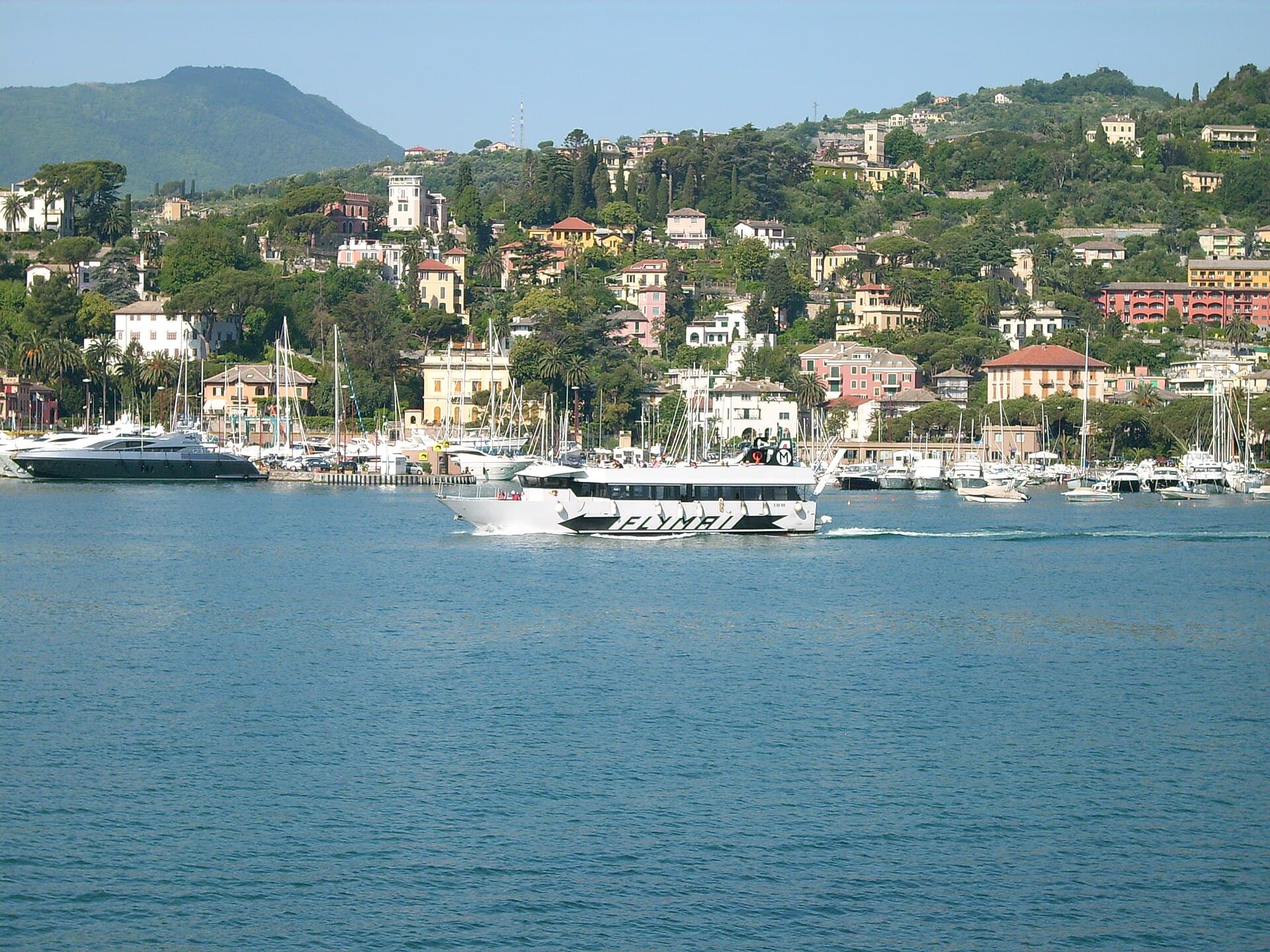 Davide Papalini / CC BY 2.5, via Wikimedia Commons
“Where the Riviera's glamour meets genuine Ligurian life.”
Not the postcards. The stories even locals don't know — whispered in your ear, right where they happened.
Rapallo's promenade isn't just for leisurely strolls; it's a living canvas of local tradition, with a surprising trick of the eye on its buildings.
This seaside fortress, a symbol of Rapallo, was built for a very specific and dramatic reason, involving a notorious figure of the Mediterranean.
Beyond its luxurious facade and infinity pool, this hotel holds a secret history of international diplomacy that shaped the course of post-World War I Europe.
Discover every secret of Rapallo
Every address, every reveal in full — in your ear, right where it happened.
You pick your stops. You walk. The voice reveals what the others miss.
No tours available yet. Check back soon — we're preparing them.
Rapallo, a captivating coastal town on the Italian Riviera, offers a compelling blend of natural beauty, deep history, and authentic Ligurian character. Unlike its more overtly glamorous neighbors like Portofino and the Cinque Terre, Rapallo maintains a genuine, local atmosphere, making it a favored destination for Italian tourists. Its colorful buildings, palm-lined promenade, and inviting waterfront create a picturesque setting where the rhythms of daily Italian life unfold.
Set in the Gulf of Tigullio, Rapallo serves as an excellent base for exploring the wider Ligurian coast, with easy access to other renowned towns via train, bus, or ferry. Rapallo itself provides a wealth of experiences, from strolling along its lively promenade to delving into its medieval old town and ascending by cable car for sweeping views. The town's mild climate, particularly in winter, has historically made it a favored retreat for affluent Italians and literary figures, adding a layer of sophisticated history to its seaside appeal.
Rapallo's history stretches back to pre-Roman times, with early settlements likely dating to the 8th century BC, though its name first appears in records around 964 AD. Its strategic position overlooking the Gulf of Tigullio made it a sought-after trade port and, by 1229, it became part of the powerful Genoese Republic, remaining a loyal ally through various conflicts.
The 16th century brought significant challenges, as the town faced attacks from Ottoman and Barbary pirates. A particularly devastating raid in 1551 by the corsair Dragut Reis led to the construction of the iconic Castello sul Mare (Castle-on-the-Sea) in 1551, a fortification built to defend against such maritime threats. This enduring symbol of Rapallo still stands today, a testament to the town's resilience.
Rapallo's fortunes shifted in the 19th century when it began to gain recognition as a tourist destination, attracting European aristocracy and literary figures like W.B. Yeats, Ezra Pound, and Ernest Hemingway, who found inspiration in its serene beauty. The early 20th century saw the opening of one of Italy's first casinos in the Kursaal Hotel, now the Excelsior Palace Hotel, further cementing its status as a glamorous resort.
The town also played a notable role in international diplomacy. In November 1917, following the Italian defeat at Caporetto, Rapallo hosted an Allied conference where the British and French agreed to support Italy and established the Supreme War Council. Later, in 1920, the Treaty of Rapallo was signed between Italy and the Kingdom of Serbs, Croats, and Slovenes, resolving frontier issues. Another Treaty of Rapallo, signed in 1922 between Germany and the Soviet Union, marked their re-emergence into diplomatic relations after World War I. These historical events underscore Rapallo's significance beyond its scenic beauty, revealing its role as a quiet stage for pivotal moments in European history.
Begin your exploration with a leisurely stroll along the Lungomare Vittorio Veneto, Rapallo's palm-lined seaside promenade. Here, you'll encounter the 16th-century Castello sul Mare, a compact fortress standing proudly at the water's edge, which now hosts art exhibitions and events. Wander through the pedestrianized historic center, where narrow carruggi (alleys) are lined with colorful buildings, boutiques, and cafes. Don't miss Piazza Cavour and the Basilica of Saints Gervasius and Protasius, with its leaning bell tower.
For expansive vistas, take the scenic seven-minute cable car ride from Piazza Solari up to the Santuario di Montallegro, a 16th-century sanctuary nearly 2,000 feet above sea level. The sanctuary itself features a marble facade and houses a Byzantine painting. Back in town, seek out the Hannibal Bridge (Ponte di Annibale), an ancient stone bridge with origins dating back to 218 BC, though its exact construction date is unknown. For a touch of local culture, visit Villa Tigullio, which houses the Lace Museum, showcasing a vast collection of lace from the 16th to 20th centuries.
Rapallo enjoys a Mediterranean climate with mild winters and warm summers. The best time to visit for warm weather activities, including swimming and boat trips, is from early July to late August, when average daily high temperatures are above 73°F (23°C). However, these months can also be the busiest and most expensive. For a more pleasant experience with fewer crowds, consider late spring or early autumn (June and September), when the weather is still agreeable for exploring and tourism services are in full swing. The off-season also offers a chance to discover the region's quieter beauties, with pleasant temperatures for strolling and trekking.
Rapallo is well-connected and easily accessible. The closest international airports are in Genoa (a 30-45 minute train ride away) and Pisa (about a two-hour train ride). Milan is also a viable option for those traveling from other continents. Once in Italy, Rapallo is on the coastal rail line, making it simple to reach by train. The train station is centrally located, providing easy access to the town's attractions and neighboring areas.
Within Rapallo, much of the town is walkable, particularly the historic center and promenade. Public transportation includes buses that connect to smaller coastal and inland towns, and ferries offer scenic routes to destinations like Portofino, Santa Margherita Ligure, and the Cinque Terre during certain seasons. Taxis are also available at the train station. While the cost of living can be relatively high due to its popularity as a tourist destination, Rapallo offers a range of accommodations to suit different budgets.