Pahari Mandir
This revered Shiva temple, set upon a hill, offers sweeping city views, yet few connect its presence to a local legend explaining the city's very name.
Full story unlocks in the tour
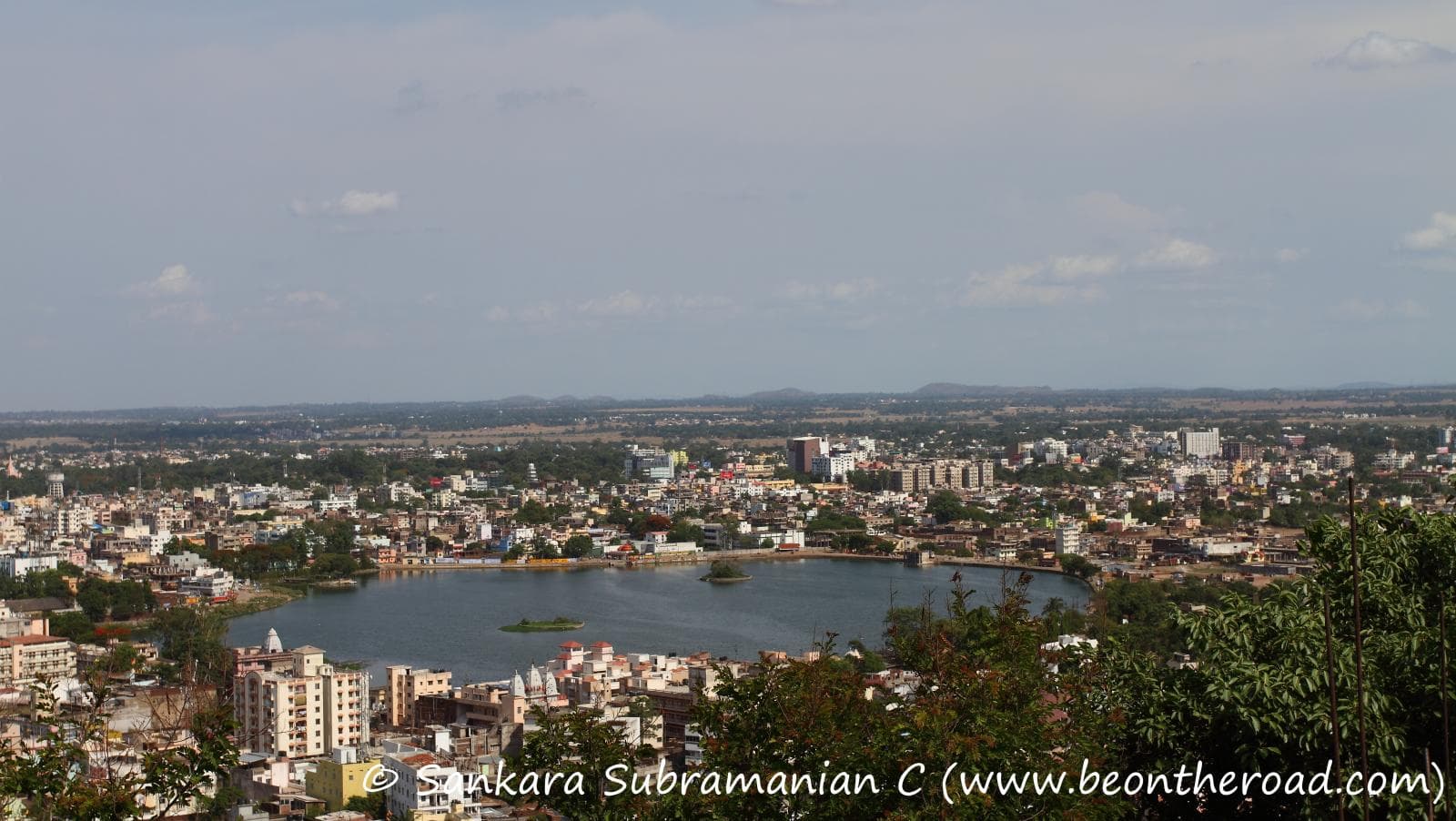 Sankara Subramanian / CC BY 2.0, via Wikimedia Commons
“Where cascading waters meet ancient tribal rhythms.”
Not the postcards. The stories even locals don't know — whispered in your ear, right where they happened.
This revered Shiva temple, set upon a hill, offers sweeping city views, yet few connect its presence to a local legend explaining the city's very name.
This historic quarter, now a bustling expanse, holds a secret from the Sepoy Mutiny that profoundly reshaped its contours.
Deep along the Kanchi River's bank lies an ancient temple, so remote that even many locals remain unaware of its profound historical and spiritual weight.
Discover every secret of Ranchi
Every address, every reveal in full — in your ear, right where it happened.
You pick your stops. You walk. The voice reveals what the others miss.
No tours available yet. Check back soon — we're preparing them.
Ranchi, the capital of Jharkhand, is frequently termed the 'City of Waterfalls' for its numerous cascades and verdant landscapes. Situated on the southern expanse of the Chota Nagpur Plateau, the city enjoys a temperate climate compared to the surrounding plains, a characteristic that historically drew the British. Ranchi gracefully intertwines its profound tribal heritage with contemporary development, crafting a distinctive experience for those who journey here.
The city functions as a vital administrative and industrial core, playing a pivotal role in India's mineral production, owing to Jharkhand's abundant resources. Beyond its natural splendor, Ranchi is an expanding urban center with a lively cultural current, recognized for its local artistry, traditional celebrations, and varied culinary offerings. It is a place where chronology, the natural world, and modern existence converge, forming a compelling destination for exploration.
The territory encompassing present-day Ranchi was historically governed by powerful empires, including the Magadha, Mauryan, and Gupta dynasties. Following the decline of the Gupta Empire, the Nagvanshi dynasty, founded by the fabled king Phanimukut, held sway over the Chota Nagpur Plateau for several centuries. The land was primarily inhabited by the Munda and Oraon tribes, recognized by Aryans as Jharkhand.
British influence began to solidify after the Battle of Plassey in 1757, with the Chota Nagpur region falling under their dominion by 1765. Early British administration encountered discontent, leading to uprisings in 1811, 1820, and 1831. In 1834, Captain Wilkinson established an administrative center for the South-West Frontier Agency, which would later be renamed Ranchi. The city attained municipality status in 1869, formalizing its urban governance. The name 'Ranchi' was officially assigned in 1899, evolving from the local tribal village name 'Archi,' which signifies 'bamboo forest' in the Nagpuri dialect.
Ranchi's agreeable climate made it the summer capital of the province of Bihar and Orissa in 1912, accelerating its growth as an administrative and garrison city. The city became a focal point for the Jharkhand Movement, advocating for a separate state for the tribal regions. A significant turning point arrived in 1958 with the establishment of the Heavy Engineering Corporation, transforming Ranchi into a major industrial center. In 1960, Ranchi University was founded, further cementing its role as an educational hub. Finally, on November 15, 2000, Ranchi became the capital of the newly formed state of Jharkhand, the culmination of a long-standing movement for autonomy.
Ranchi has been home to notable individuals who shaped its chronology and culture. Freedom fighter Birsa Munda, an emblem of indigenous resistance, passed away in Ranchi prison in 1900. The city also shares a connection with the Tagore family; Jyotirindranath Tagore, Rabindranath Tagore's eldest brother, settled in Ranchi in 1912, and the prominent Tagore Hill bears his name.
Ranchi presents a blend of natural splendor and cultural landmarks. The city is celebrated for its waterfalls, including the dramatic Dassam Falls, where water descends from 144 feet, and Hundru Falls, among the tallest in the area, sculpted by the Subarnarekha River. Jonha Falls, also known as Gautamdhara, and Hirni Falls, set within a dense forest, offer tranquil retreats.
For spiritual calm and expansive views, visit Pahari Mandir, a Shiva temple crowning a hill, providing sweeping panoramas of the city, especially at dawn and dusk. The Jagannath Mandir, mirroring the architectural style of Puri's renowned temple, is another significant spiritual attraction, hosting an annual Rath Yatra.
Those who appreciate the natural world can explore the Rock Garden, fashioned from the stones of Gonda Hill, providing a scenic setting for relaxation. The serene Nakshatra Van, a park designed according to astrological principles, offers a peaceful sanctuary. Birsa Zoological Park is a haven for wildlife enthusiasts, promoting conservation education. For a quiet interlude, boating on Ranchi Lake, at the base of Ranchi Hill, is a cherished pastime. Tagore Hill, connected to Rabindranath Tagore's family, is a peaceful location for morning strolls and contemplation, offering city views.
The ideal period to experience Ranchi is during the autumn and winter months, from October to March. During this time, the weather is agreeably cool, with average temperatures ranging from 10 to 20 degrees Celsius, making it perfect for exploration and outdoor pursuits. While summers (March to June) can be quite warm and humid, the monsoon season (July to September) brings moderate to heavy rainfall, invigorating the waterfalls and verdant landscapes, which can also be a beautiful time for adventurers and trekkers.
Birsa Munda Airport (IXR) is the domestic airport serving Ranchi, situated approximately 5-7 km from the city center in Hinoo. It connects Ranchi to major Indian cities such as Delhi, Kolkata, and Mumbai with regular flights. Ranchi Junction (RNC) is the primary railway station, a significant hub linking the city to most major Indian cities. The city also includes other railway stations like Hatia, Tatisilwai, and Namkon.
Within Ranchi, public transportation primarily consists of buses and auto-rickshaws. While auto-rickshaws do not operate on meters, fares are typically set based on distance, with shared options available at reduced costs. Private auto-rickshaws are also an option, though at a slightly higher fare. The city is well-connected by road to other parts of Jharkhand and neighboring states via National Highways 33 and 23. Jharkhand State Road Transport Corporation buses and private operators offer regular services to various towns.