Kasbah of the Udayas
The iconic blue and white streets of the Kasbah des Oudaias hold a secret beyond their aesthetic appeal.
Full story unlocks in the tour
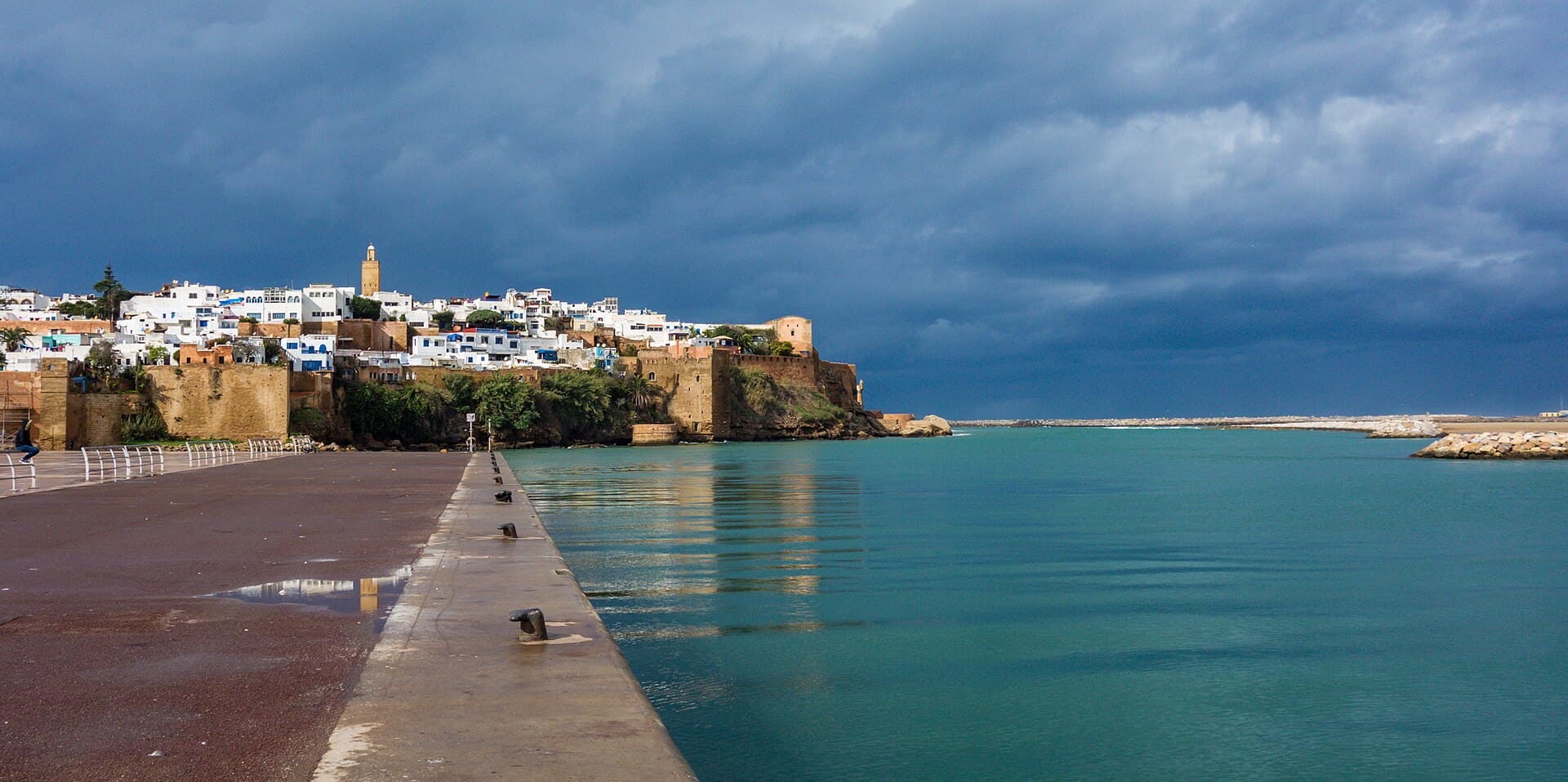 Visions of Domino / CC BY 2.0, via Wikimedia Commons
“Where ancient empires meet Atlantic breezes.”
Not the postcards. The stories even locals don't know — whispered in your ear, right where they happened.
The iconic blue and white streets of the Kasbah des Oudaias hold a secret beyond their aesthetic appeal.
Beyond the Roman ruins and Marinid tombs, a surprising, ancient tradition still thrives at Chellah.
This unfinished minaret, intended to be the world's largest, conceals an architectural ingenuity for its time.
Discover every secret of Rabat
Every address, every reveal in full — in your ear, right where it happened.
You pick your stops. You walk. The voice reveals what the others miss.
No tours available yet. Check back soon — we're preparing them.
Rabat, Morocco's capital, offers a distinct experience compared to its more frenetic imperial counterparts like Marrakech or Fes. It is a city where historic sites integrate seamlessly with modern urban planning, creating an atmosphere that feels refined and relaxed. Situated on the Atlantic coast at the mouth of the Bou Regreg River, Rabat blends Islamic heritage with traces of French colonial influence. Its walkable neighborhoods, manicured green spaces, and a modern tramway make it an enjoyable city to explore at a human pace.
Often overlooked by travelers, Rabat quietly charms with its blend of culture without chaos. The city is a UNESCO World Heritage site, recognized for its shared heritage of a modern capital and historic city. From ancient kasbahs and river walks to modern art galleries and a sandy Atlantic beach, Rabat provides a thoughtful introduction to the broader Moroccan experience.
Rabat's history stretches back millennia, with the area initially settled by Phoenicians and later becoming the Roman city of Sala Colonia. The remnants of Roman baths, columns, and city walls at the Chellah Necropolis still bear witness to this era. In the 10th century, the Zanātah Imazighen (Berbers) established Salé, the city's twin across the Bou Regreg River.
The city of Rabat itself was founded in the 12th century by ʿAbd al-Muʾmin, the first Almohad ruler, as a ribāṭ (fortified monastery) to quarter troops for his campaigns in Spain. It was the third Almohad sultan, Abū Yūsuf Yaʿqūb al-Manṣūr, who named it Ribāṭ al-Fatḥ, meaning "Camp of Conquest," after a victory over the Spanish in 1195. Under al-Manṣūr, Rabat flourished, with ambitious construction projects including the Kasbah of the Udayas and the grand, though unfinished, Hassan Tower, intended to be the world's largest minaret and part of the largest mosque in the western Muslim world. However, construction ceased upon his death in 1199, and the city entered a period of decline.
In the 17th century, Rabat saw renewed importance with the arrival of Moriscos—Muslims expelled from Spain—who settled in Rabat and Salé. This influx of skilled artisans and traders transformed Rabat into a center of commerce and piracy. Rabat and Salé united to form the Republic of Bou Regreg in 1627, an autonomous corsair stronghold that preyed on merchant ships. This pirate republic lasted for 44 years until the Alaouite dynasty seized control, though corsair activities continued into the early 19th century.
When the French established a protectorate over Morocco in 1912, Rabat was chosen as its administrative center, modernizing its infrastructure while preserving its historical core. Upon Morocco's independence in 1956, Rabat became the capital of the kingdom, a role it has maintained since. Today, Rabat is one of Morocco's four imperial cities, a lively blend of old and new, where modern government buildings stand alongside ancient medinas.
Begin your exploration at the Kasbah of the Udayas, a historic fortified district overlooking the Bouregreg River and the Atlantic. Wander through its narrow streets lined with blue and white houses, a unique appeal distinct from other Moroccan cities. Within the Kasbah, discover the peaceful Andalusian Gardens, a European-inspired retreat with citrus-scented pathways and tiled details. You can also visit the National Jewellery Museum, housed in a former royal pavilion within the gardens.
Next, head to the iconic Hassan Tower, the unfinished minaret of a grand mosque commissioned in the 12th century. Standing at 44 meters, the red sandstone tower is surrounded by hundreds of columns that hint at the mosque's intended colossal scale. Adjacent to the tower is the Mausoleum of Mohammed V, an exquisite structure with a gold-leafed ceiling, housing the tombs of King Mohammed V and King Hassan II.
Journey to the Chellah Necropolis, an ancient site that blends Roman ruins with medieval Islamic architecture. Explore the crumbling arches, fig trees, and the numerous stork nests that add a touch of wild nature to this historic grandeur. Finally, immerse yourself in the Medina of Rabat, a UNESCO World Heritage site. While smaller and less chaotic than those in Marrakech or Fes, it offers a traditional atmosphere with bustling souks and opportunities to find unique Rabati rugs. Stroll along Rue des Consuls, known for its artisan stalls and colorful doors.
The best times to visit Rabat are during spring (March to May) and autumn (September to November). During these seasons, temperatures are mild and pleasant, ranging from 15°C to 25°C in spring and 18°C to 28°C in autumn, making it comfortable for exploring the city's historical sites and gardens. The city feels lively but not overly crowded, and tourist numbers are moderate. Spring is particularly beautiful as gardens and green spaces are in full bloom. For beach activities, May to June and mid-September to early October offer ideal conditions with warmer Atlantic waters.
Rabat is considered one of Morocco's easier cities to navigate, making it a good starting point for first-time visitors to the country. The city is largely walkable, with many major attractions within easy reach of each other. For longer distances, Rabat offers a modern and efficient tramway system that connects historical quarters with modern districts, with single rides costing 7 MAD (approximately 0.70 USD). Blue petits taxis are also readily available for city rides; it's advisable to ask the driver to use the meter. Expect short rides to cost between 10 and 40 MAD.
French is widely spoken due to the city's strong French influence, so basic French phrases can be helpful. For accommodation, consider staying near the edge of the medina or in the Hassan neighborhood for a blend of atmosphere and practicality. The Agdal district is a good option for those who prefer modern cafes and a less touristy evening experience. Rabat–Salé Airport (RBA) is located about 20-30 minutes from the city center.