Sleggveien
The houses along this street reveal a social hierarchy etched into their very facades.
Full story unlocks in the tour
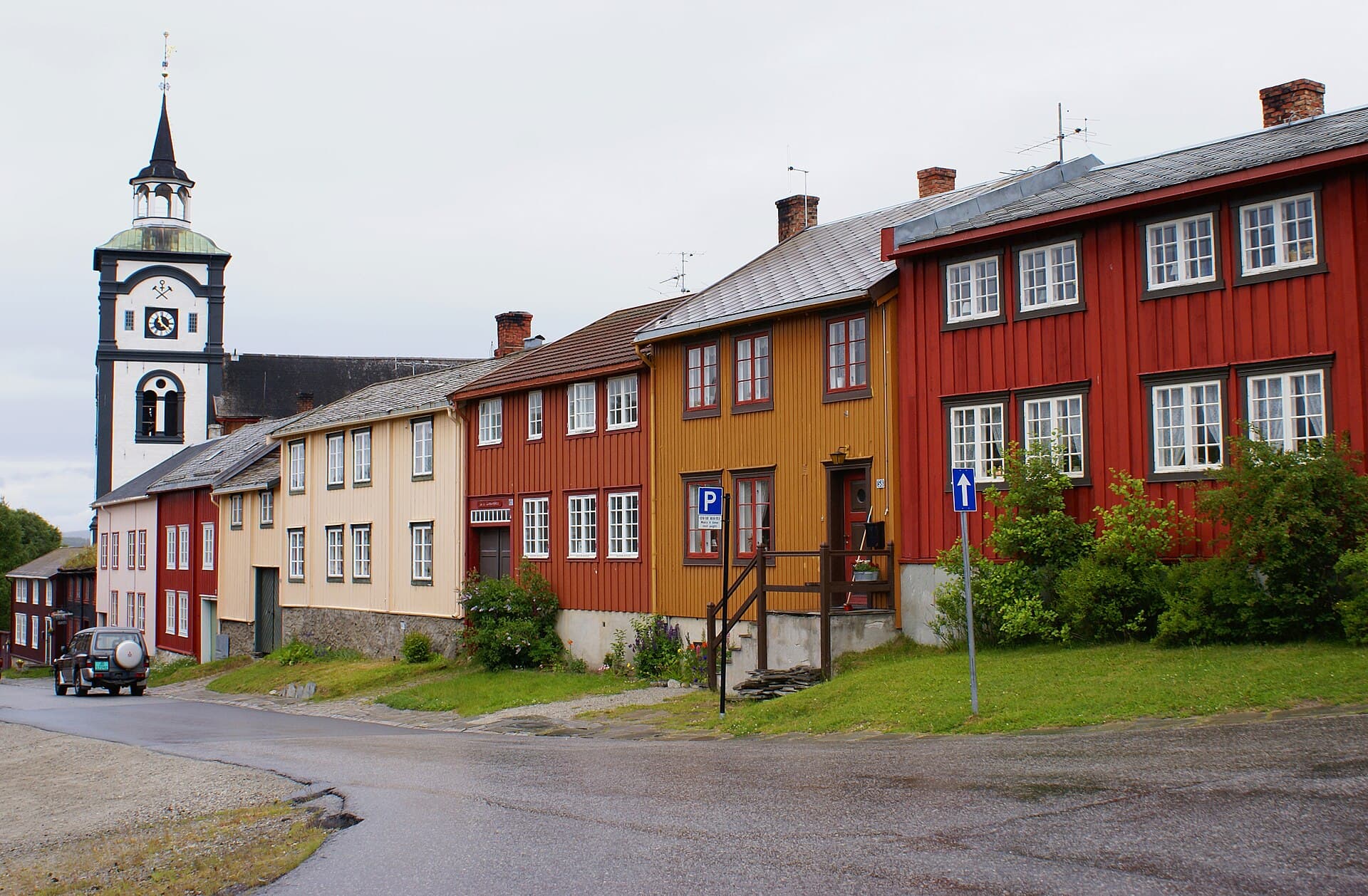 Randi Hausken from Bærum, Norway / CC BY-SA 2.0, via Wikimedia Commons
“Where time slows, and copper echoes in wooden streets.”
Not the postcards. The stories even locals don't know — whispered in your ear, right where they happened.
The houses along this street reveal a social hierarchy etched into their very facades.
This grand church, celebrated as 'The Pride of the Mining Town,' conceals a secret about its funding and a peculiar architectural detail.
The verdant forests you observe today were once absent, and their disappearance profoundly altered the landscape.
Discover every secret of Røros
Every address, every reveal in full — in your ear, right where it happened.
You pick your stops. You walk. The voice reveals what the others miss.
No tours available yet. Check back soon — we're preparing them.
Røros, a UNESCO World Heritage site in Norway, is a town where the past is not merely preserved but actively lived. Its origins trace to 1644, when the discovery of copper ore transformed a remote mountain plateau into a thriving mining community. Today, Røros is celebrated for its authentic wooden buildings, many dating to the 17th and 18th centuries, and its distinctive street pattern established in the 1600s.
Stroll through its colorful streets, and you will encounter a town that feels like a living museum, where residents still inhabit and work within these historic structures. Røros offers a singular blend of industrial heritage and rural charm, set against a backdrop of expansive, often snow-covered, landscapes. It is a place where the rhythm of life feels unhurried, inviting visitors to delve into a profound cultural landscape shaped by centuries of mining and a deep connection to local traditions.
The narrative of Røros commenced in 1644 with the discovery of abundant copper ore deposits in the surrounding mountains, igniting the establishment of the Røros Copper Works. Just two years later, the first smelter was constructed, drawing people from across central Norwegian valleys to labor in the mines and related industries. King Christian IV granted Røros the designation of a "Mining Town" (Bergstad), bestowing exclusive rights to minerals, timber, and water within a 45-kilometer radius to the Røros Copper Works.
This burgeoning community, initially designed with a grid-like layout, confronted significant adversity. During the Scanian War, the town was razed twice by the Swedish Army in 1678 and 1679. Forty years later, in 1718, Swedish forces again invaded during the Great Northern War, leading to a tragic retreat where over 3,000 soldiers perished in the severe mountain weather. Despite these challenges, Røros rebuilt, with many houses from the 1700s and 1800s still standing today.
The 18th century marked a prosperous era for the Røros Copper Works, with numerous mines yielding well. The company's affluence is evident in the construction of the magnificent Røros Church, completed in 1784, which remains one of Norway's largest churches. Industrial advancements in the late 19th century brought transformations, including the completion of the Rørosbanen railway line in 1877, connecting the town to Trondheim and Hamar. However, a devastating fire in 1953 destroyed the main smelting plant, signaling the beginning of the end for the Røros Copper Works. After 333 years of continuous operation, mining ceased in 1977 when the company declared bankruptcy due to declining copper prices.
In 1980, Røros was designated a UNESCO World Heritage site, acknowledging its unique contribution to cultural heritage and its remarkably preserved wooden architecture. The designation was expanded in 2010 to include the Røros Mining Town and the Røros Copper Works' Circumference, encompassing the town, its industrial-rural landscapes, and the winter transport route. Today, Røros flourishes as a cultural center, blending its profound past with an emphasis on local gastronomy and sustainable tourism.
Begin your exploration with a guided walk through the Old Town, where you can admire the traditional wooden houses and learn about Røros's mining past. The Røros Museum, serving as the official World Heritage Visitor Centre, offers insight into 333 years of mining history through meticulously preserved buildings and exhibits, including the Smelthytta museum constructed on the ruins of the last smelter. For a deeper immersion into the mining experience, take a guided tour of Olav's Mine, venturing 50 meters below the surface and 500 meters into the mountain. The Røros Church, also known as "Bergstadens Ziir" (The Pride of the Mining Town), is a striking octagonal stone structure from 1784, notable for its scale and the copperworks emblem on its tower. Do not miss the opportunity to wander along Kjerkgata, the primary shopping thoroughfare, and its parallel Bergmannsgata, filled with independent design stores, cafes, and restaurants. You might even recognize Kjerkgata from the Netflix series Home for Christmas. The surrounding slag heaps, enormous reddish-black mounds of processed rock, are also part of the UNESCO site and offer a dramatic visual testament to the town's industrial past.
Røros provides distinct experiences across its four seasons. The summer months, from June to August, are considered the most agreeable for warm-weather activities, with average daytime temperatures ranging from 14°C to 15°C, creating comfortable conditions for walking and exploration. While mild, summer evenings can still be cool, and some rain is possible. Winter, from December to March, transforms Røros into a snow-covered wonderland, perfect for dog sledding, skiing, and experiencing the ethereal "blue hour" around Christmas. The renowned Røros Winter Market, Rørosmartnan, occurs annually in the last week of February, attracting large crowds with traditional crafts, local food, and horse-drawn sleds. Spring and autumn are transitional, offering variable weather but unique opportunities to witness the landscape's transformation.
Røros is a town easily traversed on foot, its compact center making exploration simple. You can reach Røros by flying directly from Oslo (approximately a one-hour flight) or by train from Oslo via Hamar, or from Trondheim. Driving from Trondheim takes about two and a half hours. Once there, a car is not necessary for navigating the town itself, as the train station is conveniently located downtown. For accommodation, Røros offers a range of options, including historic hotels like Erzscheidergården and Vertshuset Røros, as well as modern hotels like Røros Hotell, many with excellent reviews and amenities. Some hotels provide family rooms, apartments with kitchens, or even spa facilities. Consider a guided tour to gain deeper insights into the town's past; booking in advance is recommended, especially during busier seasons. Many old houses and sites also feature QR codes for self-guided information.