Château Turpault
This imposing Anglo-Medieval manor, marking the start of the Côte Sauvage, holds a secret beyond its grand facade and German occupation during WWII.
Full story unlocks in the tour
 Remi Jouan / CC BY-SA 3.0, via Wikimedia Commons
“Where the wild coast greets calm sands, and Breton character permeates the sea air.”
Not the postcards. The stories even locals don't know — whispered in your ear, right where they happened.
This imposing Anglo-Medieval manor, marking the start of the Côte Sauvage, holds a secret beyond its grand facade and German occupation during WWII.
Once France's leading sardine fishing port, Port Maria maintains an unexpected connection to a fantastical sport.
At the southern tip of the peninsula, amidst expansive views, lie unusual stone slabs with an industrial past that may surprise you.
Discover every secret of Quiberon
Every address, every reveal in full — in your ear, right where it happened.
You pick your stops. You walk. The voice reveals what the others miss.
No tours available yet. Check back soon — we're preparing them.
Quiberon, a slender peninsula on the southern coast of Brittany in the Morbihan department, offers a captivating blend of rugged Atlantic beauty and tranquil, sheltered beaches. This "almost island" stretches 14 kilometers, a narrow strip of land that, at its slimmest point, is only about 22 meters wide. It is a place where the dramatic cliffs and crashing waves of the Côte Sauvage on the west give way to the calm, sandy shores of Quiberon Bay on the east.
More than just a scenic escape, Quiberon is a center for outdoor enthusiasts and those seeking a taste of authentic Breton culture. The town itself is a lively spot with active markets, seafood restaurants, and a welcoming atmosphere. It also serves as a gateway to the nearby islands of Belle-Île-en-Mer, Houat, and Hoëdic, with regular ferry departures from Port Maria. Whether you are drawn to adventure on the waves, peaceful strolls along the coast, or exploring charming villages, Quiberon provides a memorable Breton experience.
Quiberon's geography has played a pivotal role in its history, beginning as an island in the 11th century before sand movements gradually formed the narrow isthmus that connects it to the mainland today. This strategic location has witnessed significant events, including the Battle of Quiberon Bay in 1759, a decisive naval engagement during the Seven Years' War where the British fleet defeated the French. Later, in July 1795, Quiberon became the base for a failed Royalist invasion of Brittany during the French Revolution, ultimately defeated by Revolutionary forces under General Lazare Hoche.
The 19th century brought a new era of prosperity to Quiberon, largely due to advancements in food sterilization by chemist Nicolas Appert. This innovation transformed Quiberon into France's leading harbor for sardine fishing and canned sardine production. Families from the Finistère department migrated to Quiberon for the sardine season, with men fishing and women working in the canneries. The arrival of the railway line connecting Auray to Quiberon in 1882 further solidified its transformation, shifting its focus from fishing and seaweed exploitation towards tourism. By 1924, the peninsula was officially classified as a health resort, attracting notable figures like writers Gustave Flaubert and Anatole France, and actress Sarah Bernhardt.
During the Second World War, Quiberon's strategic importance was again recognized, with Penthièvre Fort at the narrowest point of the isthmus occupied by German forces and incorporated into the Atlantic Wall. A somber chapter unfolded in July 1944, when 59 resistance fighters were tortured and buried alive there, now commemorated by a Cross of Lorraine. After the war, Quiberon continued its development as a tourist destination, now drawing visitors with its diverse landscapes, water sports, and well-being offerings like thalassotherapy centers.
Begin your exploration with the Côte Sauvage, the dramatic western coastline characterized by rugged cliffs, crashing waves, and secluded coves. Popular spots like Pointe du Percho and Pointe de Beg-er-Goalennec offer expansive ocean views.
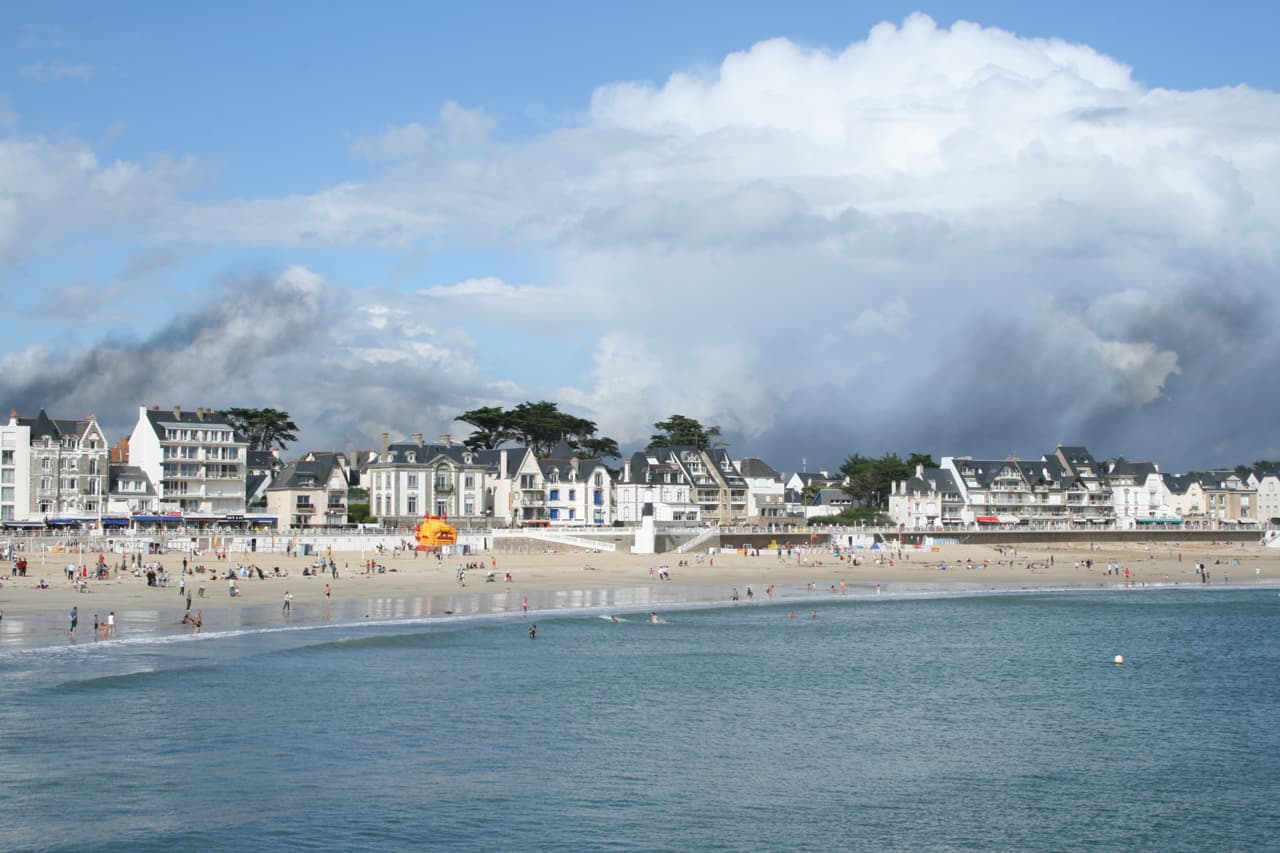
On the eastern side, discover the calmer Grande Plage, a wide sandy beach ideal for swimming and sunbathing, bordered by a boardwalk with boutiques and eateries. The historic Port Haliguen, once a commercial and fishing harbor, is now a marina with 1200 berths, retaining its character with an emblematic lighthouse built in 1856.
For a glimpse into the past, visit the Château Turpault, an Anglo-Medieval style manor from 1904 that marks the entrance to the Côte Sauvage. Explore picturesque villages such as Kermorvan or Saint-Julien, with their white houses and blue shutters. The Pointe du Conguel, at the peninsula's southern tip, provides panoramic views of the offshore islands and remnants of kelp ovens.
Quiberon is also a gateway to the islands of Belle-Île-en-Mer, Houat, and Hoëdic, accessible by ferry from Port Maria. Do not miss the opportunity to tour La Belle-Iloise Canning Factory for a free tour and tasting of local seafood.
The best time to visit Quiberon for warm weather and outdoor activities is between May and September. July is ideal for warm and sunny weather, with comfortable and dry summers. For hot-weather activities like beach and pool days, mid-July to mid-August offers peak conditions. Summer is lively with festivals and events, while spring (March to May) and early autumn (September to October) offer a quieter experience with mild temperatures, fewer crowds, and beautiful light. Autumn also brings still-warm sea temperatures and deserted beaches. Even in winter, Quiberon reveals an authentic character, with spectacular storms on the rugged coastline and mild Breton temperatures.
Quiberon is accessible by car and public transport. During summer, the seasonal Tire-Bouchon train connects Auray to Quiberon, offering a scenic journey. Outside of summer, an SNCF bus service links Auray to Quiberon. If driving, plan to arrive early during peak season due to potential traffic and limited parking.
Parking in Quiberon is often limited during summer months. Paid, secure car parks, such as Parking des Îles (formerly Semaphore) and Kerné car park, are available, many offering free shuttles to the Port-Maria ferry terminal. Off-season, some parking becomes free, though shuttle services may not operate. Remember to check rates and availability in advance, as parking often operates without reservations.
Quiberon's dining scene highlights Breton cuisine, with fresh seafood, crêpes, cider, and local specialties like sardines and far breton. The weekly market takes place on Saturday mornings in Place du Varquez, with a seasonal market on Wednesday mornings in Port Haliguen.