Confucius Temple
The expansive Confucius Temple rivals imperial palaces, yet one architectural detail was once veiled during a specific imperial visit.
Full story unlocks in the tour
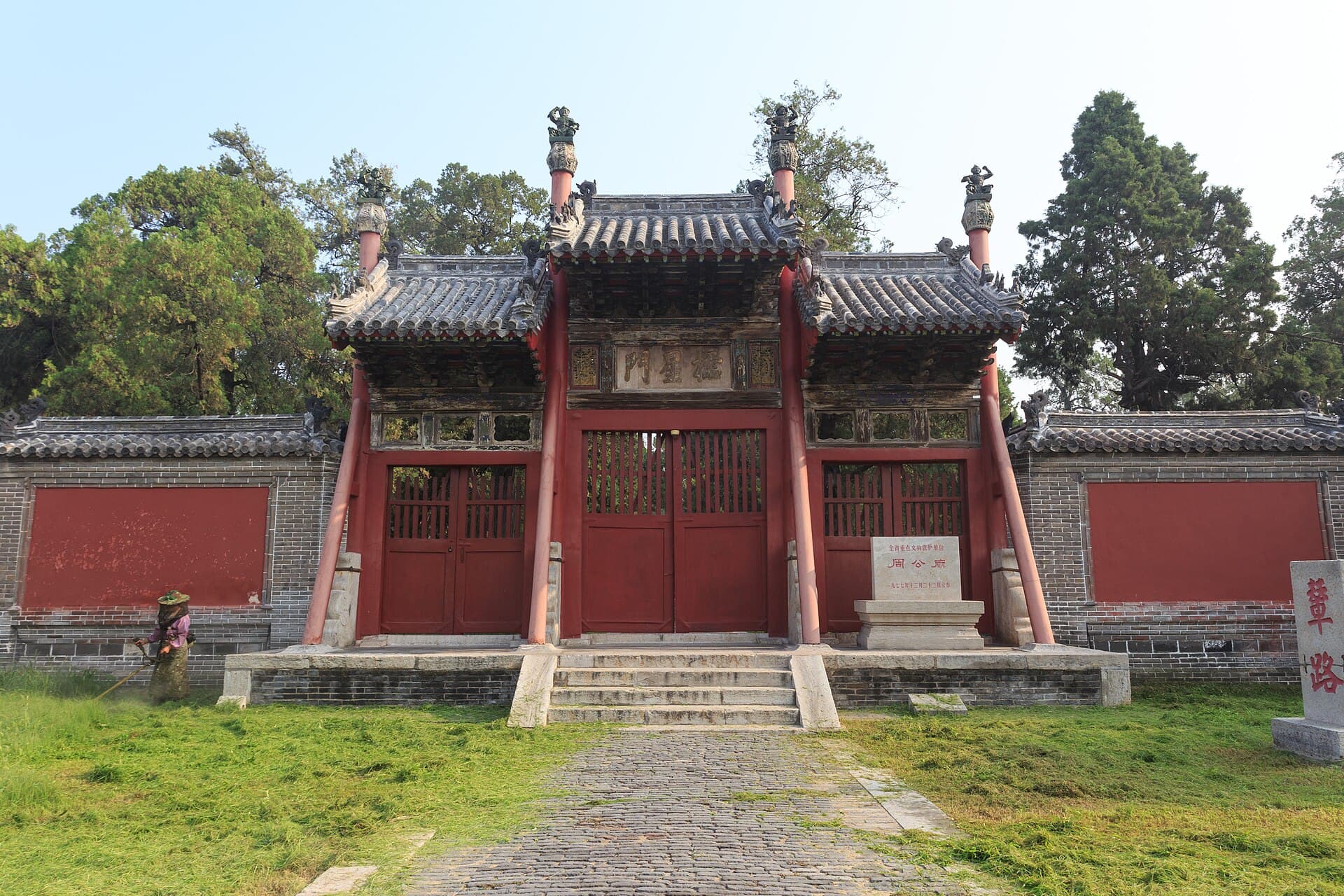 Zhangzhugang / CC BY-SA 4.0, via Wikimedia Commons
“Follow the ancient paths where Confucius taught, lived, and found his final rest.”
Not the postcards. The stories even locals don't know — whispered in your ear, right where they happened.
The expansive Confucius Temple rivals imperial palaces, yet one architectural detail was once veiled during a specific imperial visit.
This sprawling cemetery is more than a burial ground; it is a living testament to an unbroken lineage, with interments continuing into the present day.
The Kong Family Mansion, ancestral home to Confucius's direct descendants, once held a unique hereditary title that positioned them as the de facto leaders of Qufu.
Discover every secret of Qufu
Every address, every reveal in full — in your ear, right where it happened.
You pick your stops. You walk. The voice reveals what the others miss.
No tours available yet. Check back soon — we're preparing them.
Qufu, a city in China's Shandong Province, is profoundly connected to the life and enduring influence of Confucius, the revered philosopher, educator, and political theorist whose teachings have shaped Chinese society for over two millennia. Often referred to as the "Holy City of the East," Qufu offers a tranquil, reflective journey through ancient cultural monuments that seamlessly blend with daily life. It is a destination where the echoes of history resonate clearly, inviting visitors to explore the origins of Confucianism and its lasting impact.
The city's primary allure lies in the "San Kong" (Three Confucian Sites): the Temple of Confucius, the Kong Family Mansion, and the Cemetery of Confucius. These locations, collectively designated a UNESCO World Heritage Site in 1994, represent a distinctive and well-preserved chronicle of a profound cultural tradition. Beyond the San Kong, Qufu also provides glimpses into traditional Chinese crafts and cuisine, making it a multifaceted cultural exploration.
## The Cradle of Confucianism Qufu's history extends back several millennia, with settlements dating to the Shang Dynasty. It gained prominence as the capital of the formidable State of Lu during the Zhou Dynasty, from approximately the 10th to the 3rd century BCE, establishing itself as a significant political and cultural center.
Confucius, born in Qufu in 551 BCE, spent much of his life here, teaching and writing until his passing in 479 BCE. Two years after his death, his former three-room residence was transformed into a temple by the Duke of Lu, marking the beginning of the Temple of Confucius. Over subsequent centuries, emperors from various dynasties, commencing with Emperor Gao of the Han Dynasty in 205 BCE, paid tribute to Confucius in Qufu, expanding and renovating the temple into the grand complex observed today. The architecture of the Temple of Confucius, particularly after a major redesign in 1499 following a fire, bears a notable resemblance to Beijing's Forbidden City.
The Kong Family Mansion, the historical dwelling of Confucius's direct descendants, evolved from a modest home into an expansive aristocratic complex. By the 19th century, it encompassed 560 rooms, rivaling imperial residences in scope. The Kong family, entrusted with ritual obligations and unique imperial privileges, served as moral guardians of Confucian ethics, with their lineage holding the hereditary title of "Duke Yansheng" for nearly a thousand years. The Cemetery of Confucius, established in 479 BCE, grew into the world's largest and oldest family cemetery, containing over 100,000 tombs of Confucius and his descendants.
The core of Qufu's appeal resides in its three UNESCO World Heritage Sites, known collectively as the San Kong. The Temple of Confucius (Kong Miao) is China's largest and most celebrated Confucius temple, spanning 218,000 square meters with nine courtyards and 466 rooms. Its architecture, especially after a 1499 redesign, mirrors the Forbidden City. Key elements include the Kuiwen Pavilion, Thirteen Stele Pavilion, Xingtan Pavilion (Apricot Platform), and Dacheng Hall.
Adjacent to the temple is the Kong Family Mansion (Kong Fu), the ancestral home of Confucius's direct descendants. This extensive complex, with 152 buildings and 480 rooms, exemplifies traditional Chinese residential architecture, separating official spaces from private quarters. It safeguards over 100,000 relics, including family tree scrolls and imperial edicts.
North of the city lies the Cemetery of Confucius (Kong Lin), the world's largest family burial ground. This tranquil, expansive site, covering nearly 2 square kilometers, contains the tomb of Confucius and over 100,000 tombs of his descendants, some tracing back to the Zhou Dynasty. Ancient cypress trees and numerous stone steles cultivate a contemplative atmosphere.
Beyond the San Kong, consider visiting Nishan Sacred Land, approximately 30 kilometers from the city center, which offers natural beauty and cultural activities connected to Confucius's birthplace.
The most agreeable times to visit Qufu are during spring (April–May) or autumn (September–October). Temperatures are moderate, and rainfall is less frequent. Summers (July and August) are hot and humid with concentrated rainfall, while winters (January) are cold. It is wise to avoid China's Golden Week (first week of October), Labor Day (May 1–5), and Chinese New Year, as these periods draw large crowds and higher prices. Early mornings on weekdays offer a more peaceful experience at the main sites.
Qufu is readily accessible via high-speed rail, with most travelers arriving at Qufu East Station. From there, the K01 bus provides a cost-effective route to the city center and major attractions, or taxis and Didi (China's Uber equivalent) are easily available. The historical central city is walkable, particularly the area around the Confucius Temple and Old Town. For payments, Alipay and WeChat Pay are the prevalent methods, so set up these applications with your passport and a linked card before arrival, as many local vendors may not accept cash or international cards. Amap is recommended for precise navigation and real-time bus schedules. Modest attire is appropriate when visiting culturally significant sites like the Temple and Cemetery of Confucius. Always confirm that accommodation is legally authorized to host international guests before booking.