Saint-Louis Forts and Châteaux National Historic Site
Many visitors stroll along Dufferin Terrace, admiring the vistas and the Château Frontenac, unaware of what lies directly beneath their feet.
Full story unlocks in the tour
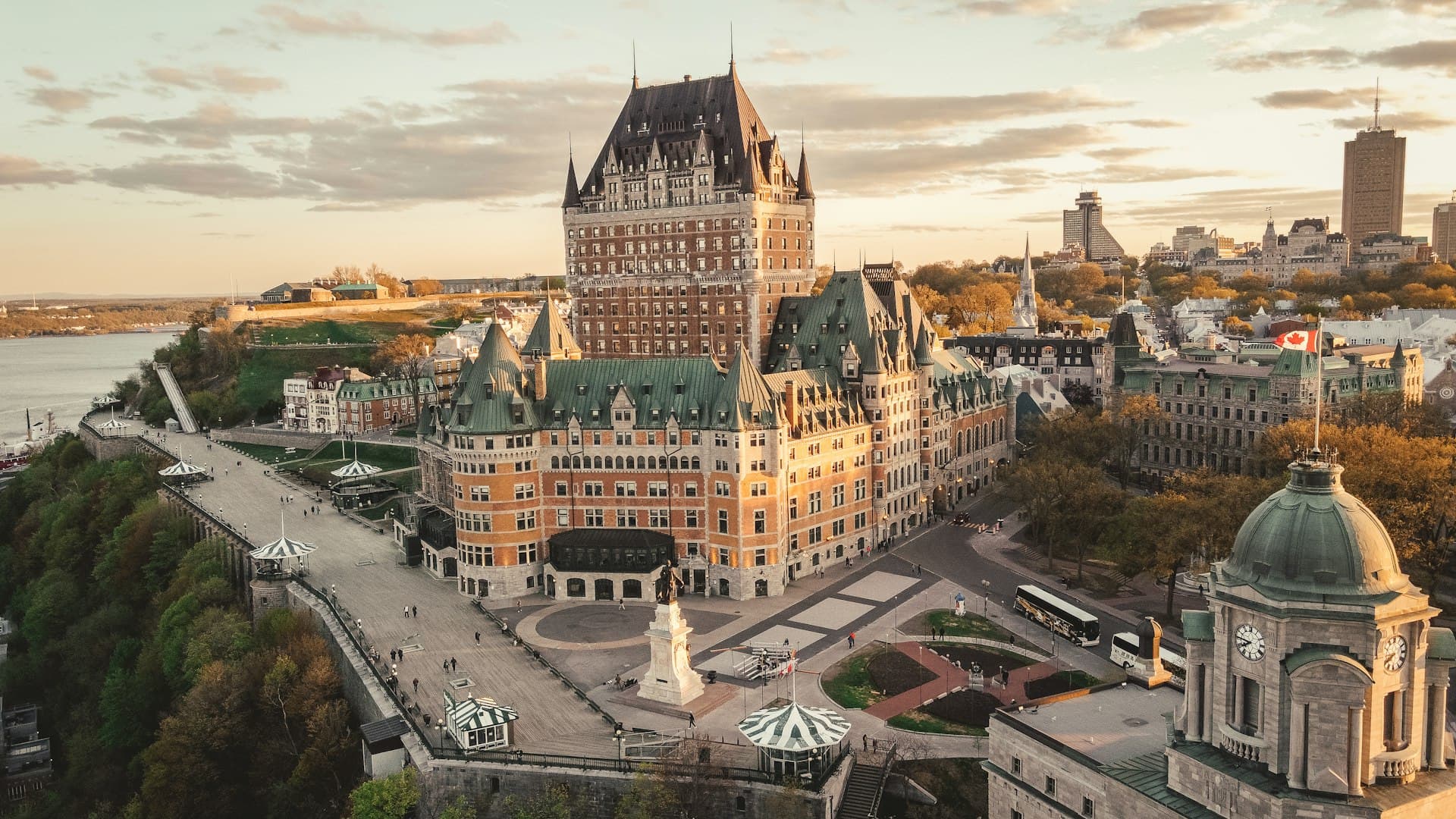 Photo: Nathan Feyssat / Unsplash
“Where ancient walls meet modern spirit, and every stone holds a French secret.”
Not the postcards. The stories even locals don't know — whispered in your ear, right where they happened.
Many visitors stroll along Dufferin Terrace, admiring the vistas and the Château Frontenac, unaware of what lies directly beneath their feet.
Today, it's one of the most picturesque streets, but centuries ago, this charming lane had a much grittier reputation.
This grand church in the 'hipster' district holds a surprising detail within its very walls, a feature most visitors (and even some locals) overlook.
Discover every secret of Québec
Every address, every reveal in full — in your ear, right where it happened.
You pick your stops. You walk. The voice reveals what the others miss.
No tours available yet. Check back soon — we're preparing them.
Québec City, the capital of Canada's largest province, stands as a testament to French civilization in North America. Founded in 1608 by Samuel de Champlain, it is one of the oldest European settlements on the continent and the only fortified city north of Mexico. Its dramatic location atop Cap Diamant, overlooking the St. Lawrence River, offers a blend of historic character and natural grandeur. The city is divided into a Lower Town, with its historic squares and narrow lanes, and an Upper Town, characterized by commercial activity and iconic landmarks like the Fairmont Le Château Frontenac.
Designated a UNESCO World Heritage site in 1985, Old Québec is a living museum where ancient streets, centuries-old architecture, and a lively French-speaking culture create an atmosphere unlike any other in North America. Approximately 80% of Québec residents speak French as their native language, and nearly 95% speak it overall, making it the oldest French-speaking place in North America. Yet, in tourist areas, English is widely spoken, ensuring a welcoming experience for all visitors.
Beyond its historical core, Québec City offers a dynamic culinary landscape, a love for the outdoors, and a calendar full of festivals and events. From its distinct architectural heritage, influenced by French, British, Romantic, and Art Deco styles, to its proximity to striking natural attractions like Montmorency Falls, Québec City invites exploration and discovery.
## From Indigenous Lands to New France Québec City's history stretches back thousands of years, with its first inhabitants being the First Nations peoples. The name "Quebec" itself originates from an Algonquin word, "Kebec," meaning "where the river narrows," a reference to the constriction of the St. Lawrence River at this strategic location.
French explorer Jacques Cartier recognized the site's strategic value in the 1540s, though a permanent settlement wasn't established until July 3, 1608, when Samuel de Champlain founded a trading post. This marked the beginning of a lasting French presence in North America, with Québec City evolving into a center for the fur trade, missionary work, and military expeditions, eventually becoming the capital of New France.
## Colonial Conflicts and British Conquest The city's history is marked by intense colonial rivalry between France and Britain. Québec City was besieged five times in its history. The Seven Years' War culminated in the pivotal Battle of the Plains of Abraham in 1759, where British forces defeated the French, leading to British control over Québec. In 1763, France formally ceded its claims to Canada, and Québec, the former capital of New France, became the principal town of the new British colony, "The Province of Québec."
## A Fortified City and Cultural Heart Despite the British conquest, Québec City's French-speaking, Catholic population maintained its distinct cultural identity. The city's fortifications, initially built by the French in the 17th and 18th centuries for defense, were later reinforced by the British. By 1872, these walls had fallen into disrepair, and demolition began to make way for urban expansion. However, Lord Dufferin, then Governor General of Canada, persuaded local politicians to not only save the walls but also to restore them and promote them as a tourist attraction. Today, Québec City remains the only fortified city north of Mexico, with 4.6 kilometers of walls, gates, and the Citadelle, dating from the 17th to 19th centuries, enclosing Old Québec.
In 1985, Québec City's historic district became the first urban ensemble in North America to be declared a World Heritage Site by UNESCO, recognizing its role as the birthplace of French civilization and its unique fortifications. The city has continued to restore and celebrate elements from its past, balancing preservation with progress, and in 2008, it celebrated its 400th anniversary.
A visit to Québec City often begins in Old Québec, a UNESCO World Heritage site best explored on foot. Wander through the narrow streets of the Petit Champlain District, known for its boutique shops and charming restaurants. Take the funicular, or the more rewarding Breakneck Stairs (Escalier Casse-Cou), to connect the Upper and Lower Towns, enjoying views of the St. Lawrence River.
Dominating the skyline is the Fairmont Le Château Frontenac, the world's most photographed hotel. Even if not staying there, a guided tour reveals its historical secrets and famous guests. Adjacent to the Château is Dufferin Terrace, offering wide-ranging views. Explore the city's fortifications, including the Citadelle of Québec, an active military fortress where you can witness the changing of the guard in summer.
Beyond the walls, the Plains of Abraham, Canada's first national historic park, offers a green oasis and the site of a pivotal battle. Just 15 minutes from the city center are the Montmorency Falls, which are 30 meters taller than Niagara Falls. You can explore them via cable car, a suspension bridge, or even zipline across them for a thrill. For art enthusiasts, the Musée national des beaux-arts du Québec houses a large collection of Quebecois art within Battlefields Park.
Québec City offers a distinct experience in every season. Summer (June to August) is lively with warm weather, outdoor festivals, and bustling patios. Fall (September to October) brings crisp air and brilliant fall foliage, making it ideal for sightseeing and photography. Winter (November to March) transforms the city into a magical place, complete with snow-covered rooftops, festive lights, and the world's largest winter festival, Carnaval de Québec. Spring (April and May) offers a quieter experience as the city thaws, with blooming gardens and fewer crowds. To avoid peak tourist season, consider visiting in late spring or early autumn.
Québec City is highly walkable, especially Old Québec, though comfortable shoes are essential due to its streets and inclines. While French is the official language, most businesses in tourist areas are bilingual. Learning a few French phrases is always appreciated.
Public transportation, including buses and a funicular connecting the Upper and Lower Towns, makes getting around efficient. If you plan to explore areas beyond the city center, a car can be useful, but it's often best to park outside the historic district and explore on foot. Québec City is considered a very safe city with a low crime rate, allowing for secure exploration day and night. For those seeking unique experiences, consider renting winter clothing if visiting in colder months.