Jagannath Temple
The banner atop the Jagannath Temple defies a fundamental law of physics.
Full story unlocks in the tour
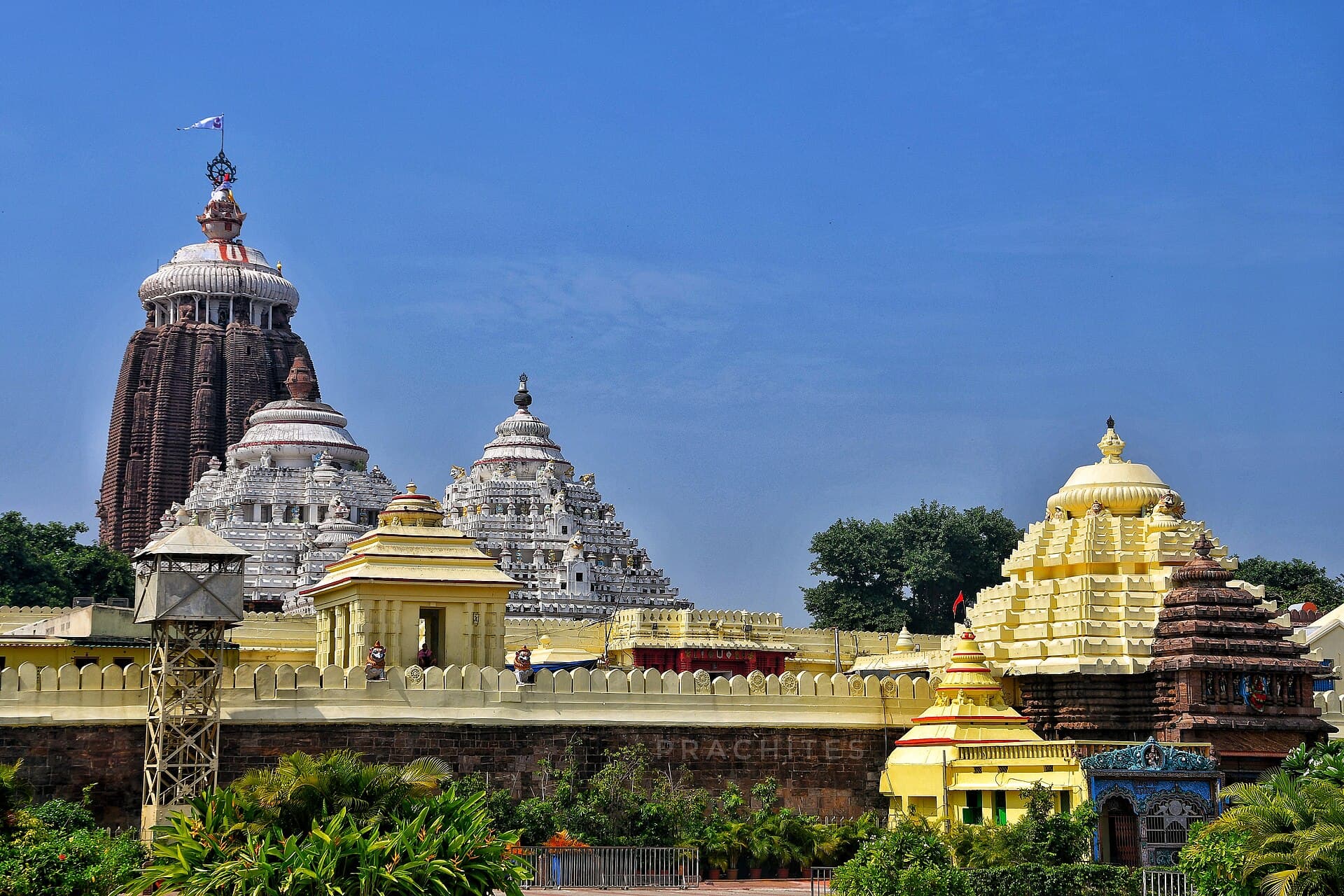 Subham9423 / CC BY-SA 4.0, via Wikimedia Commons
“Where the sacred meets the sea, Puri breathes ancient reverence.”
Not the postcards. The stories even locals don't know — whispered in your ear, right where they happened.
The banner atop the Jagannath Temple defies a fundamental law of physics.
The kitchen at the Jagannath Temple operates on an almost unimaginable scale.
During the Rath Yatra, Puri's primary deities depart their grand dwelling to sojourn at their 'aunt's house' for a week.
Discover every secret of Puri
Every address, every reveal in full — in your ear, right where it happened.
You pick your stops. You walk. The voice reveals what the others miss.
No tours available yet. Check back soon — we're preparing them.
Puri, a coastal city in the Indian state of Odisha, serves as a significant pilgrimage site for Hindus, widely recognized for the Jagannath Temple. Situated on the Bay of Bengal's edge, it stands as one of the four sacred Char Dham pilgrimage destinations, believed to cleanse the soul and assist in attaining moksha (salvation). The city's spiritual essence is deeply interwoven with its natural splendor, offering a distinctive fusion of devotion and seaside calm.
Puri is not merely a spiritual center but also a destination for those seeking repose by the ocean. Puri Beach, also known as the Golden Beach, is a prominent visitor attraction and a Hindu sacred location. The city's economy is largely propelled by its religious identity and the tourism it draws. Beyond the main temple, Puri offers a window into Odisha's extensive cultural legacy, with various festivals, local markets, and traditional arts.
The history of Puri's Jagannath Temple is woven with both mythological narratives and historical accounts, reaching back over a millennium. Legends propose that the first Jagannath temple was commissioned by King Indradyumna of Satya Yuga. He is said to have intended for it to be the tallest monument globally, measuring 1,000 cubits (457.2 meters) in height. Another legend recounts King Indradyumna receiving divine guidance to construct a grand dwelling for Lord Jagannath, an embodiment of Lord Vishnu.
The current Jagannath Temple complex was reconstructed starting in the eleventh century. The earliest major rebuilding and the foundational structure of the present temple, around the early 12th century, are credited to King Anantavarman Chodaganga Deva of the Eastern Ganga dynasty, who reigned from approximately 1078-1150 CE. Initially a Shaivite, Anantavarman became a Vaishnavite after conquering the Utkala region in 1112 CE. The temple's construction is believed to have cost him a substantial amount of gold and took fourteen years to complete, in 1198 AD. The temple stands as a striking example of Kalinga architecture, distinguished by its soaring spire (Vimana) reaching a height of 190 feet. The complex spans an area of about 10.7 acres and is enclosed within two concentric walls.
Across the centuries, the temple has undergone several renovations and expansions, enhancing its architectural grandeur and cultural importance. Many of the temple's rituals are rooted in Shabari Tantras, which evolved from tribal beliefs, and the Daitapatis (servitors) claim descent from these tribes. The temple is also one of the 108 Abhimana Kshethram of the Sri Vaishnavite tradition. The murtis (idols) of Lord Jagannath and his siblings were worshipped without interruption until 1568. The Jagannath cult is distinctive, embracing a synthesis of various religious faiths including Brahmanism, Buddhism, Jainism, Saivism, and Sakti cults, promoting messages of unity, equality, and peaceful coexistence.
The Jagannath Temple is undeniably the heart of Puri. This 12th-century architectural marvel of Kalinga design is dedicated to Lord Jagannath, a form of Vishnu, and stands as one of the four sacred Char Dham pilgrimage sites. While entry to the main temple is restricted to Hindus, non-Hindus can appreciate its grandeur from a nearby rooftop viewpoint, such as the Raghunandan Library.
Just 3 kilometers from the main temple resides the Gundicha Temple, frequently called Lord Jagannath's 'aunt's house'. This temple holds particular significance during the annual Rath Yatra, when the deities stay here for seven days. During this festival, international visitors are permitted inside the Gundicha Temple.
Puri Beach, also known as the Golden Beach, extends along the Bay of Bengal and is a favored location for both travelers and pilgrims. It is recognized for its sand art displays, often showcasing creations by international award-winning artist Sudarshan Pattnaik. The beach also hosts the annual Puri Beach Festival. In 2020, Puri Beach received the 'Blue Flag' designation for its cleanliness and environmental responsibility. Other notable beaches nearby include Balighai Beach, known for its peaceful atmosphere and surrounding casuarina, Alaska, and Eucalyptus trees, and Swargadwar Beach, a lively area with stalls offering local products.
For those who appreciate nature, Chilika Lake, situated approximately 50 km from Puri, is an essential visit, particularly during winter (October to March) for birdwatching and spotting dolphins.
The ideal period to visit Puri is during the cooler months, from October to February. During this time, the weather is pleasant and mild, with average temperatures ranging between 16°C and 28°C, creating comfortable conditions for exploration and beach activities. Humidity levels are also lower. If you wish to experience the lively Rath Yatra, plan your journey for June or July, though precise dates vary annually based on the Hindu lunar calendar. Anticipate significant crowds and secure accommodations well in advance during this festival.
Puri is readily accessible by rail and road. Puri Railway Station offers direct train connections to major Indian cities including Delhi, Kolkata, Chennai, and Mumbai. The nearest airport is Biju Patnaik International Airport in Bhubaneswar, about 60 km away. From Bhubaneswar, one can reach Puri by taxi, app-based cabs (Ola/Uber), or regular bus services.
Within Puri, local transport options include auto-rickshaws, cycle-rickshaws, taxis, and e-rickshaws. Rental cars and bikes are also available. Be aware that travel restrictions apply near the Jagannath Temple and Puri Beach, so walking may be necessary in these areas.
Dress modestly, especially when visiting temples. Carry sunscreen and remain hydrated, particularly during beach excursions. It is advisable to use authorized taxis or rickshaws. Exercise caution regarding online hotel booking schemes; utilize reputable platforms and be wary of unusually low discounts. Keep valuables in your hotel's safe deposit box and avoid carrying large sums of cash. Emergency contacts: Police – 100, Ambulance – 108.