Pula Arena
The Pula Arena stands as one of the world's best-preserved Roman amphitheaters, yet a common cinematic portrayal of gladiatorial combat might be misleading here.
Full story unlocks in the tour
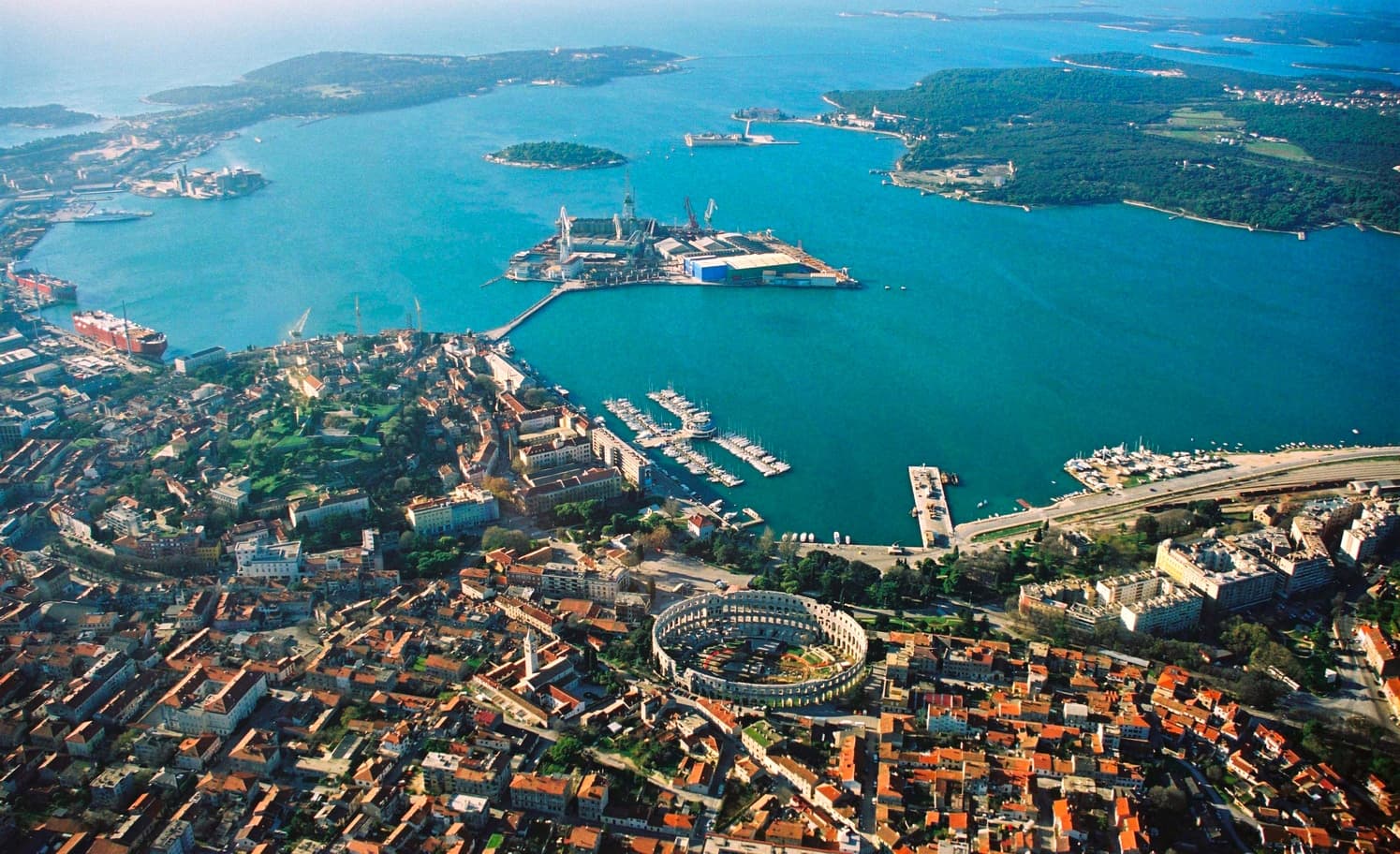 Orlovic / CC BY-SA 3.0, via Wikimedia Commons
“Where Roman grandeur meets Adriatic allure.”
Not the postcards. The stories even locals don't know — whispered in your ear, right where they happened.
The Pula Arena stands as one of the world's best-preserved Roman amphitheaters, yet a common cinematic portrayal of gladiatorial combat might be misleading here.
Beneath Pula's modern streets extends a labyrinth of tunnels, originally constructed for a purpose far removed from tourism.
Pula once held not one, but two Roman theatres, and only one remains visible today.
Discover every secret of Pula
Every address, every reveal in full — in your ear, right where it happened.
You pick your stops. You walk. The voice reveals what the others miss.
No tours available yet. Check back soon — we're preparing them.
Pula, a city on Croatia's Istrian Peninsula, offers a compelling blend of ancient history and coastal allure. With a population of over 57,000, it stands as the largest city in Istria and serves as an economic and administrative center. The city's identity is deeply rooted in its past, shaped by Roman, Venetian, and Austro-Hungarian influences. Unlike some of its more polished Istrian neighbors, Pula maintains a slightly rugged, urban character, with shipbuilding, fishing, and naval traditions ingrained in its very fabric.
Travelers are drawn to Pula primarily for its remarkably preserved Roman monuments, which stand as testaments to its significant role in ancient times. The iconic Pula Arena, a Roman amphitheater, dominates the cityscape, but the historical tapestry extends to ancient gates, temples, and a well-preserved old town. Beyond its historical depth, Pula provides access to the clear waters of the Adriatic Sea, with beaches and natural beauty just a short distance from the city center.
The city serves as an excellent base for exploring the wider Istrian region, including national parks and charming coastal towns. Whether you're a history enthusiast, a lover of the outdoors, or simply seeking a unique Mediterranean experience, Pula offers a diverse range of attractions and a distinct cultural atmosphere.
## From Illyrian Roots to Roman Grandeur Pula's history stretches back to prehistoric times, with evidence of early human settlements dating to the Neolithic period. The first Illyrian settlement emerged around the 10th century BC, founded by the Histri, an Indo-European tribe who gave their name to the Istrian peninsula. These early inhabitants constructed hillfort settlements and were known for their pirating activities.
In the 2nd century BC, Pula was conquered by the Romans, and by the 1st century BC, it had become a Roman colony known as Pietas Julia. Under Roman rule, Pula flourished, developing into a vital port and trade center, as well as a significant military base. The Roman Imperial period, from the 1st to 3rd centuries AD, saw the construction of Pula's most impressive classical monuments. The Pula Arena, an elliptical amphitheater, was built during the 1st century AD, primarily under Emperor Vespasian, and could seat up to 23,000 spectators for gladiator fights and wild beast hunts. Other notable Roman structures from this era include the Arch of the Sergii, the Temple of Augustus, and the Forum, which served as the administrative, commercial, and religious heart of the city.
## Medieval Decline and Revival Following the fall of the Roman Empire, Pula experienced a period of decline. It was conquered by the Visigoths and Ostrogoths in the 5th century, then became part of the Eastern Roman (Byzantine) Empire, during which it held military importance. The 6th century saw Slavic invasions of the Istrian peninsula, leading to a population decrease and a standstill in trade and manufacturing. In 1150, Pula swore allegiance to the Republic of Venice, which would heavily influence its development for several centuries. However, the 14th, 15th, and 16th centuries were marked by attacks and conquests by Genoese, Croatian-Hungarian, and Habsburg armies, along with devastating epidemics of plague, malaria, typhoid, and smallpox, which decimated the population to just hundreds by the 1630s.
## Austro-Hungarian Transformation and Modern Era Pula's fortunes began to reverse in the 19th century when it came under Austrian rule in 1797. After 1866, it was transformed into the main naval port and arsenal of the Austro-Hungarian Empire. This period saw significant investment in infrastructure, including a sewage system and a new railway, which helped Pula grow from a struggling village to a prosperous town with a population increasing to around 40,000 within 50 years. The city developed both military and trading functions during this time. After World War I, Pula became part of Italy in 1920, and then, following World War II in 1947, it was incorporated into Croatia as part of Yugoslavia. After the breakup of Yugoslavia in the 1990s, Pula became part of independent Croatia, evolving into a favored tourist destination known for its historical monuments and coastline.
Pula's most prominent landmark is the Pula Arena, a remarkably preserved Roman amphitheater from the 1st century AD. It once hosted gladiator fights and could hold up to 23,000 spectators. Today, it serves as a venue for concerts, film festivals, and historical reenactments, including gladiator fights during the summer.
In the heart of the old town, explore the Forum, Pula's main square since Roman times. Here, you'll find the Temple of Augustus, an elegant structure with Corinthian columns that now houses a small museum. Nearby, the Arch of the Sergii, a triumphal arch built between 29 and 27 BC, marks an ancient city gate and is a passage into the old town.
For a glimpse beneath the city, visit Zerostrasse, an extensive network of underground tunnels built during World War I as air-raid shelters. These cool corridors offer a unique historical perspective and connect to the Kaštel (Pula Fortress), a 17th-century Venetian-built fort that now houses the Historical and Maritime Museum of Istria and provides expansive views of the city and harbor.
Other Roman remnants include the Twin Gates and the Gate of Hercules, both ancient city gates. The Small Roman Theatre, situated on a slope below the Castle, offers a look at another ancient performance space. For natural beauty, consider a day trip to Brijuni National Park, a group of islands known for their unspoiled nature and archaeological sites, or explore the beaches and walking trails of the Verudela Peninsula, just south of the city center.
The ideal time to visit Pula is between May and October, when the weather is comfortable, and rainfall is low, creating perfect conditions for exploration. For those who prefer fewer crowds, late spring (May) and early autumn (September) offer pleasant temperatures and a more relaxed atmosphere. May sees temperatures between 18°C and 24°C, with the sea beginning to warm, making it suitable for sightseeing and light beach activities. September also provides warm sea temperatures for swimming, with daytime temperatures around 24°C to 27°C, and attractions are still fully operational without the peak summer crowds.
Summer months (June to August) are bustling with activity, offering average temperatures between 24°C and 30°C, minimal rainfall, and warm Adriatic waters perfect for swimming. This is also when many cultural events and festivals take place, including the Pula Film Festival. While Pula can be visited year-round, the low season from November to March brings cooler temperatures (around 5-10°C) and fewer tourists, with some limitations on swimming.
Croatia transitioned from the kuna to the euro on January 1, 2023, so the local currency is the Euro (€). The primary language is Croatian, but Italian is also an officially recognized language in Pula, making the city bilingual. Many locals also speak English. Pula operates on Central European Time (CET) and observes Daylight Saving Time.
Tap water in Pula is safe to drink. The standard European electrical voltage of 220V is used. Wi-Fi is widely available in hotels, restaurants, and popular tourist areas. Tipping is appreciated but not mandatory. For transportation, Pula has a reliable public bus system. While there is a train station, it primarily serves regional connections, and trains can be infrequent. Pula also has a regional airport (PUY) about 8 km from the center, with shuttle buses connecting to the city.
Pula is generally safe for tourists, but it's always wise to be cautious in crowded areas or late at night. Shops generally close on Sundays in compliance with a new Trade Act, though traders can open on 16 specific Sundays throughout the year, so it's advisable to check locally. If driving, be aware of 'Permit Holders Only' parking signs.