Golfo Dulce
This 'Sweet Gulf' is one of the world's few tropical fjords.
Full story unlocks in the tour
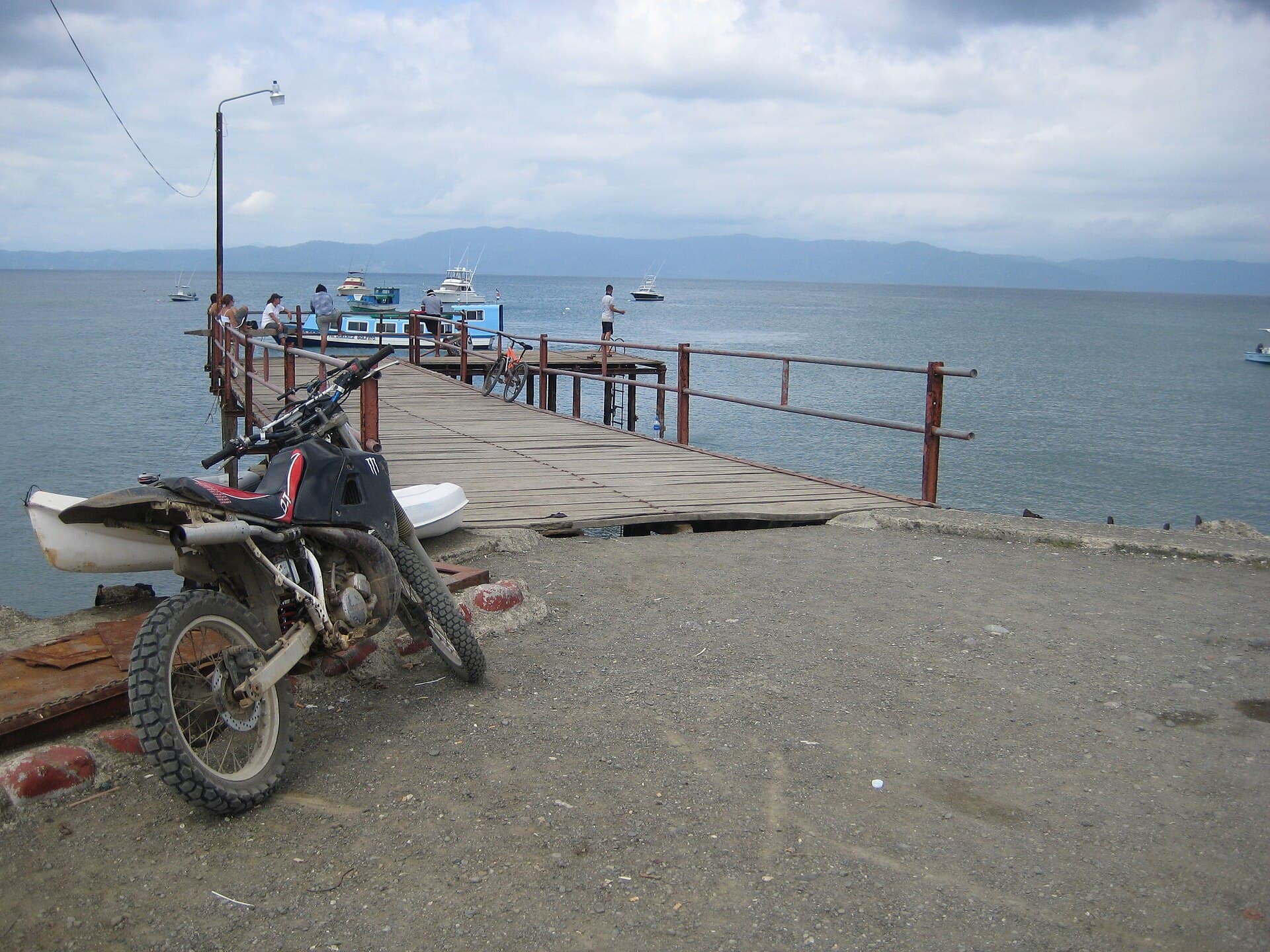 Norbert Utz / CC BY-SA 3.0, via Wikimedia Commons
“Where the rainforest meets the sea, and wildness still reigns.”
Not the postcards. The stories even locals don't know — whispered in your ear, right where they happened.
This 'Sweet Gulf' is one of the world's few tropical fjords.
The Osa Peninsula is considered one of the most biodiverse places on Earth.
Before eco-tourism, Puerto Jiménez was a hub for a different kind of natural resource.
Discover every secret of Puerto Jiménez
Every address, every reveal in full — in your ear, right where it happened.
You pick your stops. You walk. The voice reveals what the others miss.
No tours available yet. Check back soon — we're preparing them.
Puerto Jiménez, a coastal town on Costa Rica's Osa Peninsula, serves as a portal to some of the country's most spectacular natural wonders. Positioned between the calm Golfo Dulce and the expansive Corcovado National Park, the town offers a blend of adventure, wildlife, and a relaxed atmosphere. It is a prime destination for those seeking an immersive natural experience in one of Costa Rica's most ecologically significant regions.
The Osa Peninsula, primarily reached through Puerto Jiménez, is celebrated for its unparalleled biodiversity. Travelers can explore verdant rainforests teeming with wildlife, from monkeys and toucans to jaguars and tapirs. The town itself provides essential services, local markets, and cafes, functioning as a practical center for exploring the surrounding wildlands.
Puerto Jiménez is a launching point for eco-tours, sport fishing, and night hikes, offering abundant opportunities to connect with nature. Whether embarking on jungle treks, kayaking through mangroves, or spotting dolphins in the bay, it's an ideal destination for travelers looking to immerse themselves in the untamed beauty of Costa Rica's southern wilderness.
The history of Puerto Jiménez is deeply intertwined with the exploration of the wild Osa Peninsula. Unlike Costa Rica's older colonial centers, this settlement formed much later, in the early 20th century. The area was initially inhabited by indigenous tribes. The first known settlement was Santo Domingo de Golfo Dulce, located in Puntarenitas. After a strong earthquake in 1853, part of the town sank, leading to a relocation to a neighborhood west of the Platanares River mouth. This new settlement, still called Santo Domingo, also faced erosion.
The town received its official status and current name in 1914, honoring Ricardo Jiménez Oreamuno, the then-President of Costa Rica, who facilitated the purchase of private land for the town's current location.
In its early years, Puerto Jiménez had the atmosphere of a frontier town, with its economy entirely dependent on the extraction of natural resources. The region initially attracted attention for its valuable timber and mangrove forests, which spurred logging activities. Gold was discovered in the rivers of the peninsula in the early 20th century, with gold mining activity continuing into the 1950s in rivers like the Tigre, Agujas, Rincón, and Riyito. The 1980s marked the peak of the "gold rush," drawing thousands of prospectors and significantly revitalizing the local economy.
A turning point in Puerto Jiménez's history came in 1975 with the establishment of Corcovado National Park. In 1986, the government banned artisanal gold mining within the park, compelling residents to seek alternative livelihoods. This led to a reorientation of the city's economy towards ecotourism and nature research in the 1990s. Many former gold prospectors and loggers retrained as naturalist guides, marking a unique social transformation.
The 2000s saw significant infrastructure improvements, including the modernization of the local airport and the paving of the road connecting the town to the Pan-American Highway, making Puerto Jiménez more accessible to international travelers. Today, Puerto Jiménez is recognized as the main tourism hub of the Osa Peninsula, offering a blend of adventure, wildlife, and a welcoming local atmosphere.
Puerto Jiménez acts as a base for exploring the diverse natural attractions of the Osa Peninsula. Corcovado National Park is a primary draw, offering incredible opportunities for wildlife viewing and hiking through its extensive rainforests. Guided tours are available to help navigate the park's trails and spot animals like jaguars, tapirs, monkeys, and scarlet macaws.
The Golfo Dulce, a tropical fjord, provides opportunities for snorkeling in coral reefs and encountering diverse marine life. Boat tours through the mangrove forests of the Golfo Dulce offer a chance to spot crocodiles, dolphins, and various bird species. Sportfishing is also popular in the gulf, with opportunities to catch marlin, sailfish, and dorado.
For those seeking other activities, consider birdwatching, as the Osa Peninsula is home to over 400 bird species. Kayaking or stand-up paddleboarding in the calm waters of the Golfo Dulce, or taking a bioluminescent kayak tour at night, are also popular. Beaches like Playa Platanares and Playa Preciosa offer spaces for relaxation and swimming. The Rio Nuevo Reserve provides an alternative to Corcovado for hiking and wildlife viewing. Within town, visitors can enjoy the main beach for swimming and walking.
The ideal time to visit Puerto Jiménez is during the dry season, from December to April. This period offers sunny days with minimal rain, creating perfect conditions for outdoor activities like beach excursions, wildlife tours, and exploring Corcovado National Park. Temperatures are warm and comfortable, making it suitable for adventures like hiking and kayaking. This season also provides the best opportunities for spotting wildlife, including monkeys and exotic birds.
The green season, from May to November, brings lush landscapes and rainforests, with frequent afternoon showers. While it is less crowded and may offer lower prices, some tours and activities might be affected by rain. For whale watching, August and September are the best months, though these are also rainy months.
Puerto Jiménez is accessible by domestic flight, car, or bus. Domestic flights from San José take approximately 50 minutes. Driving from San José can take around six to eight hours, with a 4x4 vehicle recommended for smoother travel on some roads. Public bus services are also available from San José, offering a more scenic but longer journey.
Once in Puerto Jiménez, 4x4 taxis are readily available. Renting a bicycle is a popular way to get around town. The town has two banks with ATMs, but it's advisable to carry some local colones or USD, as not all businesses accept credit cards. A small public clinic in town can handle basic medical needs, with a private English-speaking doctor also available. For emergencies, the nearest hospital is in Golfito.
When packing, bring comfortable clothing suitable for warm weather, sturdy shoes for hiking, sunscreen, insect repellent, a reusable water bottle, and binoculars for wildlife spotting.