Ptuj Castle
Beneath the castle's imposing walls lies a secret from its earliest days, long before knights and noble families.
Full story unlocks in the tour
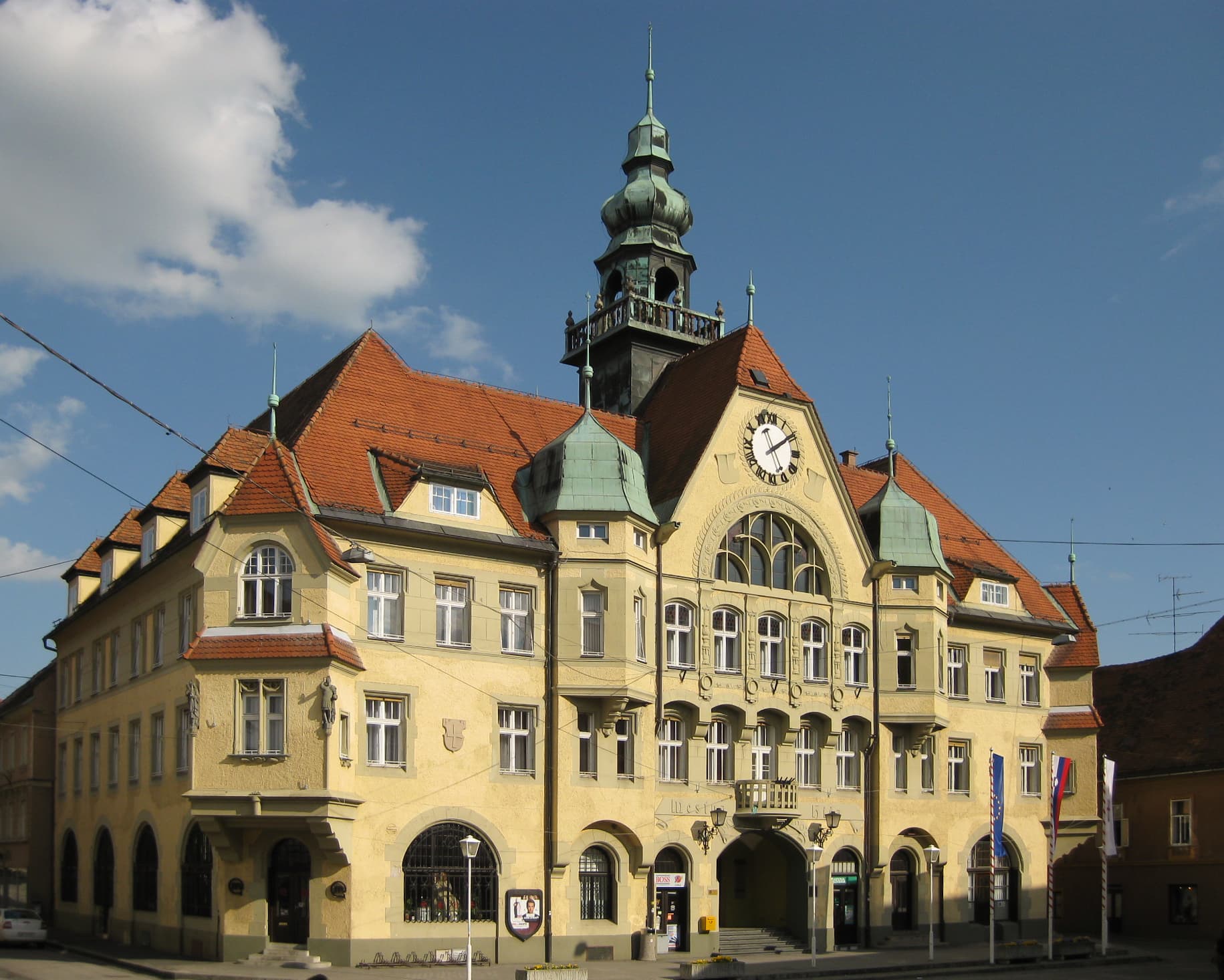 Ptuj-mestnaHisa1.JPG: Sl-Ziga uploaded and derivative work: MrPanyGoff / Public domain, via Wikimedia Commons
“Where Roman echoes meet medieval grace and carnival spirits dance.”
Not the postcards. The stories even locals don't know — whispered in your ear, right where they happened.
Beneath the castle's imposing walls lies a secret from its earliest days, long before knights and noble families.
This towering Roman monument, a symbol of Ptuj, once served a surprisingly different, more humbling purpose in the Middle Ages.
While Ptuj contains Slovenia's oldest wine cellar, a particular vintage within its depths holds a unique, almost mystical, connection to the town's most famous tradition.
Discover every secret of Ptuj
Every address, every reveal in full — in your ear, right where it happened.
You pick your stops. You walk. The voice reveals what the others miss.
No tours available yet. Check back soon — we're preparing them.
Ptuj, Slovenia's most ancient town, rests along the Drava River in the country's northeastern region. With roots stretching back to the Stone Age, this captivating destination offers a journey through millennia of human presence. Its well-preserved medieval core, crowned by a hilltop castle, invites exploration of winding streets, venerable buildings, and inviting squares.
Beyond its architectural allure, Ptuj is a town of lively cultural life. It is celebrated for its annual Kurentovanje carnival, an ethnologically significant event that draws tens of thousands of visitors with its traditional masks and rituals aimed at ushering out winter. The town also embraces its Roman past, evident in archaeological sites and a spirited Roman festival. Surrounded by vineyards, Ptuj is also a significant hub for wine enthusiasts, home to Slovenia's oldest wine cellar.
Whether you seek historical immersion, cultural festivities, or a taste of regional wines, Ptuj provides a memorable experience. Its blend of ancient heritage, dynamic traditions, and picturesque setting makes it a compelling stop for any traveler.
## From Stone Age Settlement to Roman Metropolis Ptuj's history is remarkably long, with evidence of human settlement dating back to the late Stone Age, specifically the 5th millennium BCE. In the Late Iron Age, Celtic tribes inhabited the area. The town's prominence truly began with the Romans, who established a settlement here by the 1st century BCE as part of the Pannonian province. In 69 AD, a pivotal moment occurred when Vespasian was elected Roman Emperor by the Danubian legions in Ptuj, marking the first written mention of the city. Known as Poetovio, it served as a base camp for Legio XIII Gemina.
Emperor Trajan granted Poetovio city rights between 98 and 102 AD, renaming it Colonia Ulpia Traiana Poetovio. By the 2nd and 3rd centuries, Poetovio flourished, becoming the largest and most important Roman town in Slovenian territory, even surpassing the size of contemporary Vienna and London. It was a vital military, economic, and administrative center with a population once exceeding 40,000 inhabitants. This era left behind significant archaeological remnants, including the five-meter-high Orpheus Monument.
## Medieval Transitions and Habsburg Rule The Roman era ended dramatically when the Huns plundered the city in 450 AD. In 570, Eurasian Avars and Slavic tribes occupied the city. Ptuj became part of the Frankish Empire in the late 8th century after the fall of the Avar state. For a period between 840 and 874, it belonged to the Slavic Balaton Principality. By the late 9th century, the Archbishopric of Salzburg gained significant influence, holding both spiritual and temporal rule.
Ptuj received its town rights in 1376, initiating an economic upswing. The medieval fortress, which would become Ptuj Castle, dates back to the 11th century, initially owned by the Archdiocese of Salzburg. The Lords of Ptuj administered the castle and town for over three centuries, establishing the Dominican and Minorite Monasteries in the 13th century. The town's strategic location meant it was a battleground during the Ottoman wars, suffering from fires and conflicts. In 1555, Ptuj was officially incorporated into the Duchy of Styria under Habsburg rule. The castle was later owned by the Scottish Leslie family from 1656 to 1802, who transformed it into a Baroque residence. The castle's last private owners were the Counts of Herberstein, who held it until 1945 when it was nationalized and became part of the Ptuj Museum.
## Modern Era and Cultural Revival In the 19th century, Ptuj's importance declined after the Vienna-Trieste railway line bypassed it. However, the town experienced a revival with early tourism efforts, capitalizing on its Roman history, wine, and thermal baths. Today, Ptuj is the eighth-largest city in Slovenia, with a population estimated at around 18,365 in 2026. It remains an economic hub for the Podravje region and a significant cultural center, known for its festivals and wine production.
Ptuj offers a concentrated experience of history and culture. Begin at Ptuj Castle, a 12th-century fortress situated on a hill, offering expansive views of the town and the Drava River. Inside, the Regional Museum showcases extensive collections, including weapons, musical instruments, furniture, and traditional carnival masks.
Descend into the old town to encounter the Orpheus Monument, a five-meter-high Roman marble stele that once served as a public pillory. Nearby, the Town Tower dominates the skyline. Explore the medieval religious architecture with visits to the Dominican Monastery and the Minorite Monastery, both dating back to the 13th century. The Minorite Monastery is particularly notable for its library, housing over 5,000 books, some from the 16th century.
Delve into Ptuj's Roman past at the Poetovio Archaeological Park, which features Roman remains and museum exhibits, including remnants of Mithras shrines. For wine enthusiasts, a visit to Ptujska Klet, Slovenia's oldest wine cellar, is a worthwhile stop for tastings and tours.
Beyond specific landmarks, wander through the inviting streets and squares, such as Slovenski Trg and Mestni Trg, to absorb the atmosphere. The Drava River and Ptuj Lake, Slovenia's largest permanent lake, offer scenic walks and opportunities for birdwatching.
Ptuj is engaging year-round, but specific times offer distinct experiences. For warm-weather activities and pleasant exploration, the period from mid-June to mid-September is ideal, with July being the warmest month, averaging 79°F. Spring (March-May) and early autumn (September-November) also provide agreeable weather and are excellent for cultural events and enjoying the vineyard landscapes.
However, if the renowned Kurentovanje carnival is a priority, plan your visit for late February or early March. This 11-day festival transforms the town into an open-air ethnographic museum, though it will be cold, with average temperatures between 23°F and 39°F from December to February. Booking accommodation well in advance is essential during Kurentovanje.
Ptuj is located in northeastern Slovenia, approximately 130 kilometers from Ljubljana, accessible by car or public transport. The town center is walkable, and in summer, city bikes can be rented for free at the Ptuj Tourist Information Centre. For environmentally friendly transport within the center, an electric vehicle called Zapeljivec (Seducer) and a free town bus are available.
Accommodation options in Ptuj include hotels, guesthouses, B&Bs, apartments, farm stays, and hostels. While many locals in the hospitality industry speak English, particularly younger residents, some older residents may speak less, so knowing a few basic Slovenian phrases like 'hvala' (thank you) can be helpful. The local tourist information office can assist with arranging tours for individuals or groups. Ptuj also offers thermal spa facilities, continuing a Roman tradition of relaxation.